...ואמר אלהם שמע ישראל אתם קרבים היום למלחמה על-איביכם
(דברים, כ: ג)
I only have a brief D'var Torah this week, as I am typing this on the 962 Yerushalayim-T'veryah bus!
One of the many things set out in Parshat Shoftim are the rules of war. Famously later we learn that a Jewish army is not permitted to destroy trees, although this is normal military behaviour, and we also learn that a man who desires a captive woman must adhere to a strict set of rules before he may take her as a partner.
Here, at the beginning of this particluar chapter, we learn that Am Yisrael are instructed to gather and listen to the words of the Kohen Gadol, who served to act as the Army's Chief of Staff and prepared the warrior for battle. In the Sefer "Ma'ayanah shel HaTorah" a small paragraph attributed to "Sefarim" points out that the word Sh'ma, (hear,) is crucial. As I have mentioned in my Divrei Torah a number of times, when the Hebrew word for hearing is used, it also means something that is accepted. Another aspect of hearing is that it is intriniscally linked to collecting. You might ask yourself at this point what do listening and collecting have to do with one another, so I'll try to pass over something I've learned about the faculty of hearing.
When a person sees something, he sees the entire entity at once, and there can be no doubt as to what it is that the person is perceiving. But when that person hears something, they only hear that thing in stages; a piece at a time. If we take music for an example, one never hears a song, but rather hears a note at a time. If you ask someone to pick their favourite song and then ask them whether they like an individual note, they'll look at you as if you're mad - a person likes the song as an entity - not for it's constituent parts! Similarly, when one listens to another person talking, one only hears one word at a time, and by the time one hears one word, the previous word is only a memory. Hearing, by its very definition, is a process of memory, collection, and most importantly, unification.
It is no coincidence that "Sh'ma" is the opening word used in the most famous sentence in Judaism, for when we talk of oneness, of achdut, we talk of listening and bring back together that which is seemingly separate. And here too, when the nation of Israel enters into a war, all the constituent parts must come together, else failure beckons (God forbid).
Wishing you a Shabbat Shalom!
Showing posts with label Shoftim. Show all posts
Showing posts with label Shoftim. Show all posts
Friday, August 21, 2009


Friday, September 05, 2008
Parshat Shoftim - פרשת שופטים
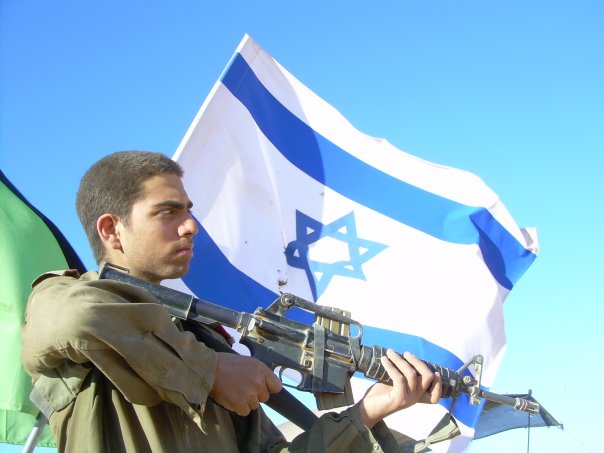
Judaism is a very practical religion. Unlike Buddhism, Judaism realises that we cannot isolate ourselves from the world, rather we are intended to engage it, and make a "Kiddush Hashem." (To act in a way that inspires people and reflects portrays His name and those who follow Him in a good light.) It is therefore pertinent to deal with the laws of engagement, to lay down rules for war. One of the first rules set down deals with the soldiers that we may send to do battle, who may and may not go. In my time in the IDF, I was exposed to the "Mashakit Tash", the soldier's welfare representative, but ut appears that she was preceded by the Torah!
When our ancestors would mobilize their forces for war, they were addressed by a high ranking priest. First he would offer brave words of encouragement and confident predictions of victory. “Let your heart not be faint; do not fear the enemy nor enter into panic and do not be terrified for G-d will vanquish your enemy for you.”
The military officers would then announce: “Any man who has built a home, but has yet lived in it... planted a vineyard, but has yet to render it fit for use... betrothed a woman, but has not yet married her... should return home, lest he die in war....” (Deuteronomy 20) This is an astounding time for such announcements. The priest has just bolstered the morale of the troops and the officers; yet now, it seems, he proceeds to demoralize them by thinning their ranks!

(There are a number of explanations that are offered by the commentaries for these announcements. Ibn Ezra argues that this was strategically wise. Men with such concerns on their mind will worry about their affairs at home and will be unable to keep their mind on the battle. Filling their ranks with such unmotivated troops would weaken the military and undermine their prospects for victory. Abarbanel argues that since these men did not have opportunity to fulfil the respective Mitzvot associated with their endeavour (the house builder has yet to build his parapet, the vineyard planter has yet to offer the priestly gifts and the betrothed has yet to sire children) they would not merit the miracles required for victory.)
The Talmud remarks that the order of these announcement reflect the proper conduct of life: First we ought to build a home, then plant a vineyard, or establish alternative sources of income, and only then should we marry. This remark indicates that our sages viewed these three announcements as a reflection on the ordinary routine of life.
Why does an army go to war? To protect its national interest. What is a nation's primary interest? It's citizens' unhindered pursuit of life's ordinary routine. When an enemy threatens the ordinary pursuit of day to day life, the nation's very fabric is undermined. In this way, perhaps we can explain the priest's public announcement of these exemptions from battle immediately following his words of encouragement. The troops were reminded of their exalted purpose. Why are we going to war? To enable our comrades to pursue the normal routine of life. So they can build homes, plant vineyards, and establish families.
The troops that were sent home knew that they were entitled to recuse themselves from military draft, but they came anyway. How could they not come? They could not sit home while their brothers fought for their country. It was not easy for them to abandon their brothers and go home. Yet they were told to do just that. These soldiers, with their departure, validated their comrades' efforts on the battlefields. If they went to war, their comrades would die in vain.
When the enemies of Israel threaten our cities with rockets, when they threaten our lives with suicide bombers, when they send our citizens to bomb shelters and destroy our way of life, the nation is justified in going to war. No argument can justify a cease fire that does not achieve the goals for which the nation set out to war. If our soldiers are not safe, if our borders are still violated and if our cities are still under attack then our war is not over.
We mourn the loss of innocent lives on all sides, our Torah ethic demand it. We pursue the war with a vengeance, till peace can be restored, our Torah ethic demands that too. We do not seek a peace that will lead to another war. We seek a war that will lead to a lasting peace. This is the unfortunate reality fostered upon us by our enemy.
Shabbat Shalom!
Adapted from www.chabad.org
When our ancestors would mobilize their forces for war, they were addressed by a high ranking priest. First he would offer brave words of encouragement and confident predictions of victory. “Let your heart not be faint; do not fear the enemy nor enter into panic and do not be terrified for G-d will vanquish your enemy for you.”
The military officers would then announce: “Any man who has built a home, but has yet lived in it... planted a vineyard, but has yet to render it fit for use... betrothed a woman, but has not yet married her... should return home, lest he die in war....” (Deuteronomy 20) This is an astounding time for such announcements. The priest has just bolstered the morale of the troops and the officers; yet now, it seems, he proceeds to demoralize them by thinning their ranks!

(There are a number of explanations that are offered by the commentaries for these announcements. Ibn Ezra argues that this was strategically wise. Men with such concerns on their mind will worry about their affairs at home and will be unable to keep their mind on the battle. Filling their ranks with such unmotivated troops would weaken the military and undermine their prospects for victory. Abarbanel argues that since these men did not have opportunity to fulfil the respective Mitzvot associated with their endeavour (the house builder has yet to build his parapet, the vineyard planter has yet to offer the priestly gifts and the betrothed has yet to sire children) they would not merit the miracles required for victory.)
The Talmud remarks that the order of these announcement reflect the proper conduct of life: First we ought to build a home, then plant a vineyard, or establish alternative sources of income, and only then should we marry. This remark indicates that our sages viewed these three announcements as a reflection on the ordinary routine of life.
Why does an army go to war? To protect its national interest. What is a nation's primary interest? It's citizens' unhindered pursuit of life's ordinary routine. When an enemy threatens the ordinary pursuit of day to day life, the nation's very fabric is undermined. In this way, perhaps we can explain the priest's public announcement of these exemptions from battle immediately following his words of encouragement. The troops were reminded of their exalted purpose. Why are we going to war? To enable our comrades to pursue the normal routine of life. So they can build homes, plant vineyards, and establish families.
The troops that were sent home knew that they were entitled to recuse themselves from military draft, but they came anyway. How could they not come? They could not sit home while their brothers fought for their country. It was not easy for them to abandon their brothers and go home. Yet they were told to do just that. These soldiers, with their departure, validated their comrades' efforts on the battlefields. If they went to war, their comrades would die in vain.
When the enemies of Israel threaten our cities with rockets, when they threaten our lives with suicide bombers, when they send our citizens to bomb shelters and destroy our way of life, the nation is justified in going to war. No argument can justify a cease fire that does not achieve the goals for which the nation set out to war. If our soldiers are not safe, if our borders are still violated and if our cities are still under attack then our war is not over.
We mourn the loss of innocent lives on all sides, our Torah ethic demand it. We pursue the war with a vengeance, till peace can be restored, our Torah ethic demands that too. We do not seek a peace that will lead to another war. We seek a war that will lead to a lasting peace. This is the unfortunate reality fostered upon us by our enemy.
Shabbat Shalom!
Adapted from www.chabad.org
Subscribe to:
Posts (Atom)



 Posts
Posts


