" הִשָּׁמֶר לְךָ, פֶּן-תִּשְׁכַּח אֶת-יְהוָה אֱלֹהֶיךָ, לְבִלְתִּי שְׁמֹר מִצְוֹתָיו וּמִשְׁפָּטָיו וְחֻקֹּתָיו, אֲשֶׁר אָנֹכִי מְצַוְּךָ הַיּוֹם. - Beware lest you forget Hashem your God, in not keeping His commandments, and His ordinances, and His statutes, that I command you this day."
(דברים ח:יא)
Parshat Ekev is a parsha that is full of mitzvot. One particular one interests us in this Dvar Torah. The verses preceding the quote above detail the commandment to remember the 40 years the Jews sent wandering in the desert. In that time, we were sent the Mon (Manna when rendered in English for some odd reason) - a heaven sent food substitute that was pure spiritual nourishment. The verses there explain that it was food " אֲשֶׁר לֹא-יָדַעְתָּ, וְלֹא יָדְעוּן אֲבֹתֶיךָ - that you did not know, and your forefathers did not know" (i.e. it was totally foreign and bizarre to us) so that we would learn to rely on Hashem and so that we would appreciate our place and role in this world better. Indeed, the narrative goes on to explain "לְמַעַן הוֹדִיעֲךָ, כִּי לֹא עַל-הַלֶּחֶם לְבַדּוֹ יִחְיֶה הָאָדָם--כִּי עַל-כָּל-מוֹצָא פִי-יְהוָה, יִחְיֶה הָאָדָם - in order to let you know; that man does not live by bread alone, but by every thing that issues from Hashem's mouth man lives."
Rav Shimshon Rephael Hirsch writes in his commentary here that there was a reason why bread specifically is mentioned. At first, we might find it odd that that bread is mentioned - bread is a kind of food that requires man's input for it to be completed. One doesn't eat wheat by itself, as it is found in nature. For bread to be eaten, man must work on the wheat. With this in mind, we may understand the reason that bread is mentioned. Almost all people appreciate the wonders of the natural world. Anyone who picks an apple from a tree and eats it will agree with you that it is amazing that something so tasty can be found growing naturally. But a person who works hard on bread might be forgiven for thinking that he is at least an equal partner in the process of creating the food.
For this reason, close to this passage we find the verse quoted above - warning us not to forget Hashem and our responsibilities. There are plenty of commandments in this week's Parsha, but this specific passage merits the warning above. Why is that? Well, Rav Hirsch explains that if we look at the verse closely, we can see three categories מצוות (commandments), משפטים (ordinances/laws) and חוקים (statutes). Now, traditionally we regard the latter two as more severe categories of obligations toward Hashem. That being the case, there must be a good reason as to why מצותיו (His commandments) is listed first. Rav Hirsch posits the explanation that this category deals with the things that we derive enjoyment from in this world. Bread, and food as a general, is something that Hashem gave us to enjoy. It is a strong Jewish belief that everything in this world is created for man to make use of or benefit from.
The problem is, we are only human and susceptible to momentary lapses of appreciation of this fine gift. As such, Hashem makes a point of stressing that while we are to derive benefit from all "that issues from Hashem's mouth", we must be careful to never become lax and take for granted what we have in this world.
This D'var Torah is dedicated for the speedy recovery of יוסף בן חנינה לאה, the brother of a friend of mine. Please take a few seconds to think and/or pray on his behalf. Thank you.
Wishing you a Shabbat Shalom :)
Showing posts with label D'varim. Show all posts
Showing posts with label D'varim. Show all posts
Friday, July 30, 2010


Friday, July 16, 2010
Parshat D'varim and Tish'a B'av
רְאֵה נָתַתִּי לִפְנֵיכֶם, אֶת-הָאָרֶץ; בֹּאוּ, וּרְשׁוּ אֶת-הָאָרֶץ, אֲשֶׁר נִשְׁבַּע יְהוָה לַאֲבֹתֵיכֶם לְאַבְרָהָם לְיִצְחָק וּלְיַעֲקֹב לָתֵת לָהֶם, וּלְזַרְעָם אַחֲרֵיהֶם. – Behold, I have set the land before you: go in and inherit the land which Hashem swore to your fathers, to Abraham, to Isaac, and to Jacob, to give unto them and to their seed after them.'
(דברים א:ח)
One of the principal beliefs in Judaism is that there is nothing in this world that can stop a person who really wants something; "אין דבר העומד בפני הרצון - There's nothing that can stand before one's will."
As Jews, we believe in a all-powerful God, One who is Master of the entire universe and who can turn anything to His will. We believe that if we can tune ourself in to this spiritual energy, we may access huge amounts of power. Given this belief, we may in turn better understand some of the events to occur in Jewish history; how it is that we have seen off multiple great nations and empires including the Egyptians, the Greeks, the Assyrians, the Babylonians. We have witnessed them all come, leave their impression and then go. But the Jews still live on.
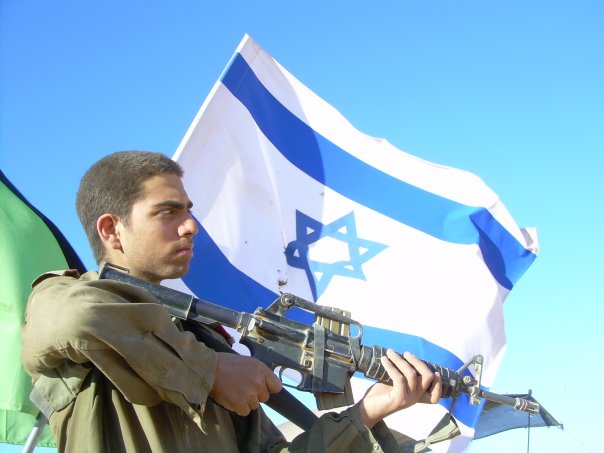
More recently, in 1967, Israel won the Six-Day war when the odds were stacked against us. It is said that the American military has a computer that processes all the recorded wars in history in an attempt to determine why the winning side was victorious and to gain insight as to what strategies and tactics can be used in the future. Apparently, this computer can "understand" all the wars put in its system, but for one. The 1967 Six-Day war is said to be incomprehensible; there was simply no way that the Jews should have won. There were thousands more troops fighting against Israel than for it. And yet we won.
The main idea to be understood is that part of being Jewish is to not be limited by nature. All the things described above are highly unlikely events in their own right. At the height of the Greek empire, who would have bet that the meek Jews would outlast the Greeks? And when the Roman empire was at its pomp, who would have cared to wager that the downtrodden Jews would be around long after they had disappeared? One lucky escape can be attribbuted to luck. But for this phenomenon to occur over and over again indicates something deeper at play; that the Jewish nation is not bound by nature's laws. If something has to happen; it will.
In the quote above from this week's Parsha, D'varim, Hashem shows B'nei Yisrael the land of Israel, telling them to behold it. Rashi explains here that if the Jews had gone in at that very moment, there would have been no need to fight to claim the land. But since they insisted on spying out the land, they were forced to take up arms and wage battle against the hostile people who were then residing in the promised land.
One of the things we learn is that if God wants something to happen, it makes no difference what the situation is - it will happen. If God wanted these hostile peoples residing in the land of Israel to quietly accept the arrival of the Jewish people, then that's precisely what would have happened.
Touching on the forthcoming fast of Tish'a B'Av, we know that the reason for the destruction of the Bet Hamikdash is because of Sin'at Chinam, baseless hatred, most clearly expressed in the Kamtza/Bar-Kamtza incident. This is the reason that is universally given for the resulting destruction, but Rav Ya'akov Chaim Sofer explains that if we look in the Talmud, we see that another reason is recorded in Masechet Gitin.
The account of one Yosef ben Matityahu, who lived through the time of this destruction, is recorded there. His account is completely different to the standard one, and he claims that the Roman army was large and strong, with healthy and well-armed soldiers. Standing against them, on the other hand, was the weak Jewish military. The Jews lacked food and arms. It was a total mismatch. Our would-be historian doesn't mention the Kamtza/Bar-Kamtza episode once. How can this be?
The answer is simple enough. As Jews, we don't care how it is that we lost in physical terms. We are more interested as to the spiritual causes of such events. As described above, there have been enough events over the course of history for us to know that our military disadvantage is wholly irellevant to the outcome of such a situation. If we could outlast all these other foes, there is no reason why we should suddenly capitulate in this battle. If you want to know how we lost the battle against the Romans and how the Bet Hamikdash was destroyed, refer to the words of Yosef ben Matityahu. But we don't want to know how, we need to knowwhy.
The message remains clear and relevant to this day. We need not worry about external threats. When it comes down to it, we need not fear at all. What we need to worry about is ourselves and how we relate to one another. If we really want to bring peace upon ourselves, we can do it.
Wishing you a Shabbat Shalom and an easy fast next week.
(דברים א:ח)
One of the principal beliefs in Judaism is that there is nothing in this world that can stop a person who really wants something; "אין דבר העומד בפני הרצון - There's nothing that can stand before one's will."
As Jews, we believe in a all-powerful God, One who is Master of the entire universe and who can turn anything to His will. We believe that if we can tune ourself in to this spiritual energy, we may access huge amounts of power. Given this belief, we may in turn better understand some of the events to occur in Jewish history; how it is that we have seen off multiple great nations and empires including the Egyptians, the Greeks, the Assyrians, the Babylonians. We have witnessed them all come, leave their impression and then go. But the Jews still live on.
More recently, in 1967, Israel won the Six-Day war when the odds were stacked against us. It is said that the American military has a computer that processes all the recorded wars in history in an attempt to determine why the winning side was victorious and to gain insight as to what strategies and tactics can be used in the future. Apparently, this computer can "understand" all the wars put in its system, but for one. The 1967 Six-Day war is said to be incomprehensible; there was simply no way that the Jews should have won. There were thousands more troops fighting against Israel than for it. And yet we won.
The main idea to be understood is that part of being Jewish is to not be limited by nature. All the things described above are highly unlikely events in their own right. At the height of the Greek empire, who would have bet that the meek Jews would outlast the Greeks? And when the Roman empire was at its pomp, who would have cared to wager that the downtrodden Jews would be around long after they had disappeared? One lucky escape can be attribbuted to luck. But for this phenomenon to occur over and over again indicates something deeper at play; that the Jewish nation is not bound by nature's laws. If something has to happen; it will.
In the quote above from this week's Parsha, D'varim, Hashem shows B'nei Yisrael the land of Israel, telling them to behold it. Rashi explains here that if the Jews had gone in at that very moment, there would have been no need to fight to claim the land. But since they insisted on spying out the land, they were forced to take up arms and wage battle against the hostile people who were then residing in the promised land.
One of the things we learn is that if God wants something to happen, it makes no difference what the situation is - it will happen. If God wanted these hostile peoples residing in the land of Israel to quietly accept the arrival of the Jewish people, then that's precisely what would have happened.
Touching on the forthcoming fast of Tish'a B'Av, we know that the reason for the destruction of the Bet Hamikdash is because of Sin'at Chinam, baseless hatred, most clearly expressed in the Kamtza/Bar-Kamtza incident. This is the reason that is universally given for the resulting destruction, but Rav Ya'akov Chaim Sofer explains that if we look in the Talmud, we see that another reason is recorded in Masechet Gitin.
The account of one Yosef ben Matityahu, who lived through the time of this destruction, is recorded there. His account is completely different to the standard one, and he claims that the Roman army was large and strong, with healthy and well-armed soldiers. Standing against them, on the other hand, was the weak Jewish military. The Jews lacked food and arms. It was a total mismatch. Our would-be historian doesn't mention the Kamtza/Bar-Kamtza episode once. How can this be?
The answer is simple enough. As Jews, we don't care how it is that we lost in physical terms. We are more interested as to the spiritual causes of such events. As described above, there have been enough events over the course of history for us to know that our military disadvantage is wholly irellevant to the outcome of such a situation. If we could outlast all these other foes, there is no reason why we should suddenly capitulate in this battle. If you want to know how we lost the battle against the Romans and how the Bet Hamikdash was destroyed, refer to the words of Yosef ben Matityahu. But we don't want to know how, we need to knowwhy.
The message remains clear and relevant to this day. We need not worry about external threats. When it comes down to it, we need not fear at all. What we need to worry about is ourselves and how we relate to one another. If we really want to bring peace upon ourselves, we can do it.
Wishing you a Shabbat Shalom and an easy fast next week.
Friday, July 24, 2009
Parshat D'varim - פרשת דברים
This week we start the last book of the Torah - Sefer D'varim. Sefer D'varim is also referred to by another name - Mishneh Torah, which can be loosely translated as "Torah digest," as it goes over many events and laws in the Torah. The Vilna Gaon explains that there are indications in the first five P'sukim as to what we learn in the entire Sefer. If you read the first five P'sukim yourself, you will see that there on three distinct occasions, the text tells us that Moshe related something to B'nei Yisrael. First it says, "אשר דבר משה" in the first Pasuk, then it says "דבר משה אל בני ישראל" in the third, and then "הואיל משה באר" in the fifth.
The Vilna Gaon explains that the first time Moshe speaks it is a reference to the rebukes that comprise the first part of Sefer D'varim, the second incidence refers to the Aseret Hadibrot with the listing of the Mitzvot that Hashem sets out for Am Yisrael, and the third quote is linked to the blessings and curses we are promised for following or disobeying Hashem.
The Maor v'Shemesh poses an intriguing question on this set-up: Why does Moshe rebuke B'nei Yisrael first? After all, if this is "Mishne Torah," a revision of the Torah, why should we hear a rebuke now? The answer he suggests is that in Judaism, one should not try to keep on taking on new things until one is settled and comfortable with all that he has already taken on. Moreover, one cannot go to learn Torah until he has dealt with issues of Teshuvah. If there are outstanding problems, one must deal with them first before advancing to other things. Here we see that Moshe rebukes Am Yisrael in a subtle way, hinting at their previous mistakes by mentioning the places where they sinned. Moshe understood that the only way a true "Mishne Torah" could begin with a rectification of all previous wrongdoing.
Wishing you a Shabbat Shalom and an easy fast on Thursday.
The Vilna Gaon explains that the first time Moshe speaks it is a reference to the rebukes that comprise the first part of Sefer D'varim, the second incidence refers to the Aseret Hadibrot with the listing of the Mitzvot that Hashem sets out for Am Yisrael, and the third quote is linked to the blessings and curses we are promised for following or disobeying Hashem.
The Maor v'Shemesh poses an intriguing question on this set-up: Why does Moshe rebuke B'nei Yisrael first? After all, if this is "Mishne Torah," a revision of the Torah, why should we hear a rebuke now? The answer he suggests is that in Judaism, one should not try to keep on taking on new things until one is settled and comfortable with all that he has already taken on. Moreover, one cannot go to learn Torah until he has dealt with issues of Teshuvah. If there are outstanding problems, one must deal with them first before advancing to other things. Here we see that Moshe rebukes Am Yisrael in a subtle way, hinting at their previous mistakes by mentioning the places where they sinned. Moshe understood that the only way a true "Mishne Torah" could begin with a rectification of all previous wrongdoing.
Wishing you a Shabbat Shalom and an easy fast on Thursday.
Subscribe to:
Posts (Atom)



 Posts
Posts


