"וַיִּפְתַּח יְהוָה, אֶת-פִּי הָאָתוֹן; וַתֹּאמֶר לְבִלְעָם, מֶה-עָשִׂיתִי לְךָ, כִּי הִכִּיתַנִי, זֶה שָׁלֹשׁ רְגָלִים. - And Hashem opened the mouth of the donkey, and it said to Balaam: 'What have I done to you, that thou have hit me these three times?' "
~Numbers 22:28
Quite why I'd never paid attention to the phrasing of this verse before now, I'll never know, but upon reading the passage above, I noticed something quote odd. The last words, "שָׁלֹשׁ רְגָלִים" are understood to mean three times, but the phrase literally means "three feet", which is the way the three "foot" festivals in Judaism are typically referred to. (They were known as foot festivals because the entire people would descend on Jerusalem, proceeding there by foot, in order to mark the holidays.) The normal way of saying three times in Hebrew would be "שלוש פעמים", so why unusual terminology here?
Rashi explains that the words were meant as "a hint to him [Bilaam]. 'You seek to uproot a nation that observes the three festivals each year'" was the message. Problem is, while this does explain the reference somewhat, it doesn't satifactorily identify why this specific aspect of the Jewish nation is referred to. After all, Jews have many unique characteristics; why not refer to our observance of Shabbat, Brit Milah, heck, even our big noses! What's so special about the Three Foot Festivals that they are specifically referred to here? Moreover, the Gur Aryeh notes that while the regular פעם and its plural form of פעמים appear over 100 times over the course of the Torah, this word "רגלים" appears just four times in the Torah: three times here and once more in Exodus when referring to the festivals themselves. Clearly, there is a connection, but what is it exactly?
The Sfat Emet asks exactly this question, and posits an answer that I find particularly brilliant and illuminating. His explanation is that these three festivals were a form of testimony that the land of Israel was part of the Jewish heritage, and that it was the place where the Bet Hamikdash would stand. (He sources this from a verse in D'varim: " שָׁלוֹשׁ פְּעָמִים בַּשָּׁנָה יֵרָאֶה כָל-זְכוּרְךָ אֶת-פְּנֵי יְהוָה אֱלֹהֶיךָ, בַּמָּקוֹם אֲשֶׁר יִבְחָר--בְּחַג הַמַּצּוֹת וּבְחַג הַשָּׁבֻעוֹת, וּבְחַג הַסֻּכּוֹת; וְלֹא יֵרָאֶה אֶת-פְּנֵי יְהוָה, רֵיקָם. - Three times in a year shall all your males appear before Hashem your God in the place that He shall choose; on the festival of Matzot, and on the festival of Shavuot, and on the festival of Sukkot; and they shall not appear before Hashem empty." ~Deuteronomy 16:16)
The curse that Balak was trying to place on the Bnei Yisrael, through his messenger Bilaam, was to remove them from their deserved inheritance of the land of Israel. This actually makes a lot of sense with the text; earlier, Balak complains about that the Jews have "covered the eye of the land" (Numbers 22:5). Clearly, someone doesn't want the Jews to settle down in this particular spot.
Now that we understand what this fear was, and why this particular mitzvah of observing the three foot festivals was referenced, the Sfat Emet goes on to reveal an aspect of the blessing that Bilaam is forced into bestowing upon the Jews. This is the part of the Dvar Torah I most like. Famously, Bilaam pronounces, " כִּי-מֵרֹאשׁ צֻרִים אֶרְאֶנּוּ, וּמִגְּבָעוֹת אֲשׁוּרֶנּוּ: הֶן-עָם לְבָדָד יִשְׁכֹּן, וּבַגּוֹיִם לֹא יִתְחַשָּׁב. מִי מָנָה עֲפַר יַעֲקֹב, וּמִסְפָּר אֶת-רֹבַע יִשְׂרָאֵל; תָּמֹת נַפְשִׁי מוֹת יְשָׁרִים, וּתְהִי אַחֲרִיתִי כָּמֹהוּ - For from the top of the rocks I see it, and from the hills I view it: Behold! it is a people that will dwell alone, and shall not be reckoned amongst the nations. Who has counted the dust of Jacob, or numbered a quarter of Israel? Let me die the death of the righteous, and may my end be like his!" (Numbers 23: 9-10) This blessing is amongst the most notable in the Torah, and so I never really paused to consider the way it is phrased. The Sfat Emet, though, remarks upon the words "Who has counted the dust of Jacob." Upon consideration, I think we may agree that the word dust seems rather unusual. The answer the Sfat Emet gives is that this is another link, (Midah k'neged Midah, I might add) to the land of Israel. For just as Bilaam went out to deprive the Bnei Yisrael of their right to the land of Israel, he ultimately only goes to underscore it. As the Sfat Emet explains, the word dust here refers to the land itself and all the MItzvot that the Bnei Yisrael were given that could only be observed fully upon the land of Israel.
I think we might find this passage highly relevant to our times. In an age where there is an ongoing campaign to deprive the Jewish nation of their right to their homeland, it is important that we remember where we got this right from. Not from the League of Nations vote in November 1947, neither from our winning the War of Independence. No, the real reason why the Jewish people deserve to live in the land of Israel is because it is ours; an eternal heritage and our home. We would do well to remember this and that the source of our claim is biblical, no less. If we can remember this, stick to it and observe the Torah, the day will surely come when our claim to this land will be recognised by all. Amen!
This Dvar Torah was written in memory of Shaul Avraham Eliezer ben Shmuel Aryeh Leib, the father of a friend of mine who passed away this week. Kindly feel free to devote your learning in his memory, too.
Wishing you all a Shabbat Shalom.
Friday, June 25, 2010


Friday, June 18, 2010
Parshat Chukat - פרשת חוקת
"אָז יָשִׁיר יִשְׂרָאֵל אֶת-הַשִּׁירָה הַזֹּאת: עֲלִי בְאֵר, עֱנוּ-לָהּ - Then Israel sang this song: Spring up, O well; sing to it"
(במדבר כא:יז)
I have an exam in about an hour, and as it's been a hectic last week of semester, I haven't had too much spare time this week to prepare a D'var Torah. Nevertheless, I do have a quick parsha thought I'd like to share with you. (Even if it's the same one as I wrote last year.)
In the quote above, we read how Am Yisrael sing of the "Be'er Miriam," the well that accompanied them during their travails in the desert and from which water miraculously flowed. While it seems reasonable enough to mention and praise this incredible phenomenon, a question begs to be asked; why is it only now that Am Yisrael recognise the blessing of this well? After all, they had been in the desert for many years - shouldn't they have made their gratefulness known earlier?
To understand this difficulty, we have to look at the situation in it's proper context. The generation who suddenly found themselves (quite literally) singing the well's praises had never fully appreciated what a blessing this Be'er was. This particular generation had been born in the desert. As such, to them, a rock that rolled around of its own volition and produced drinking water (in huge quantities) was of no great consequence. To them, it was no more miraculous than a rainfall or a sunrise.
When Hashem punished Am Yisrael for speaking against him a few verses earlier in the Parsha, the B'nei Yisrael finally understood what a miracle this well was. Until this time, they had never appreciated Hashem's benevolence and it was only when this blessing (which they had always had) was taken away that they grasped it's goodness and their dependence on Hashem.
Part of their punishment was that "הנחשים השרפים," "the poisonous snakes" that lived in the desert, were sent after B'nei Yisrael, and consequently bit and killed many Jews. In classic fashion, Rav Shimshon Raphael Hirsch notes with precision the phrasing of the verse, and highlights the letter ה - which means "the". Rav Hirsch teaches that the presence of the definite article here indicates that these snakes were not any old snakes. Rather, these snakes were already in the desert; they had always been there, even though Am Yisrael had not encountered them in their desert travels thus far.
Rav Hirsch teaches that we should understand that these snakes were kept away from the B'nei Yisrael in an act of kindness by Hashem. However, because they had shown themselves to be unappreciative of the kindness of the Be'er, Hashem punished them with the snakes so that they would appreciate all that Hashem had done to prevent them from experiencing hardship.
There is a vital lesson that we must learn from this incident. We cannot only be thankful for that which we are blessed with, rather we must appreciate all that we are not burdened with. Here we learn that the snakes had always been in the desert and only by Hashem's grace were the B'nei Yisrael spared being bitten by them. The B'nei Yisrael grew accustomed to the miracles that Hashem had done for them. The moment Hashem stopped sustaining these miracles, it became abundantly clear just how much we are dependent on his love and good will for us.
I'd like to credit Ezra Javasky for teaching me this D'var Torah last year. It's a lovely insight and I thank him for sharing it with me.
Wishing you a Shabbat Shalom.
(במדבר כא:יז)
I have an exam in about an hour, and as it's been a hectic last week of semester, I haven't had too much spare time this week to prepare a D'var Torah. Nevertheless, I do have a quick parsha thought I'd like to share with you. (Even if it's the same one as I wrote last year.)
In the quote above, we read how Am Yisrael sing of the "Be'er Miriam," the well that accompanied them during their travails in the desert and from which water miraculously flowed. While it seems reasonable enough to mention and praise this incredible phenomenon, a question begs to be asked; why is it only now that Am Yisrael recognise the blessing of this well? After all, they had been in the desert for many years - shouldn't they have made their gratefulness known earlier?
To understand this difficulty, we have to look at the situation in it's proper context. The generation who suddenly found themselves (quite literally) singing the well's praises had never fully appreciated what a blessing this Be'er was. This particular generation had been born in the desert. As such, to them, a rock that rolled around of its own volition and produced drinking water (in huge quantities) was of no great consequence. To them, it was no more miraculous than a rainfall or a sunrise.
When Hashem punished Am Yisrael for speaking against him a few verses earlier in the Parsha, the B'nei Yisrael finally understood what a miracle this well was. Until this time, they had never appreciated Hashem's benevolence and it was only when this blessing (which they had always had) was taken away that they grasped it's goodness and their dependence on Hashem.
Part of their punishment was that "הנחשים השרפים," "the poisonous snakes" that lived in the desert, were sent after B'nei Yisrael, and consequently bit and killed many Jews. In classic fashion, Rav Shimshon Raphael Hirsch notes with precision the phrasing of the verse, and highlights the letter ה - which means "the". Rav Hirsch teaches that the presence of the definite article here indicates that these snakes were not any old snakes. Rather, these snakes were already in the desert; they had always been there, even though Am Yisrael had not encountered them in their desert travels thus far.
Rav Hirsch teaches that we should understand that these snakes were kept away from the B'nei Yisrael in an act of kindness by Hashem. However, because they had shown themselves to be unappreciative of the kindness of the Be'er, Hashem punished them with the snakes so that they would appreciate all that Hashem had done to prevent them from experiencing hardship.
There is a vital lesson that we must learn from this incident. We cannot only be thankful for that which we are blessed with, rather we must appreciate all that we are not burdened with. Here we learn that the snakes had always been in the desert and only by Hashem's grace were the B'nei Yisrael spared being bitten by them. The B'nei Yisrael grew accustomed to the miracles that Hashem had done for them. The moment Hashem stopped sustaining these miracles, it became abundantly clear just how much we are dependent on his love and good will for us.
I'd like to credit Ezra Javasky for teaching me this D'var Torah last year. It's a lovely insight and I thank him for sharing it with me.
Wishing you a Shabbat Shalom.
Friday, June 11, 2010
Parshat Korach - פרשת קרח
"וַיִּקָּהֲלוּ עַל-מֹשֶׁה וְעַל-אַהֲרֹן, וַיֹּאמְרוּ אֲלֵהֶם רַב-לָכֶם כִּי כָל-הָעֵדָה כֻּלָּם קְדֹשִׁים, וּבְתוֹכָם יְהוָה; וּמַדּוּעַ תִּתְנַשְּׂאוּ, עַל-קְהַל יְהוָה - And they assembled themselves together against Moshe and against Aharon, and said to them: 'You take too much upon you, for all the congregation, all are holy, and Hashem is amongst it, why wherefore should you lift up yourselves above the assembly of Hashem?' "
(במדבר ט"ז:ג)
The verse above is taken from the opening scene of this week's Parsha, in which Korach instigates a (doomed) rebellion against Moshe. Korach acted as if his intentions were pure, but really his desires and motivations were far from selfless; a close reading of the text with the commentaries reveals that he really wanted fame, recognition and honour.
One of the main issues Korach raises in order to provoke Moshe is that of Moshe's role as leader of Am Yisrael. For example, one of the questions that Korach asks is "If an article of clothing is made entirely of t'chelet, (a certain blue/purple colouring that is used for dying the 8th string of the tzitzit,) would there then be any need to have an additional string attached to this garment, one that would be dyed in the same colour? Surely if the entire garment is holy, argues Korach, there should be no need for an extra string to render the garment as holy; surely it's holy enough already.
The question seems fair enough, but the question wasn't really what Korach was asking. By asking this question of Moshe, he was making a point about the relevancy of Moshe's leadership. In the verse above, the same thing happens, and if anything, Korach's criticism is even more explicit. Here, Korach notes that the people are all holy, and that he sees no need for Moshe to raise himself above a nation of holy people. Just like his question regarding tzitzit, Korach asks sharp questions of Moshe's right to lead.
As it turned out, Korach was proved wrong. (And on more than one level.) The problem with his approach can be seen already from the beginning of his criticism. Rav Shimshon Raphael Hirsch has an insight into Korach's words which reveal the extent of the flaw in his thinking. In the verse above, Korach deliberately switches the subject of his sentence from at first speaking about the nation as a whole, to then speaking about the people individually before reverting back to the nation as a single entity. "For all the congregation, all are holy, and Hashem is amongst it," he says. Why the switch to the people as individuals?
I would like to tender an answer of my own. We already know that Korach placed too much value on his own pride, his own honour. He clearly valued his own individuality. Here, Korach wanted to make a point to Moshe that if all the nation were holy people (which, for the sake of this argument, I will assume to be true), then a leader above them would be redundant. What he didn't understand was that in his attacking questions lay the flaw in his thinking. He asked Moshe a question about tzitzit. But what is the answer to his question? Actually, it is that such a garment, one comprised entirely of t'chelet, still needs the special t'chelet string! The reason is that despite the undoubted holiness of each of the composite parts, there is still a need for a binding force between them. Returning to the question of the relevance of a leader over a nation made up of holy people, we must answer that a leader is still required. When the Jewish nation stand as one and act as one, our unity is so strong that we can achieve incredible things. But when we are taken as individual parts, the flaws in each of us begin to show. It is not that those flaws weren't there before, but when people come together they help mask one another's failings.
Korach was undoubtedly right that the each person within the entire nation was holy in their own right. What he didn't understand was that despite this, if they were not part of a collective, their imbalances and imperfections would be allowed to get out of control. When people work together though, and under common guidance from a recognised authority, people are able to correct their mistakes and learn from one another. If we can't do that, we too will be doomed to failure. Let us learn the lesson from Korach and only live together in unity and Shalom.
Wishing you a Shabbat Shalom.
(במדבר ט"ז:ג)
The verse above is taken from the opening scene of this week's Parsha, in which Korach instigates a (doomed) rebellion against Moshe. Korach acted as if his intentions were pure, but really his desires and motivations were far from selfless; a close reading of the text with the commentaries reveals that he really wanted fame, recognition and honour.
One of the main issues Korach raises in order to provoke Moshe is that of Moshe's role as leader of Am Yisrael. For example, one of the questions that Korach asks is "If an article of clothing is made entirely of t'chelet, (a certain blue/purple colouring that is used for dying the 8th string of the tzitzit,) would there then be any need to have an additional string attached to this garment, one that would be dyed in the same colour? Surely if the entire garment is holy, argues Korach, there should be no need for an extra string to render the garment as holy; surely it's holy enough already.
The question seems fair enough, but the question wasn't really what Korach was asking. By asking this question of Moshe, he was making a point about the relevancy of Moshe's leadership. In the verse above, the same thing happens, and if anything, Korach's criticism is even more explicit. Here, Korach notes that the people are all holy, and that he sees no need for Moshe to raise himself above a nation of holy people. Just like his question regarding tzitzit, Korach asks sharp questions of Moshe's right to lead.
As it turned out, Korach was proved wrong. (And on more than one level.) The problem with his approach can be seen already from the beginning of his criticism. Rav Shimshon Raphael Hirsch has an insight into Korach's words which reveal the extent of the flaw in his thinking. In the verse above, Korach deliberately switches the subject of his sentence from at first speaking about the nation as a whole, to then speaking about the people individually before reverting back to the nation as a single entity. "For all the congregation, all are holy, and Hashem is amongst it," he says. Why the switch to the people as individuals?
I would like to tender an answer of my own. We already know that Korach placed too much value on his own pride, his own honour. He clearly valued his own individuality. Here, Korach wanted to make a point to Moshe that if all the nation were holy people (which, for the sake of this argument, I will assume to be true), then a leader above them would be redundant. What he didn't understand was that in his attacking questions lay the flaw in his thinking. He asked Moshe a question about tzitzit. But what is the answer to his question? Actually, it is that such a garment, one comprised entirely of t'chelet, still needs the special t'chelet string! The reason is that despite the undoubted holiness of each of the composite parts, there is still a need for a binding force between them. Returning to the question of the relevance of a leader over a nation made up of holy people, we must answer that a leader is still required. When the Jewish nation stand as one and act as one, our unity is so strong that we can achieve incredible things. But when we are taken as individual parts, the flaws in each of us begin to show. It is not that those flaws weren't there before, but when people come together they help mask one another's failings.
Korach was undoubtedly right that the each person within the entire nation was holy in their own right. What he didn't understand was that despite this, if they were not part of a collective, their imbalances and imperfections would be allowed to get out of control. When people work together though, and under common guidance from a recognised authority, people are able to correct their mistakes and learn from one another. If we can't do that, we too will be doomed to failure. Let us learn the lesson from Korach and only live together in unity and Shalom.
Wishing you a Shabbat Shalom.
Monday, June 07, 2010
How to Start a Blood Libel in Four Easy Steps
This is a guest post by Yedidya Kennard.
STEP ONE - WRITE THE STORY
This is important. This is the story that you will have to stick to till the end, no matter what. It helps if part of the story is already well known - not true, but well known. For example, if your target is known to be an agressor, whether he is or isn't, this saves you a lot of work. For this reason it is important to keep a running campaign of libels, making all of them easily accepted.
The setting for your story is important. Boats are good, they bring to mind sun, beaches, deck chairs etc. If you can make it look like your target is bringing violence to a peaceful place, its always good. Of course, if your target is an army, you have an added advantage - soldiers are always associated with violence.
Try to link words with yourself that are associated with non-violence, that way even if you clearly are shown to be violent people will still be more inclined to believe you. Words like 'humanitarian' are good. Try and create a name for yourself involving words like 'freedom' or similar. It doesnt have to be relevant or true in any way, but if you can make it stick in the media they won't change it, no matter how clearly it is wrong.
STEP TWO - THE ACTION
It is important to be seen to lose. People like an underdog. Most people won't care who started or what happened; the main thing is the result. It may seem strange, but here you only win if you are seen to lose. After that, nothing else is really important. Also important is equipment, again you want to be seen here as the underdog. Words again are key. 'Guns' sounds bad, 'sticks' sound like a playground fight - even if you can kill people with them. 'Slingshots' are great too, remember, they are effective, they were once the long range weapon of choice, but now they sound like toys. Even knives and broken bottles sound harmless when put against guns. If you have to provoke at long range then you can still use this - call your rockets 'homemade' and all people will see is Grandma baking cookies. Harmless.
STEP THREE - GET YOUR STORY OUT FAST.
Speed is key here. Once the story is out there it won't stop being out there. Remember, journalists need stuff to report all the time, so if you get your story out there even 2 or 3 hours before the target gets his version out, you have a massive advantage. Journalists wont check if your story is true or not, as long as it is said by someone, they can report it. Once it is out there and there is no response from the other side, it becomes accepted as fact. It is far harder to change a story, or to challenge an established narrative, than it is to start one.
STEP FOUR - STICK TO THE SCRIPT!
This is perhaps the most difficult and most critical part. Once the other side get their act together they will of course challenge your account, and may even have evidence to back themselves up. What you have to understand here is that evidence is irrelevant. A story, however obviously wrong, will never die. However, some skill is needed to keep it as the mainstream version of events. You need to be able to lie with a straight face, despite the evidence against being right in front of you. You can practise this by looking at the sky and declaring 'The sky is green!". Once you can say this and even believe it, try to make other people believe it.
Remember, someone out there already believes your story; he will want to keep on believing it instead of seeing it being proven wrong. Help him - if he sees someone else denying the evidence, then it's easier for him to do so as well.
A great tactic to use here is emotive language. Put evidence against emotion, emotion always wins. Words again are key. If your side is seen using violence, call it 'passive resistance', it sounds good even if it's wrong. It has the word 'resistance' in it so it sounds plausible. If you can say it enough times, instead of seeing your person stabbing someone, all the viewer will see is an old wisened man in a loincloth. Also, if your words stick, then anyone challenging them is seen to be obviously changing the accepted version of events, which is very hard to do.
That's it! It all comes down to the words, whether they have any bearing on reality at all is totally irrelevant. Get your story out first, get the media to accept your words and the story will run and run. Of course, if you have a media and a population for some other reason ready to accept your version, so much the better! Always remember, the truth is irrelevant, it's the Story that counts.
STEP ONE - WRITE THE STORY
This is important. This is the story that you will have to stick to till the end, no matter what. It helps if part of the story is already well known - not true, but well known. For example, if your target is known to be an agressor, whether he is or isn't, this saves you a lot of work. For this reason it is important to keep a running campaign of libels, making all of them easily accepted.
The setting for your story is important. Boats are good, they bring to mind sun, beaches, deck chairs etc. If you can make it look like your target is bringing violence to a peaceful place, its always good. Of course, if your target is an army, you have an added advantage - soldiers are always associated with violence.
Try to link words with yourself that are associated with non-violence, that way even if you clearly are shown to be violent people will still be more inclined to believe you. Words like 'humanitarian' are good. Try and create a name for yourself involving words like 'freedom' or similar. It doesnt have to be relevant or true in any way, but if you can make it stick in the media they won't change it, no matter how clearly it is wrong.
STEP TWO - THE ACTION
It is important to be seen to lose. People like an underdog. Most people won't care who started or what happened; the main thing is the result. It may seem strange, but here you only win if you are seen to lose. After that, nothing else is really important. Also important is equipment, again you want to be seen here as the underdog. Words again are key. 'Guns' sounds bad, 'sticks' sound like a playground fight - even if you can kill people with them. 'Slingshots' are great too, remember, they are effective, they were once the long range weapon of choice, but now they sound like toys. Even knives and broken bottles sound harmless when put against guns. If you have to provoke at long range then you can still use this - call your rockets 'homemade' and all people will see is Grandma baking cookies. Harmless.
STEP THREE - GET YOUR STORY OUT FAST.
Speed is key here. Once the story is out there it won't stop being out there. Remember, journalists need stuff to report all the time, so if you get your story out there even 2 or 3 hours before the target gets his version out, you have a massive advantage. Journalists wont check if your story is true or not, as long as it is said by someone, they can report it. Once it is out there and there is no response from the other side, it becomes accepted as fact. It is far harder to change a story, or to challenge an established narrative, than it is to start one.
STEP FOUR - STICK TO THE SCRIPT!
This is perhaps the most difficult and most critical part. Once the other side get their act together they will of course challenge your account, and may even have evidence to back themselves up. What you have to understand here is that evidence is irrelevant. A story, however obviously wrong, will never die. However, some skill is needed to keep it as the mainstream version of events. You need to be able to lie with a straight face, despite the evidence against being right in front of you. You can practise this by looking at the sky and declaring 'The sky is green!". Once you can say this and even believe it, try to make other people believe it.
Remember, someone out there already believes your story; he will want to keep on believing it instead of seeing it being proven wrong. Help him - if he sees someone else denying the evidence, then it's easier for him to do so as well.
A great tactic to use here is emotive language. Put evidence against emotion, emotion always wins. Words again are key. If your side is seen using violence, call it 'passive resistance', it sounds good even if it's wrong. It has the word 'resistance' in it so it sounds plausible. If you can say it enough times, instead of seeing your person stabbing someone, all the viewer will see is an old wisened man in a loincloth. Also, if your words stick, then anyone challenging them is seen to be obviously changing the accepted version of events, which is very hard to do.
That's it! It all comes down to the words, whether they have any bearing on reality at all is totally irrelevant. Get your story out first, get the media to accept your words and the story will run and run. Of course, if you have a media and a population for some other reason ready to accept your version, so much the better! Always remember, the truth is irrelevant, it's the Story that counts.
Friday, June 04, 2010
Parshat Sh'lach Lecha - פרשת שלך לך
וַיֹּאמֶר מֹשֶׁה, לָמָּה זֶּה אַתֶּם עֹבְרִים אֶת-פִּי יְהוָה; וְהִוא, לֹא תִצְלָח - And Moshe said: 'Why is it that you transgress the commandment of Hashem? It shall not succeed!
(במדבר י"ד:מ"א)
The verse above comes at the end of the story of the Meraglim, the "spies" who were sent to scout out the land of Israel prior to what was supposed to be Israel's entry. Unfortunately, the spies' report was highly critical and negative. Because the spies spoke badly about the land of Israel (or according to some explanations, because they saw bad in Israel,) the people of that generation were reprimanded and punished by being told that they wouldn't be given the merit to enter the land of Israel.
In an attempt to correct their earlier error, some of the Jews then declared that they would push forward into the land of Israel regardless. It is at this point that Moshe warns them, above. Immediately afterwards, we read of how this plan was doomed to fail with shocking consequences; those who went to enter the land were met by forces from the Amalek and Canaan armies, and were thoroughly annihilated.
I'd like to take a close look at the wording of the verse above. If we pay attention to Moshe's warning, he words his statement in an odd way; he doesn't say "you will not succeed," rather he phrases it as "it will not succeed." What is the it that he is referring to? The answer is actually fairly obvious, and the Ibn Ezra makes no time in explaining that "it" was the action of making aliyah, of going into Israel. "It" was the plan to do this, and this "it" would not succeed.
But we've only gone halfway to answering the question; now we know what the it was referring to, but we still don't know why Moshe referred to the plan as liable to fail rather than telling the people that they would fail. By changing the subject of his sentence, it seems unncessarily clunky. I'd like to tender an answer I thought of myself: Moshe refused to criticise the people. He saw that they had good intentions and wanted to correct their earlier error. He realised that there was no point in telling them off for their hearts were true, even if their actions were off. I am not yet a parent and am not really in a place to direct people how to raise their own children, but I've heard it said that one must never say "stupid boy" or "bad girl", but rather must explain to the child in question that their actions were bad or lacked being thought through. The child is almost always good, even if the action isn't. In a similar manner, Moshe make sure to tell the nation that their actions would not succeed.
I'd like to relate this to current affairs. Benjamin Netanyahu spoke earlier this week of the hypocrisy of the world's leaders. He was absolutely correct. He asked how they would have reacted when faced with terrorists and supporters of terrorists. The world leadership and media have been quick to condemn Israel and declare it an illegal, immoral and apartheid state. Not many have thought through their stance and declared that they would like to have seen things done differently, and then explained how a better plan should have been formed. Israel is surrounded by shocking hypocrisy. But it remains up to us to ignore such inane criticism and try to conduct ourselves to the highest moral standard possible.
This week's Dvar Torah is dedicated to the soldiers injured in the operation against the flotilla terrorists*. May they heal quickly and may they not be discouraged from their holy cause of protecting the people of Israel.
Wishing you all a Shabbat Shalom!
*They were injured by gunshot wounds, stabbings and being beaten. I think I can safely call these people terrorists.
(במדבר י"ד:מ"א)
The verse above comes at the end of the story of the Meraglim, the "spies" who were sent to scout out the land of Israel prior to what was supposed to be Israel's entry. Unfortunately, the spies' report was highly critical and negative. Because the spies spoke badly about the land of Israel (or according to some explanations, because they saw bad in Israel,) the people of that generation were reprimanded and punished by being told that they wouldn't be given the merit to enter the land of Israel.
In an attempt to correct their earlier error, some of the Jews then declared that they would push forward into the land of Israel regardless. It is at this point that Moshe warns them, above. Immediately afterwards, we read of how this plan was doomed to fail with shocking consequences; those who went to enter the land were met by forces from the Amalek and Canaan armies, and were thoroughly annihilated.
I'd like to take a close look at the wording of the verse above. If we pay attention to Moshe's warning, he words his statement in an odd way; he doesn't say "you will not succeed," rather he phrases it as "it will not succeed." What is the it that he is referring to? The answer is actually fairly obvious, and the Ibn Ezra makes no time in explaining that "it" was the action of making aliyah, of going into Israel. "It" was the plan to do this, and this "it" would not succeed.
But we've only gone halfway to answering the question; now we know what the it was referring to, but we still don't know why Moshe referred to the plan as liable to fail rather than telling the people that they would fail. By changing the subject of his sentence, it seems unncessarily clunky. I'd like to tender an answer I thought of myself: Moshe refused to criticise the people. He saw that they had good intentions and wanted to correct their earlier error. He realised that there was no point in telling them off for their hearts were true, even if their actions were off. I am not yet a parent and am not really in a place to direct people how to raise their own children, but I've heard it said that one must never say "stupid boy" or "bad girl", but rather must explain to the child in question that their actions were bad or lacked being thought through. The child is almost always good, even if the action isn't. In a similar manner, Moshe make sure to tell the nation that their actions would not succeed.
I'd like to relate this to current affairs. Benjamin Netanyahu spoke earlier this week of the hypocrisy of the world's leaders. He was absolutely correct. He asked how they would have reacted when faced with terrorists and supporters of terrorists. The world leadership and media have been quick to condemn Israel and declare it an illegal, immoral and apartheid state. Not many have thought through their stance and declared that they would like to have seen things done differently, and then explained how a better plan should have been formed. Israel is surrounded by shocking hypocrisy. But it remains up to us to ignore such inane criticism and try to conduct ourselves to the highest moral standard possible.
This week's Dvar Torah is dedicated to the soldiers injured in the operation against the flotilla terrorists*. May they heal quickly and may they not be discouraged from their holy cause of protecting the people of Israel.
Wishing you all a Shabbat Shalom!
*They were injured by gunshot wounds, stabbings and being beaten. I think I can safely call these people terrorists.
Monday, May 31, 2010
The Dual Tragedy of The Flotilla
The events off the coast of Gaza in the early hours of Monday morning were a significant moment in the history of the State of Israel. More than that, they were a dual tragedy.
Before we go any further, it must be made abundantly clear that neither I nor anyone I know rejoices in the deaths of these activists. It is not in our nature to celebrate the deaths of anyone, not even those who were part of a group that had earlier chanted “Khaybar Khaybar ya yahud, Jaish Muhammad saya'ud," meaning "Jews remember Khaybar, the army of Mohammed is returning," a reference to a seventh-century Muslim massacre and expulsion of Jews from Khaybar, which is in modern-day Saudi Arabia. Despite this despicable loathsomeness, with the benefit of hindsight, I'd much rather that the ships had safely docked in Gaza than lives being needlessly wasted.
At the time of going to press, 15 people have died as a result of the IDF’s boarding the flotilla as it approached Gaza, but this does not mean that I criticize the actions of the IDF. Neither do I reserve criticism of the actions of these "human rights" activists. Taking a glance at some of the headlines from the world media, one would be forgiven that Israel had stormed aid ships for no particular reason. "Deadly clashes at sea as Israel intercepts Gaza-bound aid ships," reports the Times of London. "10 Reported Killed as Israel Raids Boats Headed to Gaza" announces the New York Times.
Even reading the headline on the Jerusalem Post, "At least 15 activists dead, dozens hurt in flotilla clashes", it is hard to get away from the pervading sense of injustice felt from that now all too familiar of situations; Israeli troops acting heavy-handedly and killing unarmed civilians. Irrespective of whether their actions were right or wrong, the balance appears so lop-sided, peace activists on the one hand and soldiers on the other, that most people's minds are made up well before they read the articles themselves.
But a serious question lies at the heart of the affair. How and why did a supposedly passive peace demonstration turn rowdy to the degree for the military forces who had boarded the boat to feel threatened enough to open fire? The answer has been stated repeatedly of the last few days and stares us in the face: these were no peace activists. These were no human rights activists, these people had a very clear agenda in mind: the delegitimization of Israel.
Much has been said of this deligitimization of Israel, but what is it? What is being delegitimized, exactly? Well, Israel's right to defense, for one. When every single defense operation is questioned, criticized and consequently condemned, we would do well to realize that we are witnessing the systematic denial of Israel’s right to defend herself.
Similarly, when events like the death of Mohammed Al-Dura in 2000, the so-called “Massacre in Jenin” in 2002, the bombing of Hezballah forces in Qana, Lebanon in 2006, and the “disproportional” Israeli offensive on Hamas in Operation Cast Lead are spun out of all proportion, we must understand that the damage done to Israel’s image is long lasting and its ability to strike out at terrorists is being methodically wiped out.
There’s one question I’ve asked myself repeatedly over the last few years: “And how would you handle it?” I’ve imagined this question being asked of Kofi Annan, Barack Obama, Gordon Brown and now I ask it of these activists and their supporters. Maybe Israel’s actions aren’t always correct, but Israel has the sovereign right to act in the way it deems fit. If you don’t like the way we deal with terrorists, how about proposing an alternative solution to prevent Hamas proliferating its stockpile of military grade weaponry? If you don’t like human shields, and you shouldn’t if you care about human rights, how do you propose that the IDF tackles Hamas, an extremist group bent on Israel’s destruction that also happens to make extensive use of this tactic?
News agencies worldwide reported that the Israeli Navy stormed a flotilla carrying hundreds of pro-Palestinian activists and tons of supplies for Gaza on Monday morning. But they didn’t give more than passing mention to the fact that these pro-Palestinian activists had intentionally and deliberately provoked the IDF into acting. Amid reports from the IDF which claims that soldiers were met by well-planned lynch involving concealed handguns, knives, bats and metal pipes, we would do well to note that prior to boarding the flotilla, Maj. Gen. Eliezer Marom, Commander of the Israeli Navy, briefed the forces who participated in the interception of these protest boats, and called on them not be dragged into provocations with the passengers of the ship.
Referring to previous experience with such protesters, Marom explained that no matter what “provocation that they may create, and there are here a number of soldiers that participated in past events, for example to throw cigarettes, spitting, cursing, and so forth; we do not respond to these types of actions.” While Marom correctly identified these “peace activists” as paradoxically unpleasant to deal with, even he could not have predicted that there would be those amongst their number who would attempt to steal the soldiers’ guns, let alone stab them. But that is precisely what occurred. For us to regard these people as genuine peace activists would be a real tragedy.
Gen. Maj. Marom explained that “we have no intention of harming any of these people”, but that was sadly not the case with the activists. Beyond physically hurting the soldiers, their intention to give Israel’s image a good hiding could not be clearer. We may call them pro-Palestinian activists, but that would be a fib, for they had plenty of other options available to them, but instead went for the cheap PR stunt. And yet the PR stunt is the one way that wins. Israel yet again emerges as the loser, it’s entitlement to protect its population damaged. Worse still, this affair sets a dangerous precedent. Even after the criticism has faded and the media move on to the next big story, Israel will be left as many as 15 “Rachel Corries” to explain, 15 more images of Israeli brutality, injustice, violent excess. No matter whether the deceased foolishly tried to provoke soldiers in their last moments, they will become icons for the anti-Israel movement for an eternity.
The events off the coast of Gaza in the early hours of Monday morning were a dual tragedy. People died, and for that I grieve. But if Israel’s right to defend itself continues to be eroded, and if a precedent has been set here, more people will die. And that would be an even greater tragedy.
Before we go any further, it must be made abundantly clear that neither I nor anyone I know rejoices in the deaths of these activists. It is not in our nature to celebrate the deaths of anyone, not even those who were part of a group that had earlier chanted “Khaybar Khaybar ya yahud, Jaish Muhammad saya'ud," meaning "Jews remember Khaybar, the army of Mohammed is returning," a reference to a seventh-century Muslim massacre and expulsion of Jews from Khaybar, which is in modern-day Saudi Arabia. Despite this despicable loathsomeness, with the benefit of hindsight, I'd much rather that the ships had safely docked in Gaza than lives being needlessly wasted.
At the time of going to press, 15 people have died as a result of the IDF’s boarding the flotilla as it approached Gaza, but this does not mean that I criticize the actions of the IDF. Neither do I reserve criticism of the actions of these "human rights" activists. Taking a glance at some of the headlines from the world media, one would be forgiven that Israel had stormed aid ships for no particular reason. "Deadly clashes at sea as Israel intercepts Gaza-bound aid ships," reports the Times of London. "10 Reported Killed as Israel Raids Boats Headed to Gaza" announces the New York Times.
Even reading the headline on the Jerusalem Post, "At least 15 activists dead, dozens hurt in flotilla clashes", it is hard to get away from the pervading sense of injustice felt from that now all too familiar of situations; Israeli troops acting heavy-handedly and killing unarmed civilians. Irrespective of whether their actions were right or wrong, the balance appears so lop-sided, peace activists on the one hand and soldiers on the other, that most people's minds are made up well before they read the articles themselves.
But a serious question lies at the heart of the affair. How and why did a supposedly passive peace demonstration turn rowdy to the degree for the military forces who had boarded the boat to feel threatened enough to open fire? The answer has been stated repeatedly of the last few days and stares us in the face: these were no peace activists. These were no human rights activists, these people had a very clear agenda in mind: the delegitimization of Israel.
Much has been said of this deligitimization of Israel, but what is it? What is being delegitimized, exactly? Well, Israel's right to defense, for one. When every single defense operation is questioned, criticized and consequently condemned, we would do well to realize that we are witnessing the systematic denial of Israel’s right to defend herself.
Similarly, when events like the death of Mohammed Al-Dura in 2000, the so-called “Massacre in Jenin” in 2002, the bombing of Hezballah forces in Qana, Lebanon in 2006, and the “disproportional” Israeli offensive on Hamas in Operation Cast Lead are spun out of all proportion, we must understand that the damage done to Israel’s image is long lasting and its ability to strike out at terrorists is being methodically wiped out.
There’s one question I’ve asked myself repeatedly over the last few years: “And how would you handle it?” I’ve imagined this question being asked of Kofi Annan, Barack Obama, Gordon Brown and now I ask it of these activists and their supporters. Maybe Israel’s actions aren’t always correct, but Israel has the sovereign right to act in the way it deems fit. If you don’t like the way we deal with terrorists, how about proposing an alternative solution to prevent Hamas proliferating its stockpile of military grade weaponry? If you don’t like human shields, and you shouldn’t if you care about human rights, how do you propose that the IDF tackles Hamas, an extremist group bent on Israel’s destruction that also happens to make extensive use of this tactic?
News agencies worldwide reported that the Israeli Navy stormed a flotilla carrying hundreds of pro-Palestinian activists and tons of supplies for Gaza on Monday morning. But they didn’t give more than passing mention to the fact that these pro-Palestinian activists had intentionally and deliberately provoked the IDF into acting. Amid reports from the IDF which claims that soldiers were met by well-planned lynch involving concealed handguns, knives, bats and metal pipes, we would do well to note that prior to boarding the flotilla, Maj. Gen. Eliezer Marom, Commander of the Israeli Navy, briefed the forces who participated in the interception of these protest boats, and called on them not be dragged into provocations with the passengers of the ship.
Referring to previous experience with such protesters, Marom explained that no matter what “provocation that they may create, and there are here a number of soldiers that participated in past events, for example to throw cigarettes, spitting, cursing, and so forth; we do not respond to these types of actions.” While Marom correctly identified these “peace activists” as paradoxically unpleasant to deal with, even he could not have predicted that there would be those amongst their number who would attempt to steal the soldiers’ guns, let alone stab them. But that is precisely what occurred. For us to regard these people as genuine peace activists would be a real tragedy.
Gen. Maj. Marom explained that “we have no intention of harming any of these people”, but that was sadly not the case with the activists. Beyond physically hurting the soldiers, their intention to give Israel’s image a good hiding could not be clearer. We may call them pro-Palestinian activists, but that would be a fib, for they had plenty of other options available to them, but instead went for the cheap PR stunt. And yet the PR stunt is the one way that wins. Israel yet again emerges as the loser, it’s entitlement to protect its population damaged. Worse still, this affair sets a dangerous precedent. Even after the criticism has faded and the media move on to the next big story, Israel will be left as many as 15 “Rachel Corries” to explain, 15 more images of Israeli brutality, injustice, violent excess. No matter whether the deceased foolishly tried to provoke soldiers in their last moments, they will become icons for the anti-Israel movement for an eternity.
The events off the coast of Gaza in the early hours of Monday morning were a dual tragedy. People died, and for that I grieve. But if Israel’s right to defend itself continues to be eroded, and if a precedent has been set here, more people will die. And that would be an even greater tragedy.
The Terrorists Speak of Morality
This is a guest post by a friend, Channah Barkhordari.
I read an article in The Jerusalem Post tonight that has made me more sickened than perhaps any other I have read this year.
As many of you may know, there is a bill pending ratification in the Knesset that is meant to take away some of the supreme benefits being afforded to the Hamas terrorists in Israel's prisons. The logic behind the bill is that since Gilad Schalit has been held captive by Hamas for over four years, (the terrorist group refusing to reveal one iota of information regarding his whereabouts and living conditions, and continually breaking international law by restricting access to him by even the Red Cross,) it seems quite superfluous to provide amenities to Hamas terrorist prisoners that stretch over and above the legal requirements. Removing them is meant to provide some pressure on Hamas to return Gilad. (Jerusalem Post Editorial, 25/5/10)
At first I was relieved that Gilad was once again being focussed upon and that we are doing something. But if you asked me yesterday whether I thought the move would affect any serious progress, I would have said no — not because, as I discovered tonight, I should have known the sickening depth with which the leaders of Hamas deal in unconditional terror, but because the bill is simply not enough.
For one thing, I was unaware that Hamas terrorists were receiving such a range of stimulating benefits in Israel's prisons, from the option of pursuing higher education at Israel's Open University, to multi-channel cable TV. Yes, this is horribly ironic. Hamas restricts these basic rights, objective higher education and free press, from the Palestinians under their control on a consistent basis. What could make the situation clearer when the best place for a Hamas terrorist to go, or any Palestinian of Gaza for that matter, is an Israeli prison?
Do you think that maybe, just maybe, it makes sense that when your own soldiers (yes, soldiers plural—for Gilad we have the most hope, but there are more of our brothers missing—) are hidden behind circumstances so precarious we daily wonder at their life or death, that perhaps we shouldn’t make our enemies so comfortable?
But I digress. The source of my disgust was not that article, but this one. As I read, it became clear that Hamas’ reaction to the bill was an immediate threat against Gilad. And this does not mean taking away his books, TV, or visitation rights. He, of course, has none of these, and as we may guess has suffered far worse than we know. Though Israel has considered quarantine for Hamas prisoners, Gilad is already in the remotest of isolation. The exact wording of Hamas representatives is that he will “suffer,” that they will not stop those guarding him from “retaliating,” and that they would treat Schalit “according to what its religion tells it and in a way that satisfies its God.” We know what this implies; the Hamas charter spells it out clearly. This is their desire for the destruction of our people in the symbol of one IDF soldier. This may well be, G-d forbid, a threat to torture him, possibly maintaining the vitals of his physical life so they can continue to use him as a bargaining chip for freeing over a thousand Israel-kept prisoners…or possibly eventually returning him to us, G-d forbid, as they did Eldad Regev and Ehud Goldwasser...
Yet I would expect that from Hamas. I would expect the threat, in its all-too-well-understood gravity, as they have continually called for our destruction and total annihilation, continually attempted to make it a reality. But what made me sick, though I can’t explain why, was what Jamal Nassar, Hamas legislator in Gaza, then proceeded to say. And I quote The Jerusalem Post, “The ‘Gilad Schalit Bill’ reflected the ‘moral decline’ of the Israeli government and signaled the beginning of its collapse, Nassar said” (Khaled Abu Toameh, The Jerusalem Post, 26/5/10). The “moral decline” of the Israeli government…
Many people this year have told me that things bother me too much; that I ought not let them bother me. That I’m too sensitive, that I allow things get to me, that if I learned how to let go I would be happier. "What do I care if he says it?" they say. "Let him say it." And perhaps they are right. But something so unjust, so inverted, so absolutely evil is embodied in that one statement that the word “hypocrite” is like a weak and trite pebble in the mountain of what is being invoked here. Something indescribably black and foul is hiding in the soul of its message, something that goes against humanity itself.
I will acknowledge, but not concede to those who say I have wasted my time in writing this. Perhaps I felt it simply needed to be said, or that I needed to say it. Perhaps in truth I believe that it is our sensitivity that makes us human, and that it is specifically the G-d given sensitivity of עם ישראל that defines being a “light unto the nations.” But one thing I know for sure — what happens to Gilad will be so much more than the life of a single soldier. What happens to Gilad will serve as the emotional and political barometer of a nation who has had enough of terror, a nation that seeks peace and pursues it. There can be no other outcome, because like Jerusalem, we will never forget Gilad.
Awaiting the speedy return of our brother in safety and peace.
I read an article in The Jerusalem Post tonight that has made me more sickened than perhaps any other I have read this year.
As many of you may know, there is a bill pending ratification in the Knesset that is meant to take away some of the supreme benefits being afforded to the Hamas terrorists in Israel's prisons. The logic behind the bill is that since Gilad Schalit has been held captive by Hamas for over four years, (the terrorist group refusing to reveal one iota of information regarding his whereabouts and living conditions, and continually breaking international law by restricting access to him by even the Red Cross,) it seems quite superfluous to provide amenities to Hamas terrorist prisoners that stretch over and above the legal requirements. Removing them is meant to provide some pressure on Hamas to return Gilad. (Jerusalem Post Editorial, 25/5/10)
At first I was relieved that Gilad was once again being focussed upon and that we are doing something. But if you asked me yesterday whether I thought the move would affect any serious progress, I would have said no — not because, as I discovered tonight, I should have known the sickening depth with which the leaders of Hamas deal in unconditional terror, but because the bill is simply not enough.
For one thing, I was unaware that Hamas terrorists were receiving such a range of stimulating benefits in Israel's prisons, from the option of pursuing higher education at Israel's Open University, to multi-channel cable TV. Yes, this is horribly ironic. Hamas restricts these basic rights, objective higher education and free press, from the Palestinians under their control on a consistent basis. What could make the situation clearer when the best place for a Hamas terrorist to go, or any Palestinian of Gaza for that matter, is an Israeli prison?
Do you think that maybe, just maybe, it makes sense that when your own soldiers (yes, soldiers plural—for Gilad we have the most hope, but there are more of our brothers missing—) are hidden behind circumstances so precarious we daily wonder at their life or death, that perhaps we shouldn’t make our enemies so comfortable?
But I digress. The source of my disgust was not that article, but this one. As I read, it became clear that Hamas’ reaction to the bill was an immediate threat against Gilad. And this does not mean taking away his books, TV, or visitation rights. He, of course, has none of these, and as we may guess has suffered far worse than we know. Though Israel has considered quarantine for Hamas prisoners, Gilad is already in the remotest of isolation. The exact wording of Hamas representatives is that he will “suffer,” that they will not stop those guarding him from “retaliating,” and that they would treat Schalit “according to what its religion tells it and in a way that satisfies its God.” We know what this implies; the Hamas charter spells it out clearly. This is their desire for the destruction of our people in the symbol of one IDF soldier. This may well be, G-d forbid, a threat to torture him, possibly maintaining the vitals of his physical life so they can continue to use him as a bargaining chip for freeing over a thousand Israel-kept prisoners…or possibly eventually returning him to us, G-d forbid, as they did Eldad Regev and Ehud Goldwasser...
Yet I would expect that from Hamas. I would expect the threat, in its all-too-well-understood gravity, as they have continually called for our destruction and total annihilation, continually attempted to make it a reality. But what made me sick, though I can’t explain why, was what Jamal Nassar, Hamas legislator in Gaza, then proceeded to say. And I quote The Jerusalem Post, “The ‘Gilad Schalit Bill’ reflected the ‘moral decline’ of the Israeli government and signaled the beginning of its collapse, Nassar said” (Khaled Abu Toameh, The Jerusalem Post, 26/5/10). The “moral decline” of the Israeli government…
Many people this year have told me that things bother me too much; that I ought not let them bother me. That I’m too sensitive, that I allow things get to me, that if I learned how to let go I would be happier. "What do I care if he says it?" they say. "Let him say it." And perhaps they are right. But something so unjust, so inverted, so absolutely evil is embodied in that one statement that the word “hypocrite” is like a weak and trite pebble in the mountain of what is being invoked here. Something indescribably black and foul is hiding in the soul of its message, something that goes against humanity itself.
I will acknowledge, but not concede to those who say I have wasted my time in writing this. Perhaps I felt it simply needed to be said, or that I needed to say it. Perhaps in truth I believe that it is our sensitivity that makes us human, and that it is specifically the G-d given sensitivity of עם ישראל that defines being a “light unto the nations.” But one thing I know for sure — what happens to Gilad will be so much more than the life of a single soldier. What happens to Gilad will serve as the emotional and political barometer of a nation who has had enough of terror, a nation that seeks peace and pursues it. There can be no other outcome, because like Jerusalem, we will never forget Gilad.
Awaiting the speedy return of our brother in safety and peace.
Sunday, May 30, 2010
Evil Zionists At It Again
My brother just posted the following link to his Facebook page. The title, "Palestinian Fatah Fighters Rehabilitate in Israel", only hints at the many hours of effort and the masses of resources that the Israeli government has invested in nursing these fighters; men committed to a cause that yearns for Israel's destruction.
It makes me wonder how Israel time and again is portrayed in such a negative light when things like this are routine in Israel. Yes, Israel engages in scary, dangerous and often lethal military operations, but it does not embark on these missions lightly; we care passionately about life and our fighting is to protect it, not to endanger it.
It makes me wonder how Israel time and again is portrayed in such a negative light when things like this are routine in Israel. Yes, Israel engages in scary, dangerous and often lethal military operations, but it does not embark on these missions lightly; we care passionately about life and our fighting is to protect it, not to endanger it.
Thursday, May 27, 2010
Parshat Beha'alotcha - פרשת בהעלותך
וידבר ה' אל משה לאמר. "דבר אל אהרון ואמרת אליו: 'בהעלותך את הנרות אל-מול פני המנורה יאירו שבעת הנרות.' " -Hashem spoke to Moshe, saying, "Speak to Aharon, and say to him: 'When you light the lights towards the face of the Menorah, the seven lamps shall cast light.' "
(במדבר ח:א-ב)
I have two short thoughts on this week's Parsha. I don't normally like writing my own thoughts in case my own understanding happens to (inadvertently) clash with that posited by those with far greater perception and wisdom in Torah knowledge than me. But this week I feel fairly safe, given that neither are controversial and after having thought of the second one, I read a D'var Torah by a friend (Eitan Rapps) and discovered that it had been written about by a well-known Rabbi.
The first section of this D'var Torah deals with the very first words of the Parsha, written above. As you can see, Hashem speaks to Moshe to speak to Aharon, the Head Cohen, and instruct him to light the Menorah. Although I'd read this, and similar passages numerous times, I was struck by the seeming redundancy of Hashem speaking to Aharon through an intermediary. We know that Moshe was a prophet and merited to have Hashem speak to him, but why couldn't Aharon have heard this instruction directly from Hashem himself? After all, wasn't Aharon a great prophet in his own right?
The answer that I suggest is that we can see here how a dual leadership is prevented. If Aharon had been given a route to circumvent the need to go through his brother, Moshe's authority would have been eroded to some extent. There would have been the leader of the people, all the people but for one exception. I can imagine no easier way to stoke discontent than to provide people with a public example of someone who's authority is publicly disregarded. So, despite Aharon and Moshe being brothers, and despite Aharon's own monumental spiritual level, Hashem still made sure that Moshe's role as a leader was not compromised.
I think we may learn another, more practical, thing from this, too. Twice in the first chapter in Pirkei Avot (Ethics of the Fathers,) we read the much-discussed imperative: "עשה לך רב - Make yourself a Rabbi." Each and every single one of us must find for ourselves a spiritual leader. The decision rests with us; we must find someone we are comfortable with, but ultimately we all are commanded to find someone more learned than ourselves in order to learn from them. And here too, we see that even someone who reaches the towering spiritual heights achieved by Aharon is not exempt from this.
***
The second thought I had is also based on the two verse quoted above, but this time the focus is on the word 'בהעלותך', which we may loosely translate as 'When you light.' In Rashi's commentary on the Torah, a well-known explanation of this term is given. The normal term for lighting candles is להדליק; it could just as easily have been written בהדלקתך above. Rashi notes that the word used, 'בהעלותך', is "לשון עלייה, שצריך להדליק עד שתהא השלהבת עולה מאליה," which may be loosely translated as meaning that "the terms is one associated with 'going up', and that one needs to kindle [a light] until the flame rise by itself." Rashi's point is that there was a special manner in which Aharon had to light the flames of the Menorah, and therefore the unusual term בהעלותך is employed.
Rav Avigdor Neventzahl, the former Chief Rabbi of the Old City of Jerusalem, explains however, that this isn't actually any different from the way we light any candle. Anyone who's tried taking a flame way from a candle before it's risen by itself knows that the candle will not light; of course you wait for the candle to catch the first flame and rise by itself; that's just the normal procedure.
When I was pondering the matter myself, an old Oxfam advert came to my mind. The voiceover explains that if you "give a child some corn" she won't be hungry for a short while. But if you "give her family the chance to grow their own corn," they will be independent of handouts, and will be able to provide food for themselves, earn money and send their children to school. I see a parallel between the advert and Rashi's point on the meaning of the word בהעלותך; the word teaches us how to give to people. Rather than simply giving people to stop-gap solutions, we must aim to find the root cause of the problem, fix that, and enable people to provide for themselves.
In a similar fashion, Rav Neventzahl points out that the phrase refers to the optimal way in which to teach and learn Torah. If a teacher feeds his students Torah so that they are not excited by what is being said, but listen nevertheless, then the moment he departs from their presence, their Torah learning will cease. Instead the teacher is charged with the task of igniting their students' souls. One of the greatest satisfactions in this world is creativity. Humans are markedly different from other creations in that they are able to change the conditions around them as well as express thoughts and feelings. If we give to someone, we are depriving them of their ability to be human. Rather we must allow them to rise up (as Rashi says, לשון עלייה) with their own creative energy so that they may give themselves.
Wishing you a Shabbat Shalom!
(במדבר ח:א-ב)
I have two short thoughts on this week's Parsha. I don't normally like writing my own thoughts in case my own understanding happens to (inadvertently) clash with that posited by those with far greater perception and wisdom in Torah knowledge than me. But this week I feel fairly safe, given that neither are controversial and after having thought of the second one, I read a D'var Torah by a friend (Eitan Rapps) and discovered that it had been written about by a well-known Rabbi.
The first section of this D'var Torah deals with the very first words of the Parsha, written above. As you can see, Hashem speaks to Moshe to speak to Aharon, the Head Cohen, and instruct him to light the Menorah. Although I'd read this, and similar passages numerous times, I was struck by the seeming redundancy of Hashem speaking to Aharon through an intermediary. We know that Moshe was a prophet and merited to have Hashem speak to him, but why couldn't Aharon have heard this instruction directly from Hashem himself? After all, wasn't Aharon a great prophet in his own right?
The answer that I suggest is that we can see here how a dual leadership is prevented. If Aharon had been given a route to circumvent the need to go through his brother, Moshe's authority would have been eroded to some extent. There would have been the leader of the people, all the people but for one exception. I can imagine no easier way to stoke discontent than to provide people with a public example of someone who's authority is publicly disregarded. So, despite Aharon and Moshe being brothers, and despite Aharon's own monumental spiritual level, Hashem still made sure that Moshe's role as a leader was not compromised.
I think we may learn another, more practical, thing from this, too. Twice in the first chapter in Pirkei Avot (Ethics of the Fathers,) we read the much-discussed imperative: "עשה לך רב - Make yourself a Rabbi." Each and every single one of us must find for ourselves a spiritual leader. The decision rests with us; we must find someone we are comfortable with, but ultimately we all are commanded to find someone more learned than ourselves in order to learn from them. And here too, we see that even someone who reaches the towering spiritual heights achieved by Aharon is not exempt from this.
***
The second thought I had is also based on the two verse quoted above, but this time the focus is on the word 'בהעלותך', which we may loosely translate as 'When you light.' In Rashi's commentary on the Torah, a well-known explanation of this term is given. The normal term for lighting candles is להדליק; it could just as easily have been written בהדלקתך above. Rashi notes that the word used, 'בהעלותך', is "לשון עלייה, שצריך להדליק עד שתהא השלהבת עולה מאליה," which may be loosely translated as meaning that "the terms is one associated with 'going up', and that one needs to kindle [a light] until the flame rise by itself." Rashi's point is that there was a special manner in which Aharon had to light the flames of the Menorah, and therefore the unusual term בהעלותך is employed.
Rav Avigdor Neventzahl, the former Chief Rabbi of the Old City of Jerusalem, explains however, that this isn't actually any different from the way we light any candle. Anyone who's tried taking a flame way from a candle before it's risen by itself knows that the candle will not light; of course you wait for the candle to catch the first flame and rise by itself; that's just the normal procedure.
When I was pondering the matter myself, an old Oxfam advert came to my mind. The voiceover explains that if you "give a child some corn" she won't be hungry for a short while. But if you "give her family the chance to grow their own corn," they will be independent of handouts, and will be able to provide food for themselves, earn money and send their children to school. I see a parallel between the advert and Rashi's point on the meaning of the word בהעלותך; the word teaches us how to give to people. Rather than simply giving people to stop-gap solutions, we must aim to find the root cause of the problem, fix that, and enable people to provide for themselves.
In a similar fashion, Rav Neventzahl points out that the phrase refers to the optimal way in which to teach and learn Torah. If a teacher feeds his students Torah so that they are not excited by what is being said, but listen nevertheless, then the moment he departs from their presence, their Torah learning will cease. Instead the teacher is charged with the task of igniting their students' souls. One of the greatest satisfactions in this world is creativity. Humans are markedly different from other creations in that they are able to change the conditions around them as well as express thoughts and feelings. If we give to someone, we are depriving them of their ability to be human. Rather we must allow them to rise up (as Rashi says, לשון עלייה) with their own creative energy so that they may give themselves.
Wishing you a Shabbat Shalom!
Monday, May 24, 2010
Help the poor people of Gaza!
Supported by trendy-lefties*, hippies and anarchists, a new flotilla has set sail from Western Europe with the aim of "breaching the Israeli blockade" of Gaza and providing much needed supplies to the residents of the Gaza Strip.
Of course, this now well-established PR stunt will serve to stoke the anti-Israel rhetoric and will most likely give people whose moral compasses are somewhat wonky a chance to holler their crazed beliefs and consipracy theories into the microphones of the world's press.
Unfortunately for them, their efforts are unlikely to help the average Gazan on the street, as it were. Aside from relentlessly shooting rockets at Israeli villages and cities and public executions of anyone who publicly disagrees with its extreme religious or political stance, Hamas should also be known for its repeated stealing of supplies intended for the very citizens it is supposed to be governing and looking after.
But this does not concern the jolly group of solidarity activists; this is more about decrying Israel as a despicable country that perpetrates war crimes than it is about supporting and caring for their fellow human beings. No, if they really cared, they would go to countries where real abuses of human rights take place, where no one is permitted to strike a balance for minorities, where there is no journalistic freedom, where there is no judicial review. They could go to Sudan, Somalia, Zimbabwe but that none of these are a real cause celebre is telling.
Meanwhile, 97 trucks laden with building materials were permitted into the Gaza Strip earlier today. And this is no one-off. So much aid has been entering Gaza, that MFA Spokesman Yigal Palmor announced earlier today that, "Since the ceasefire in January 2009, well over a million tons of humanitarian supplies entered Gaza from Israel - that is almost a ton of aid for each man, woman and child in the Strip." (Source: here)
If this is a siege, Israel's mighty and imperious evil war machine isn't exactly doing its job efficiently, is it? The truth is that there is no seige of Gaza, there is no blockade, there is no illegal collective punishment being wreaked upon the Palestinian people. There undoubtedly are shortages of many goods, but none to the point where people are desperate for them. In any case, for as long as the tunnel industry is able to smuggle in items as large as cars, (in addition to augmenting Hamas's massive stockpile of rifles, rockets and other weaponry) it is quite clear that Gazans are not in a dire need for anything. The unfortunate truth is that the blockade is a lie; something these activists are unwilling to admit.
So it seems to me like these "pro-Palestinian" activists are no more than a rowdy bunch of hate-filled nuts who need to mouth off about the "despotism" of the Israeli government. I would say that they would be better served by reading the news, but no doubt they'd find some way to twist what they read to their agenda, too.
In the meantime, I post this video below. It makes for highly recommended viewing and serves to set the record straight about the people these activists plan to meet with.
* You know the type; the kind who invariably have immense trouble placing Israel on a map, let alone answering correctly questions about its size relative to the countries surrounding it. Or indeed those who posit that Israel has a population of over 100 million or some such exorbitant figure, that it's national language is Jewish and that it practices apartheid. You can spot them a mile away; they like to wear designer spectacle, T shirts bearing slogans such as "End Poverty Now!" (any suggestions on how to overthrow corrupt African regimes without sparking a war, sweethearts?) and with that most sickeningly omnipresent of fashion statements — the keffiyeh — carefully draped around their necks.
Of course, this now well-established PR stunt will serve to stoke the anti-Israel rhetoric and will most likely give people whose moral compasses are somewhat wonky a chance to holler their crazed beliefs and consipracy theories into the microphones of the world's press.
Unfortunately for them, their efforts are unlikely to help the average Gazan on the street, as it were. Aside from relentlessly shooting rockets at Israeli villages and cities and public executions of anyone who publicly disagrees with its extreme religious or political stance, Hamas should also be known for its repeated stealing of supplies intended for the very citizens it is supposed to be governing and looking after.
But this does not concern the jolly group of solidarity activists; this is more about decrying Israel as a despicable country that perpetrates war crimes than it is about supporting and caring for their fellow human beings. No, if they really cared, they would go to countries where real abuses of human rights take place, where no one is permitted to strike a balance for minorities, where there is no journalistic freedom, where there is no judicial review. They could go to Sudan, Somalia, Zimbabwe but that none of these are a real cause celebre is telling.
Meanwhile, 97 trucks laden with building materials were permitted into the Gaza Strip earlier today. And this is no one-off. So much aid has been entering Gaza, that MFA Spokesman Yigal Palmor announced earlier today that, "Since the ceasefire in January 2009, well over a million tons of humanitarian supplies entered Gaza from Israel - that is almost a ton of aid for each man, woman and child in the Strip." (Source: here)
If this is a siege, Israel's mighty and imperious evil war machine isn't exactly doing its job efficiently, is it? The truth is that there is no seige of Gaza, there is no blockade, there is no illegal collective punishment being wreaked upon the Palestinian people. There undoubtedly are shortages of many goods, but none to the point where people are desperate for them. In any case, for as long as the tunnel industry is able to smuggle in items as large as cars, (in addition to augmenting Hamas's massive stockpile of rifles, rockets and other weaponry) it is quite clear that Gazans are not in a dire need for anything. The unfortunate truth is that the blockade is a lie; something these activists are unwilling to admit.
So it seems to me like these "pro-Palestinian" activists are no more than a rowdy bunch of hate-filled nuts who need to mouth off about the "despotism" of the Israeli government. I would say that they would be better served by reading the news, but no doubt they'd find some way to twist what they read to their agenda, too.
In the meantime, I post this video below. It makes for highly recommended viewing and serves to set the record straight about the people these activists plan to meet with.
* You know the type; the kind who invariably have immense trouble placing Israel on a map, let alone answering correctly questions about its size relative to the countries surrounding it. Or indeed those who posit that Israel has a population of over 100 million or some such exorbitant figure, that it's national language is Jewish and that it practices apartheid. You can spot them a mile away; they like to wear designer spectacle, T shirts bearing slogans such as "End Poverty Now!" (any suggestions on how to overthrow corrupt African regimes without sparking a war, sweethearts?) and with that most sickeningly omnipresent of fashion statements — the keffiyeh — carefully draped around their necks.
Friday, May 21, 2010
Parshat Naso - פרשת נשא
With 176 verses, Parshat Naso, is noted for being the longest in the Torah. I'd like to share with you two interesting insights I just read. The first is very short: The Chiddushei HaRim (who happened to be the grandfather of the Sfat Emet), observed that not only is the length of the parsha itself noteworthy, but also the number of column inches relating to this Parsha in the Midrashim and in the Zohar, too. Noting that this week's parsha almost always falls the weekend after the festival of Shavuot (the festival on which we celebrate receiving the Torah), the Chidushei HaRim suggests that Chazal were given the merit to plumb the depths of this parsha to unparalleled levels.
The second thought on the parsha is one that many people observe for themselves; that the reading this week is very long mainly due to the full account of the gifts that the Nesi'im (the heads of the tribes) brought to the temple. It would seem to us that there is an endless repetition here of the gifts brought. We might be excused for thinking that it would have been enough for the Torah to give a brief summary, but clearly Hashem saw fit to write this episode in full, without skipping even the smallest of details.
There are a number of reasons for the Torah's meticulous recording of the gift offerings being brough here. I wrote about one reason ealier this year in Parshat Vayakhel: there, the Nesi'im resolved to wait until the rest of the nation had brought whatever they could for the temple, and when the rest of the people had brought all that they could, the Nesi'im planned to provide all that which had not yet been supplied. Unfortunately for them, they did not anticipate that the people would be so generous, and only managed to make a donation at the last minute when they saw that everything was going to be provided without their help. There, the Torah writes their name והנשיאים, "(And the) Nesi'im" without the letter י, so that it appears as והנשאם. This removal of a letter associated with God's name was a form of rebuke for the princes' seeming lack of eagerness.
Fast forward to this week's parsha, and we read of the princes' willing and abundant procession of gifts. Having first rebuked their behaviour, the Torah ensures that when the princes make good on their ealier error, they are afforded a full account of their deeds. The message is clear: when someone corrects his ways, it is only proper to give that person recognition for having made the effort.
An alternative reason as to why this event is written in full is given by Rabbi Paysach Krohn. Rabbi Krohn tells a story about Rav Yitzchak Elchonon Spektor, the Kovno Rav, who lived in Russia. Back in those days, the Jewish population lived in fear that their young men would get drafted into the Russian Army; something that was very hard to get out of. One who did enter the Russian military had a tough time in store; quite apart from the usual problems of serving in an army, the Russian army made it especially hard for people to remain religiously observant. The only hope was to acquire a military exemption.
In this story, one student, Yaakov, had applied for an exemption and was waiting for Moscow to respond to his request. Knowing that obtaining such an exemption was a tricky matter, Yaakov and his friends nervously anticipated the authorities' reply. One day, while Yaakov's cherished Rabbi, Rav Yitzchak Elchonon, was engaged with other Rabbis in resolving a complex and thorny affair through Jewish law, a young man interrupted proceedings to tell his Rabbi that he had just received the wondeful news that Yaakov ahd been given an exemption from military service. The Rabbi smiled, thanked the student, and blessed him for bringing the news.
The boy left happy and the Rabbis resumed their deliberations. But not long afterwards, another student burst into the room. Again, he told the Rabbi that he had very important news to convey; that Yaakov, one of the Rabbi's most beloved students, had managed to get out of serving in the army. Again, the Rabbi was thankful and proceeded to bless him for having brought such good news. A little while later, yet another boy entered the room. Yet again, the Rabbi was careful to smile and thank the "intruder", making sure to bless him for having been considerate and letting the Rabbi know of this development.
This chain of events repeated itself a number of times over the course of the afternoon, and each time the Rabbi was careful to treat each visitor in the exact same manner.
The lesson here is perfectly clear; despite the news being "old", the Rabbi made sure to receive each and every guest in the same manner as the first person who came to tell him. Unaware that their Rabbi had already heard the news, they were eager to share it with him and were each clearly anticipating seeing him take pleasure and relief. Although he could have explained gently that he already knew, the Rabbi understood that it was more important to allow each of them to express their feelings and therefore acted as he did. In much the same way, the seemingly inordinate length of this week's Parsha is neccesitated; each and every gift brought by the princes may have been no more than a repeitition of that which was brought previously, but Hashem wanted to show them that their intentions and desires were very much appreciated.
Wishing you a Shabbat Shalom!
The second thought on the parsha is one that many people observe for themselves; that the reading this week is very long mainly due to the full account of the gifts that the Nesi'im (the heads of the tribes) brought to the temple. It would seem to us that there is an endless repetition here of the gifts brought. We might be excused for thinking that it would have been enough for the Torah to give a brief summary, but clearly Hashem saw fit to write this episode in full, without skipping even the smallest of details.
There are a number of reasons for the Torah's meticulous recording of the gift offerings being brough here. I wrote about one reason ealier this year in Parshat Vayakhel: there, the Nesi'im resolved to wait until the rest of the nation had brought whatever they could for the temple, and when the rest of the people had brought all that they could, the Nesi'im planned to provide all that which had not yet been supplied. Unfortunately for them, they did not anticipate that the people would be so generous, and only managed to make a donation at the last minute when they saw that everything was going to be provided without their help. There, the Torah writes their name והנשיאים, "(And the) Nesi'im" without the letter י, so that it appears as והנשאם. This removal of a letter associated with God's name was a form of rebuke for the princes' seeming lack of eagerness.
Fast forward to this week's parsha, and we read of the princes' willing and abundant procession of gifts. Having first rebuked their behaviour, the Torah ensures that when the princes make good on their ealier error, they are afforded a full account of their deeds. The message is clear: when someone corrects his ways, it is only proper to give that person recognition for having made the effort.
An alternative reason as to why this event is written in full is given by Rabbi Paysach Krohn. Rabbi Krohn tells a story about Rav Yitzchak Elchonon Spektor, the Kovno Rav, who lived in Russia. Back in those days, the Jewish population lived in fear that their young men would get drafted into the Russian Army; something that was very hard to get out of. One who did enter the Russian military had a tough time in store; quite apart from the usual problems of serving in an army, the Russian army made it especially hard for people to remain religiously observant. The only hope was to acquire a military exemption.
In this story, one student, Yaakov, had applied for an exemption and was waiting for Moscow to respond to his request. Knowing that obtaining such an exemption was a tricky matter, Yaakov and his friends nervously anticipated the authorities' reply. One day, while Yaakov's cherished Rabbi, Rav Yitzchak Elchonon, was engaged with other Rabbis in resolving a complex and thorny affair through Jewish law, a young man interrupted proceedings to tell his Rabbi that he had just received the wondeful news that Yaakov ahd been given an exemption from military service. The Rabbi smiled, thanked the student, and blessed him for bringing the news.
The boy left happy and the Rabbis resumed their deliberations. But not long afterwards, another student burst into the room. Again, he told the Rabbi that he had very important news to convey; that Yaakov, one of the Rabbi's most beloved students, had managed to get out of serving in the army. Again, the Rabbi was thankful and proceeded to bless him for having brought such good news. A little while later, yet another boy entered the room. Yet again, the Rabbi was careful to smile and thank the "intruder", making sure to bless him for having been considerate and letting the Rabbi know of this development.
This chain of events repeated itself a number of times over the course of the afternoon, and each time the Rabbi was careful to treat each visitor in the exact same manner.
The lesson here is perfectly clear; despite the news being "old", the Rabbi made sure to receive each and every guest in the same manner as the first person who came to tell him. Unaware that their Rabbi had already heard the news, they were eager to share it with him and were each clearly anticipating seeing him take pleasure and relief. Although he could have explained gently that he already knew, the Rabbi understood that it was more important to allow each of them to express their feelings and therefore acted as he did. In much the same way, the seemingly inordinate length of this week's Parsha is neccesitated; each and every gift brought by the princes may have been no more than a repeitition of that which was brought previously, but Hashem wanted to show them that their intentions and desires were very much appreciated.
Wishing you a Shabbat Shalom!
Tuesday, May 18, 2010
Shavuot - שבועות
Shavuot is a festival that goes by many names. Known variously as Atzeret, Chag Habikkurim, Zman Matan Torateinu, Chag Kaztzir and Shavuot, it has many dimensions which can be explored and interpreted in differing ways. Previously, I have looked at the relevance of the name Chag Habikkurim, (a highly recommended read if you have an extra five minutes,) and this year I plan on exploring the connection between the names Zman Matan Torateinu and Shavuot.
The underlying question behind this D'var Torah is simple: the festival of Shavuot is known primarily for one thing – the giving of the Torah. But the name that refers to this, Zman Matan Torateinu, is not actually to be found anywhere in the Torah. We only refer to this festival that way in our prayers. Nowhere can we find a biblical source for this name. On the other hand, we routinely call this festival by the name Shavuot, which means 'weeks'. Problem is, the weeks that we are referring to are the previous 7 weeks during which religious orthodox Jews are careful to count the Omer. Why are we referring to something in the past?
In the Yalkiut Lekach Tov, it is written that Rav Elyah Lopian poses the first part to this question in his sefer, Lev Eliyahu. There, he asks how is it that the Torah doesn't refer to this festival as Zman Matan Torateinu, but rather as Shavuot?
The answer may be drawn from a famous teaching in Pirkei Avot (Ethics of the Fathers). In the sixth chapter, we read, "שהתורה נקנית בארבעים ושמונה דברים/ That the Torah is acquired in 48 qualities." The text there then goes on to outline each one of these 48 qualities. Rav Lopian explains that the terminology "the Torah is acquired" teaches us that Torah isn't simply something that is ours – we must be active in our pursuit of it. We must acquire Torah, it is not ours by right.
An intriguing aspect to the two names Zman Matan Torateinu and Shavuot is that while one is that both are defined by time [1]. Zman Matan Torateinu literally means "The time of the giving of our Torah," and Shavuot means "Weeks". But there's a major difference between the two names; while the former is less subject to time (Torah is an eternal blessing, one that is unaffected by the passage of time,) the latter refers to seven very specific weeks.
To answer the question above, we must refer to the historical chain of events that led up to the giving of the Torah. As we know, the Jews were living in exile in Egypt prior to the giving of the Torah. They had sunk to the 49th level of impurity and, by the grace of God, were whisked out of Egypt in the nick of time. But although the Jews were then on course to receive the Torah, they could not do so straight away. 50 days elapsed between the date of the exodus itself and the giving of the Torah. Why was this? The answer is simple and fits in perfectly with the quote from Pirkei Avot, above: they had to acquire the Torah so that when it was "given" to them on Shavuot, they had already earned it to some extent. The Jews took each day as a step in building up, ascending 48 levels. On the 49th day, they went over their work in the biggest revision session the world had ever seen, and then on the 50th day, we received the Torah. (We failed the exam, but that's another story!)
Having connected the two names, it could well be that the reason why the Torah doesn't refer to Shavuot by the name of Zman Matan Torateinu is because we could only call it that after having been through the essential cleansing and rebuilding period of the seven weeks (Shavuot) before it. When the Torah refers to Shavuot, it also refers to the giving of the Torah at the same time. Only through the preceding Shavuot could we reach that final goal of receiving the Torah
Wishing you a Chag Sameach
[1] Idea found here: http://www.meaningfullife.com/torah/holidays/9a/The_Three_Names_of_Shavuot.php
The underlying question behind this D'var Torah is simple: the festival of Shavuot is known primarily for one thing – the giving of the Torah. But the name that refers to this, Zman Matan Torateinu, is not actually to be found anywhere in the Torah. We only refer to this festival that way in our prayers. Nowhere can we find a biblical source for this name. On the other hand, we routinely call this festival by the name Shavuot, which means 'weeks'. Problem is, the weeks that we are referring to are the previous 7 weeks during which religious orthodox Jews are careful to count the Omer. Why are we referring to something in the past?
In the Yalkiut Lekach Tov, it is written that Rav Elyah Lopian poses the first part to this question in his sefer, Lev Eliyahu. There, he asks how is it that the Torah doesn't refer to this festival as Zman Matan Torateinu, but rather as Shavuot?
The answer may be drawn from a famous teaching in Pirkei Avot (Ethics of the Fathers). In the sixth chapter, we read, "שהתורה נקנית בארבעים ושמונה דברים/ That the Torah is acquired in 48 qualities." The text there then goes on to outline each one of these 48 qualities. Rav Lopian explains that the terminology "the Torah is acquired" teaches us that Torah isn't simply something that is ours – we must be active in our pursuit of it. We must acquire Torah, it is not ours by right.
An intriguing aspect to the two names Zman Matan Torateinu and Shavuot is that while one is that both are defined by time [1]. Zman Matan Torateinu literally means "The time of the giving of our Torah," and Shavuot means "Weeks". But there's a major difference between the two names; while the former is less subject to time (Torah is an eternal blessing, one that is unaffected by the passage of time,) the latter refers to seven very specific weeks.
To answer the question above, we must refer to the historical chain of events that led up to the giving of the Torah. As we know, the Jews were living in exile in Egypt prior to the giving of the Torah. They had sunk to the 49th level of impurity and, by the grace of God, were whisked out of Egypt in the nick of time. But although the Jews were then on course to receive the Torah, they could not do so straight away. 50 days elapsed between the date of the exodus itself and the giving of the Torah. Why was this? The answer is simple and fits in perfectly with the quote from Pirkei Avot, above: they had to acquire the Torah so that when it was "given" to them on Shavuot, they had already earned it to some extent. The Jews took each day as a step in building up, ascending 48 levels. On the 49th day, they went over their work in the biggest revision session the world had ever seen, and then on the 50th day, we received the Torah. (We failed the exam, but that's another story!)
Having connected the two names, it could well be that the reason why the Torah doesn't refer to Shavuot by the name of Zman Matan Torateinu is because we could only call it that after having been through the essential cleansing and rebuilding period of the seven weeks (Shavuot) before it. When the Torah refers to Shavuot, it also refers to the giving of the Torah at the same time. Only through the preceding Shavuot could we reach that final goal of receiving the Torah
Wishing you a Chag Sameach
[1] Idea found here: http://www.meaningfullife.com/torah/holidays/9a/The_Three_Names_of_Shavuot.php
Friday, May 14, 2010
Parshat Bamidbar - פרשת במדבר
This Shabbat we commence reading the fourth book of the Torah - Sefer Bamidbar. In fact, there are actually two names for this Parsha and Sefer - it is also known by the name Sefer Pekudim, the "Book of Numbers" as the book opens with the census of Bnei Yisrael. The other name, Bamidbar, might be perceived as somewhat irrelevant, though - how can we relate to Am Yisrael's trek across the desert to reach Israel? We can say plenty about the need for census and how we may learn a lesson in equality from it (each man would be counted equally; each bringing exactly half a shekel no matter what his social standing was,) but how much can we derive from the fact that the Jews traversed the wilderness?
There is a concept in Torah thought that nothing in the world is completely by chance. Everything is by design, right down to the smallest details. Hashem created the world with precision, so that everything would serve a higher purpose. We believe that even the way the earth has been shaped reflects a higher purpose. Therefore, if Hashem wanted mainland Egypt to be next to Israel, he would have arranged the world to be that way. The fact that He designed the world with a desert between Egypt and Israel clearly is significant and not without meaning and intention. When the Jews left Egypyt in the great Exodus, there was no way for them to get to Israel other than passing through the desert. (They happened to take a long way round, but the desert still presented an unavoidable obstacle.)
So, if Hashem wanted the Jewish people to travel through the desert in order to enter the land of Israel, there has to be something we may learn. The Sfas Emet teaches something which will hopefully prove relevant in understanding this problem better. He focuses on the meaning of the Hebrew word for desert, מדבר, and suggests that we may learn how to improve our character traits by understanding the nature of the desert. The Sfat Emet explains that the root of the word for speech (dibbur) is דבר. Clearly there is a connection between the concept of speech and the concept of a desert - a place devoid of all extraneous details.
Some roots have multiple meanings and the root דבר also has another meaning - "to lead". The Sfat Emet then explains that the word Midbar could be interpreted as having a passive meaning, "to be led." The link between these two meanings seems unclear, though.
The Sfat Emet may be suggesting a number of things. I would like to suggest that once the Jews had left Egypt, they were in a state, both physically and mentally, where they were unfit to enter the land of Israel. First they needed the solitary environment of the desert in which they were rid of all distractions and in which they would have the chance to first accept the Torah, and then start to build their lives around it. The metaphor of a child going to school serves as a good example for this; children are sent to school at a young age. Most schools are run according to a very tightly controlled syllabus and timetable. Everything is ordered in such a way so that the students do not need to worry about anything other than their studies. Only after completing their studies do children enter the world of work and adulthood. But that does not mean to say that school was irrelevant and was merely a part of their past. On the contrary, it was an essential building block to progressing further in life.
So too with the desert; the Jewish people had to be taken through a preparatory stage before it was possible for them to enter the land of Israel. Returning to another one of the meanings for those root letters, דבר, "speech", I'd like to repeat something taught by Rav Yitzcak Ginsurgh of Kfar Chabad. He teaches that if we think picture the desert in our mind's eye, we see a vast expanse of land and absolute silence. How paradoxical it is that the Hebrew root for desert is connected with the root for speech!
There is a famous story told in Sefer Malachim of Eliyahu Hanavi encountering Hashem in a cave in the desert. Several natural phenomena accompanied Hashem's presence: first an earth-shattering wind passed him by, but the verse states that Hashem was "not in the wind." Then a tremendous earthquake shook him, but again, the verse states that Hashem was not in this phenomena, either. Following the earthquake, Eliyahu saw a great fire, but once again, Hashem was not in the fire. But the next verse reads, "And after the fire — a still silent voice."
Many things can be learned from this cryptic passage, but most relevant to us is the concept of a voice. Eliyahu heard a quiet voice and through that voice recognised Hashem. Moreover, Eliyahu experienced the still, silent voice of God in the desert. The word used to describe this still voice is Chashmal, a word that means electricity in modern Hebrew, is a compound of two other words; חש - silence, and מל - speaking. We can understand the concept of the "chashmal," having read this passage, as a kind of electrifying charge that can be experienced only in the atmosphere of neutrality and calm.
The lesson seems abundantly clear; before we can ever achieve whatever it is that we need to do in life, it is essential to withdraw to a degree and ready oneself for the forthcoming challenge. We must dispense with all the distractions and be prepared to listen to that quiet voice inside ourselves that serves as our moral compass. It is only when we take the time to listen to ourselves and what we really want, that we can ever hope to achieve our goals. Speech can be used in many ways, but all too often people are full of bluster and haughtiness. Once we take time for ourselves, we find ourselves imbued with a powerful energy borne of our sense of responsibility and a belonging to a higher cause. In turn, we learn how to speak properly; not to talk ourselves up and brag. Hopefully we can learn from the lessons of the midbar and will work towards the spiritual level that Eliyahu attained in the verse above and attain our own connection with God.
Wishing you all a שבת שלום ומבורך.
There is a concept in Torah thought that nothing in the world is completely by chance. Everything is by design, right down to the smallest details. Hashem created the world with precision, so that everything would serve a higher purpose. We believe that even the way the earth has been shaped reflects a higher purpose. Therefore, if Hashem wanted mainland Egypt to be next to Israel, he would have arranged the world to be that way. The fact that He designed the world with a desert between Egypt and Israel clearly is significant and not without meaning and intention. When the Jews left Egypyt in the great Exodus, there was no way for them to get to Israel other than passing through the desert. (They happened to take a long way round, but the desert still presented an unavoidable obstacle.)
So, if Hashem wanted the Jewish people to travel through the desert in order to enter the land of Israel, there has to be something we may learn. The Sfas Emet teaches something which will hopefully prove relevant in understanding this problem better. He focuses on the meaning of the Hebrew word for desert, מדבר, and suggests that we may learn how to improve our character traits by understanding the nature of the desert. The Sfat Emet explains that the root of the word for speech (dibbur) is דבר. Clearly there is a connection between the concept of speech and the concept of a desert - a place devoid of all extraneous details.
Some roots have multiple meanings and the root דבר also has another meaning - "to lead". The Sfat Emet then explains that the word Midbar could be interpreted as having a passive meaning, "to be led." The link between these two meanings seems unclear, though.
The Sfat Emet may be suggesting a number of things. I would like to suggest that once the Jews had left Egypt, they were in a state, both physically and mentally, where they were unfit to enter the land of Israel. First they needed the solitary environment of the desert in which they were rid of all distractions and in which they would have the chance to first accept the Torah, and then start to build their lives around it. The metaphor of a child going to school serves as a good example for this; children are sent to school at a young age. Most schools are run according to a very tightly controlled syllabus and timetable. Everything is ordered in such a way so that the students do not need to worry about anything other than their studies. Only after completing their studies do children enter the world of work and adulthood. But that does not mean to say that school was irrelevant and was merely a part of their past. On the contrary, it was an essential building block to progressing further in life.
So too with the desert; the Jewish people had to be taken through a preparatory stage before it was possible for them to enter the land of Israel. Returning to another one of the meanings for those root letters, דבר, "speech", I'd like to repeat something taught by Rav Yitzcak Ginsurgh of Kfar Chabad. He teaches that if we think picture the desert in our mind's eye, we see a vast expanse of land and absolute silence. How paradoxical it is that the Hebrew root for desert is connected with the root for speech!
There is a famous story told in Sefer Malachim of Eliyahu Hanavi encountering Hashem in a cave in the desert. Several natural phenomena accompanied Hashem's presence: first an earth-shattering wind passed him by, but the verse states that Hashem was "not in the wind." Then a tremendous earthquake shook him, but again, the verse states that Hashem was not in this phenomena, either. Following the earthquake, Eliyahu saw a great fire, but once again, Hashem was not in the fire. But the next verse reads, "And after the fire — a still silent voice."
Many things can be learned from this cryptic passage, but most relevant to us is the concept of a voice. Eliyahu heard a quiet voice and through that voice recognised Hashem. Moreover, Eliyahu experienced the still, silent voice of God in the desert. The word used to describe this still voice is Chashmal, a word that means electricity in modern Hebrew, is a compound of two other words; חש - silence, and מל - speaking. We can understand the concept of the "chashmal," having read this passage, as a kind of electrifying charge that can be experienced only in the atmosphere of neutrality and calm.
The lesson seems abundantly clear; before we can ever achieve whatever it is that we need to do in life, it is essential to withdraw to a degree and ready oneself for the forthcoming challenge. We must dispense with all the distractions and be prepared to listen to that quiet voice inside ourselves that serves as our moral compass. It is only when we take the time to listen to ourselves and what we really want, that we can ever hope to achieve our goals. Speech can be used in many ways, but all too often people are full of bluster and haughtiness. Once we take time for ourselves, we find ourselves imbued with a powerful energy borne of our sense of responsibility and a belonging to a higher cause. In turn, we learn how to speak properly; not to talk ourselves up and brag. Hopefully we can learn from the lessons of the midbar and will work towards the spiritual level that Eliyahu attained in the verse above and attain our own connection with God.
Wishing you all a שבת שלום ומבורך.
Wednesday, May 12, 2010
Some thoughts on Yom Yerushalayim
Last night, about an hour before the commencement of Yom Yerushalayim (Jerusalem Day), I updated my Facebook status to: "Elan Miller has changed his profile picture to the Jerusalem flag in support of the Jewish people's eternal right to live in Jerusalem, the eternal capital of the Jewish people. To deny Jews the right to live in their home on the basis of their religion and ethnicity alone is wrong."
Soon after, somebody I met last summer commented. The person in question is someone I don't know too well, save to say that they were working for Haaretz on a summer internship. Their response seemed somewhat disapproving of my original statement: "To deny Palestinians the right to live in their home on the basis of their religion and ethnicity alone is (also) wrong."
Immediately, a number of my friends and acquaintances jumped at this oppositional perspective. Concerned that the person who left the comment would feel besieged, I got in touch right away to explain my own personal position. The remainder of this blog entry is comprised of the subsequent conversation we had. I hope you find it thought-provoking. Feel free to comment below; I'd be interested to hear what you have to say, too.
Soon after, my friend responded:
The strength of this last statement stunned me somewhat. While the views expressed by some of my friends are firmly held, I honestly don't consider them a threat to peace talks. In essence, they pointed out that the overwhelming proportion of the lands of the Middle East are Arab-owned, and that Israel deserves its own patch. I consider this argument is overly simple as it does not take into account the myriad other factors involved, but I also don't consider such a point to be one that strikes a lethal blow to the peace process.
Having said that, I understood my friend; people with such strongly held convictions certainly seem to be opposed to listening to other views. I immediately set about penning my response in turn, copied below.
That, at least thus far, is the end of our conversation. What do you think?
Soon after, somebody I met last summer commented. The person in question is someone I don't know too well, save to say that they were working for Haaretz on a summer internship. Their response seemed somewhat disapproving of my original statement: "To deny Palestinians the right to live in their home on the basis of their religion and ethnicity alone is (also) wrong."
Immediately, a number of my friends and acquaintances jumped at this oppositional perspective. Concerned that the person who left the comment would feel besieged, I got in touch right away to explain my own personal position. The remainder of this blog entry is comprised of the subsequent conversation we had. I hope you find it thought-provoking. Feel free to comment below; I'd be interested to hear what you have to say, too.
Hey :)
Thanks for your comment. Excuse the quick protest put up by my friends and associates, please don't take their comments personally.
You should know that I'm not an extremist at all, and I actually agree with your sentiment to a large extent, if not fully. Your point is heard loud and clear, and bothers me too.
I am conflicted and torn when it comes to the Palestinians' rights. First and foremost, I am a human being and a Jew; one who wishes no evil or discomfort on any other caring, living, loving human being. Let there be no doubt that I wish the Palestinians any suffering. But at the same time, I cannot countenaence Israel giving up control over Jerusalem. For over 3,000 years Jerusalem has been a united, undivided city. For 19 years, however, it was a divided city with a wall down the middle, dividing Jews from Arab. That time was when the Jordanians annexed East Jerusalem and put up a wall to prevent the Jews of Israel from entering. It pains me to think that Jerusalem should ever be divided again.
As to the rights of the Palestinians, I consider two things as crucial to fully understanding the matter. Firstly, that the Palestinians' claim to the land it's historically sketchy, but second, that it doesn't make a lot of a difference; they have nowhere else to go now that Jordan, Egypt, Syria, Lebanon and Iraq have made it abundantly clear that they won't accept the Palestinians living amongst them. If they have lived in their present location for three generations already, my thinking is that Israel should try to ensure their safety and afford them defensible and contiguous borders. There need be no reason to stop Palestinians from living in Jerusalem; plenty already live in Haifa, Jaffa and Acre; Palestinian access to (, and land ownership in,) Jerusalem should be no barrier to peace.
Hope all's well with you.
Best regards,
-Elan
Soon after, my friend responded:
Hi Elan,
Thanks for your response, it means a lot to me. I will not bother in entering into a discussion with those people, as such a difference in basic moral, will not lead to a fulfilling conclusion.
I do not want to lecture you on my views, but I believe that when human beings (no matter their ethnicity or religion) are evicted, either through force or verbal discrimination from their houses, it should be considered a crime. My time at Haaretz showed me that there were two prevalent standards in Israel, one for Jews and one for Muslims, but one day I hope we can move past that and qualify each other first and foremost as human beings. That is exactly what my comment referred too. Racism and discrimination towards either Jews or Palestinians must end. As Jews have suffered throughout history at the hand of others, one would hope that they hold some sort of moral superiority or even conscience.
It is because of people like your friends and associates that the process towards peace will be elongated.
I hope all is well with you too.
The strength of this last statement stunned me somewhat. While the views expressed by some of my friends are firmly held, I honestly don't consider them a threat to peace talks. In essence, they pointed out that the overwhelming proportion of the lands of the Middle East are Arab-owned, and that Israel deserves its own patch. I consider this argument is overly simple as it does not take into account the myriad other factors involved, but I also don't consider such a point to be one that strikes a lethal blow to the peace process.
Having said that, I understood my friend; people with such strongly held convictions certainly seem to be opposed to listening to other views. I immediately set about penning my response in turn, copied below.
Hi,
Thank you. It's a shame that you don't enter into a discussion with them. Although I know that two of them will almost certainly not change their minds, it is entirely possible that one really will consider what you have to say.
I agree with you that evictions without due documentation and/or reason constitute a heinous crime and assure you that the overwhelming majority of Israelis agree with you, too.
I disagree with you about double-standards, however. Although there are most certainly double-standards vis-a-vis state relationships to Jews and Muslims, it should be noted that Muslim women living in Israel are afforded more rights than anywhere else in Middle East. There are many positive aspects for both Muslims living in Israel and Palestinian Muslims whose lives are essentially regulated by the Israeli occupation*.
Jews have indeed suffered throughout history and your point bothers me, too - Jews should hold themselves to a higher standard. I note with pride organisations like B'Tselem and Rabbis for Human Rights who make a point of protecting equality and human rights in Israel and the territories. While Israel is not yet perfect, I believe that we should take a long-term view. We must not forgive its errors and inadequacies, but neither should we condemn them without consideration for all the positive work being done. I really do believe that peace will eventually come to the region, but for that to happen, it is essential not to appropriate blame. Two reasons as to why; firstly, there is no such thing as a single reason for something going wrong here, and secondly, because no-one likes being blamed and pointing the finger only serves to embitter and entrench people's positions.
Feel free to let me know if you agree/disagree with what I say. I live and learn from everyone.
Best,
-Elan
*See, I'm no blind rightist, I acknowledge the occupation and deplore it, too. I'm actually more or less dead centre of the political spectrum.
That, at least thus far, is the end of our conversation. What do you think?
Subscribe to:
Posts (Atom)


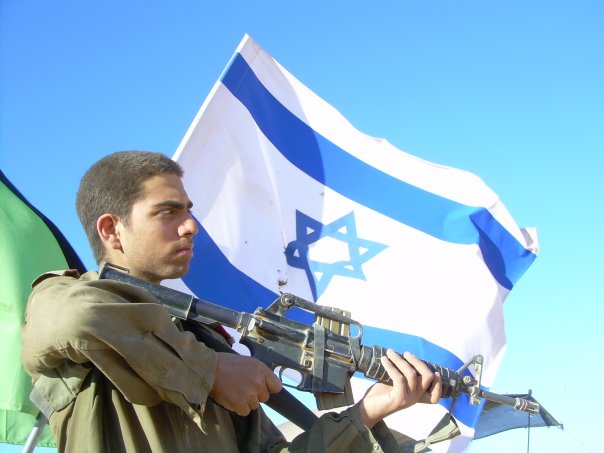

 Posts
Posts


