A number of the Jewish festivals are referred to by more than one name. For example, Sukkot is also known by the moniker Chag Ha'Asif, Shmini Atzeret is also referred to as Simchat Torah and Pesach is sometimes called Chag Hamatzot. Similarly, Rosh Hashana is called Yom T'ruah, Yom HaZikaron and Yom HaDin, while Shavuot is known variously as Chag HaBikkurim, Chag HaKatzir and Zman Matan Torateinu.
Each of these names have a different meaning and represent a different aspect of each festival. In a speech I heard last year, Rav Yonah Metzger, the Ashkenazi Chief Rabbi of Israel, suggested that some of these names are linked. While he didn't go through all the names of all the chagim, he took a few examples.
The two names Pesach and Chag Hamatzot, Rav Metzger suggested, are a pair. Pesach refers to Hashem's passing over the houses of the Jews; it is Bnei Yisrael's way of being grateful for Hashem's kindness in overlooking them while killing Egyptians worthy of death. On the other hand, Chag Hamatzot is Hashem's name for the festival and it refers to how God found our actions favourable. (We displayed a desire to leave Egypt swiftly when the time came, to the point whereby we let bread bake on our backs.)
In the same way, two of Sukkot's names can be seen as a pair; Chag Ha'Asif, Festival of the Collecting (of the harvest,) is the one of the names that the Jewish people uses for it - we thank God that we He has given us sustenance. But Hashem has refers to it from a different perspective; His name for the festival is Sukkot, for He recognises the Jewish people's devotion to sitting outside in the Sukkah, often through what can sometimes prove to be rather unpleasant conditions.
And so too we have the names of Chag Shmini Ha'atzeret and Simchat Torah. Shmini means eight, and Atzeret means stopping. Rav Metzger explained that this name can be understood as belonging to Hashem. After seeing the Jews observing Sukkot for seven days, he says to us "today is the eight day - you may stop dwelling in your Sukkot now and dwell inside with me." So that's Hashem's perspective, as it were.
But there's a second name, too: Simchat Torah. This moniker represents a rather different aspect; it represents the side of Bnei Yisrael and shows the Jewish nation's love for Hashem. When we celebrate Simchat Torah, we are thanking Hashem for the greatest gift given - that of the Torah. While we refer to our festivals by their various names without thought, interchangeably even, it is interesting to note how these names dovetail and reciprocate each other's sentiments, despite the differences between them.
From Jerusalem, wishing you all a Chag Sameach!
Wednesday, September 29, 2010


Friday, September 24, 2010
Shabbat Sukkot - שבת סוכות
Although Shabbat Sukkot doesn't seem to have much that separates it from the rest of Sukkot, there is one thing at least upon which we may comment - Megillat Kohelet, one of the five special scrolls we read over the course of the year.
Megillat Kohelet is always read during the festival of Sukkot, but it doesn't quite seem to fit - it's tone is decidedly downbeat and certainly appears to clash with the sentiment echoed in a a song commonly sung, "ושמחת בחגך - V'samachta b'chagecha - and you shall rejoice in your festivals" (Sourced from פרשת ראה: טז:יד).
Two Psukim later in פסוק טז, we read, "שלוש פעמים בשנה... בחג המצות ובחג השבועות ובחג הסוכות - Three times a year... On Chag Hamatzot, Vhag Hashavuot, and Chag HaSukkot..." We are clearly supposed to be happy on our Chagim, we must rejoice on Sukkot. So if we are meant to be happy, how can we read Kohelet, which talks about the "futility" of life?
If we examine the text of the Mussaf Shmonah Esrei we say every day of Chag, we say "ומפני חטאנו גלינו מארצנו, ונתרחקנו מעל אדמתנו - But because of our sins we have been exiled from our land and sent far from our soil." This is certainly no happy statement, and if we pray the we are meant to, these words must surely evoke a certain emotion within us, an emotion rather dissonant with the theme of rejoicing. Again, it seems to clash. How do we resolve such a discrepancy?
Rav Kook answers the question as follows. There are two types of negative feelings in life, one is sadness and one is pain. Pain is a neccessary part of life, as it allows us to realise that something is wrong and to build on it. Sadness on the other hand, is restricting and inhibits us. When we are sad, we can become depressed and caught up in the act of "being sad." Humans tend to wallow in sadness. Sometimes people feel really bad about something, and then compound their feelings by playing a depressing song. That is an example of sadness; it's destructive and a waste of one's time and energy.
Rav Kook argues that we are instructed to be full of happines during our Chagim. We must not allow ourseleves to experience sadness, or any type of negative feeling upon which we cannot build. Pain on the other hand, pain that we wrecked our Bet Hamikdash and consequently been cast into a 2,000 year long exile, is useful. That kind of pain allows us to temper our joy to a degree, and lets us realise that we are still homeless. So too, by reading Kohelet, we understand how all in life is transient. Even the greatest joy passes. Just like the Sukkah booths in which we live during the course of the festival, everything is temporary.
Wallowing in melancholy is not a Jewish quality, it will get us nowhere. Being in touch with that twinge of pain however, is essential for us to build ourselves up.
Shabbat Shalom and a Chag Sameach!
Partially based on a D'var Torah I heard from a dorm-mate of mine (Etan) during my Yeshivat Hakotel days, and added to with thoughts of my own and others found from other sources.
Megillat Kohelet is always read during the festival of Sukkot, but it doesn't quite seem to fit - it's tone is decidedly downbeat and certainly appears to clash with the sentiment echoed in a a song commonly sung, "ושמחת בחגך - V'samachta b'chagecha - and you shall rejoice in your festivals" (Sourced from פרשת ראה: טז:יד).
Two Psukim later in פסוק טז, we read, "שלוש פעמים בשנה... בחג המצות ובחג השבועות ובחג הסוכות - Three times a year... On Chag Hamatzot, Vhag Hashavuot, and Chag HaSukkot..." We are clearly supposed to be happy on our Chagim, we must rejoice on Sukkot. So if we are meant to be happy, how can we read Kohelet, which talks about the "futility" of life?
If we examine the text of the Mussaf Shmonah Esrei we say every day of Chag, we say "ומפני חטאנו גלינו מארצנו, ונתרחקנו מעל אדמתנו - But because of our sins we have been exiled from our land and sent far from our soil." This is certainly no happy statement, and if we pray the we are meant to, these words must surely evoke a certain emotion within us, an emotion rather dissonant with the theme of rejoicing. Again, it seems to clash. How do we resolve such a discrepancy?
Rav Kook answers the question as follows. There are two types of negative feelings in life, one is sadness and one is pain. Pain is a neccessary part of life, as it allows us to realise that something is wrong and to build on it. Sadness on the other hand, is restricting and inhibits us. When we are sad, we can become depressed and caught up in the act of "being sad." Humans tend to wallow in sadness. Sometimes people feel really bad about something, and then compound their feelings by playing a depressing song. That is an example of sadness; it's destructive and a waste of one's time and energy.
Rav Kook argues that we are instructed to be full of happines during our Chagim. We must not allow ourseleves to experience sadness, or any type of negative feeling upon which we cannot build. Pain on the other hand, pain that we wrecked our Bet Hamikdash and consequently been cast into a 2,000 year long exile, is useful. That kind of pain allows us to temper our joy to a degree, and lets us realise that we are still homeless. So too, by reading Kohelet, we understand how all in life is transient. Even the greatest joy passes. Just like the Sukkah booths in which we live during the course of the festival, everything is temporary.
Wallowing in melancholy is not a Jewish quality, it will get us nowhere. Being in touch with that twinge of pain however, is essential for us to build ourselves up.
Shabbat Shalom and a Chag Sameach!
Partially based on a D'var Torah I heard from a dorm-mate of mine (Etan) during my Yeshivat Hakotel days, and added to with thoughts of my own and others found from other sources.
Wednesday, September 22, 2010
Sukkot - סוכות
In my last D'var Torah, I spoke about Yom Kippur and its connection with Rosh Hashanah. Similarly, it is by no coincidence that the festivals of Sukkot and Shmini Atzeret/Simchat Torah (which takes place over one day in Israel but is split over two days in the Diaspora,) fall right next to one another. Upon consideration, it seems a tad strange to be commanded to live in a Sukkah for seven days, and then without a break, without even a day in which to dismantle the Sukkah, we jump right into another festival.
The word Atzeret comes from the Hebrew root עצר, which means stopping. On this day, Jews around the world celebrate finishing the yearly cycle of reading the Torah. But there's a concept in Judaism that seems to directly contradict this term. The concept is that we never stop going; that there's always more work to be done in this world. I'd like to point out that although this idea seems simple, it's very much the opposite of the prevalent custom today. Most people nowadays live a lifestyle that demands hard work so that ultimately, one may take time off. The Jewish concept though, is that up until one's dying day, one remains obligated to perform Mitzot - there's no such thing as time off. There's no such concept as retirement in Judaism - one is obliged to do their best till their dying day.
With this in mind, how can there be a Jewish festival that celebrates the completion of the Torah? The standard answer is cute; that we don't just stop - we start again and read from Parshat B'reishit on the same day. We refuse to wait the normal week to progress to the next Parsha, and instead signal our intent to keep going. This answer certainly proves that though this Torah reading has ended, we don't really stop, but I would like to propose an alternative answer.
A point repeatedly made by various Rabbis over the years is that the number seven in Judaism signifies that which lies in the natural. There are seven notes in the musical scale, seven continents and there are seven days in the week - something that remains remarkably indisputed, despite the fact that there are various calendar systems in use around the world, all agree that there is such a thing as a week and that it has seven days. We also say that there Hashem made seven heavens (hence the expression,) Tefillin are wrapped around the arm seven times and the Menorah in the Bet Hamikdash had seven branches. Additionally, it is said that the world was created with the number seven. The first verse in the Torah deals with the creation of the universe, and contains seven words and twenty-eight letters; a number which happens to divisible by seven!
As such, it is no surprise to say that the seven days of sukkot correspond to the natural world. For seven days we sit outside, exposed to the elements. Therefore, the second Gerer Rebbe writes in his seminal work, the Sfat Emet, that during this time we need the extra defence of the Sukkah. But beyond seven, the number of the physical, of the natural, is the number eight - which is said to represent the spiritual. He explains that the festival of Sukkot is one that "gives life to the whole world." This is alluded to by the fact that we observe Sukkot for an entire week. Similarly, in the times when the Bet Hamikdash stood, 70 bulls were sacrificed - for each of the 70 distinct nations* in the world. Through these sacrifices, the whole world was given nourishment.
On the day after Sukkot we go one level above the physical world and enter into the spiritual domain, so to speak. We call this day Shmini Atzeret, which means the eighth day. After observing Sukkot and giving physical life to the world, we don't waste any time and focus on imbuing the world with the spiritual energy it needs. The question posed at the beginning of this D'var Torah, why Sukkot and Shmini Atzeret are placed next to one another, may now be answered. On Shmini Atzeret, we leave the Sukkot outside because we don't need the protection it affords. That protection is only needed by someone living a physical, natural lifestyle. We learn that Sukkot and Shmini Atzeret have to be placed next to one another to show that when one lives life fully and spiritually, one moves beyond the need for such external protection.
Wishing you a Shabbat Shalom and a pleasant Sukkah experience :)
*There is a Torah concept that there are 70 nations in the world. Although there are over 190 countries in existence today, many of these share roots and originate from one people. As such, it's not so absurd to refer the world in terms of "70 nations".
The word Atzeret comes from the Hebrew root עצר, which means stopping. On this day, Jews around the world celebrate finishing the yearly cycle of reading the Torah. But there's a concept in Judaism that seems to directly contradict this term. The concept is that we never stop going; that there's always more work to be done in this world. I'd like to point out that although this idea seems simple, it's very much the opposite of the prevalent custom today. Most people nowadays live a lifestyle that demands hard work so that ultimately, one may take time off. The Jewish concept though, is that up until one's dying day, one remains obligated to perform Mitzot - there's no such thing as time off. There's no such concept as retirement in Judaism - one is obliged to do their best till their dying day.
With this in mind, how can there be a Jewish festival that celebrates the completion of the Torah? The standard answer is cute; that we don't just stop - we start again and read from Parshat B'reishit on the same day. We refuse to wait the normal week to progress to the next Parsha, and instead signal our intent to keep going. This answer certainly proves that though this Torah reading has ended, we don't really stop, but I would like to propose an alternative answer.
A point repeatedly made by various Rabbis over the years is that the number seven in Judaism signifies that which lies in the natural. There are seven notes in the musical scale, seven continents and there are seven days in the week - something that remains remarkably indisputed, despite the fact that there are various calendar systems in use around the world, all agree that there is such a thing as a week and that it has seven days. We also say that there Hashem made seven heavens (hence the expression,) Tefillin are wrapped around the arm seven times and the Menorah in the Bet Hamikdash had seven branches. Additionally, it is said that the world was created with the number seven. The first verse in the Torah deals with the creation of the universe, and contains seven words and twenty-eight letters; a number which happens to divisible by seven!
As such, it is no surprise to say that the seven days of sukkot correspond to the natural world. For seven days we sit outside, exposed to the elements. Therefore, the second Gerer Rebbe writes in his seminal work, the Sfat Emet, that during this time we need the extra defence of the Sukkah. But beyond seven, the number of the physical, of the natural, is the number eight - which is said to represent the spiritual. He explains that the festival of Sukkot is one that "gives life to the whole world." This is alluded to by the fact that we observe Sukkot for an entire week. Similarly, in the times when the Bet Hamikdash stood, 70 bulls were sacrificed - for each of the 70 distinct nations* in the world. Through these sacrifices, the whole world was given nourishment.
On the day after Sukkot we go one level above the physical world and enter into the spiritual domain, so to speak. We call this day Shmini Atzeret, which means the eighth day. After observing Sukkot and giving physical life to the world, we don't waste any time and focus on imbuing the world with the spiritual energy it needs. The question posed at the beginning of this D'var Torah, why Sukkot and Shmini Atzeret are placed next to one another, may now be answered. On Shmini Atzeret, we leave the Sukkot outside because we don't need the protection it affords. That protection is only needed by someone living a physical, natural lifestyle. We learn that Sukkot and Shmini Atzeret have to be placed next to one another to show that when one lives life fully and spiritually, one moves beyond the need for such external protection.
Wishing you a Shabbat Shalom and a pleasant Sukkah experience :)
*There is a Torah concept that there are 70 nations in the world. Although there are over 190 countries in existence today, many of these share roots and originate from one people. As such, it's not so absurd to refer the world in terms of "70 nations".
Friday, September 17, 2010
Yom Kippur - יום כפור
The topic of sound and its place in Judaism is one that I have covered from time to time in my Divrei Torah. Once again, I would like to refer to it in order for us to make more sense of Yom Kippur.
In Judaism, a basic concept in emunah (faith), is that one retains the capacity to listen. For this reason, the most basic sentence that encapsulates the essence of what it is to be Jewish begins with the word שמע, meaning "listen!" By way of contrast, the reigning school of thought in Western society today is one that clashes with this perspective - we are not expected to believe in anything unless it is 100% provable. Judaism requires the patience to listen and piece things together for ourselves, but the modern man all too often finds it hard to listen at all. We are busy, immersed in a hundred different things. We are restless and want things given to us on a plate. Consequently it shouldn't really be much of a surprise that we are often unable to tune into the "קול דממה הדקה" - that silent, still voice inside of each of us.
In a well-noted passage found at the end of Mishnah Masechet Yuma, we read that "אמר רבי עקיבה, אשריכם ישראל, לפני מי אתם מיטהרין ומי מטהר אתכם--אביכם שבשמיים - Rabbi Akiva says: Happy are you, Israel: For before whom are you purified, and who makes you purified? Your father in heaven... "
Upon close examination, we may note that two types of purification, separated by a subtle difference, are hinted at here. First we come across a more passive form of purification, as the verse asks, "before whom are you purified?" Then we come to a more active form: "And who makes you purified?" The distinction is a deep one and could be elaborated upon at length in its own right, but for the purposes of this D'var Torah, it is enough to know that two types of spiritual purification exist; one active and one passive.
On Rosh Hashanah, over 100 hundred blasts of the Shofar are sounded in most synagogues. Thus, the process of teshuvah starts in earnest. But for all its obvious grandeur and clear power, the shofar reduces our role to an almost passive one. On Yom Kippur, though, we hear no shofar blasts at all - at least, not until right at the very end. I think that there is a very deep lesson here. On Yom Kippur, we need no artificial stimulation from tools like the shofar. On Yom Kippur, we raise ourselves to a higher level, the level of angels, and so instead of relying on the voice of the shofar, we are able to listen to our own inner voices.
As such, I believe that it is no coincidence, that we are "treated" to one last shofar blast, right at the end of Yom Kippur. After all our activity in reaching the level whereby we are able to hear our own inner voices, we may then realise that the shofar blasts of Rosh Hashanah and then the almost total absence of these blasts on Yom Kippur were not antithetical to one another at all. On the contrary, on Yom Kippur, we finally reach the level where we hear our own voices, our own inner shofar blasts, and we hear how they were connected all along. And once we have reached that level, right at the end of the process of spiritual purification, when we hear that final shofar blast, we hear not only an artificial stimulus, but also our own voices at the same time.
Wishing you, and all of Am Yisrael, a good Yom Kippur. May you have a meaningful fast and all your prayers be answered in the only the best way possible.
---
Collected and adapted from essays by Rav Moshe Dov Kasper, Rav Yaakov Ariel and augmented with some thoughts of my own.
In Judaism, a basic concept in emunah (faith), is that one retains the capacity to listen. For this reason, the most basic sentence that encapsulates the essence of what it is to be Jewish begins with the word שמע, meaning "listen!" By way of contrast, the reigning school of thought in Western society today is one that clashes with this perspective - we are not expected to believe in anything unless it is 100% provable. Judaism requires the patience to listen and piece things together for ourselves, but the modern man all too often finds it hard to listen at all. We are busy, immersed in a hundred different things. We are restless and want things given to us on a plate. Consequently it shouldn't really be much of a surprise that we are often unable to tune into the "קול דממה הדקה" - that silent, still voice inside of each of us.
In a well-noted passage found at the end of Mishnah Masechet Yuma, we read that "אמר רבי עקיבה, אשריכם ישראל, לפני מי אתם מיטהרין ומי מטהר אתכם--אביכם שבשמיים - Rabbi Akiva says: Happy are you, Israel: For before whom are you purified, and who makes you purified? Your father in heaven... "
Upon close examination, we may note that two types of purification, separated by a subtle difference, are hinted at here. First we come across a more passive form of purification, as the verse asks, "before whom are you purified?" Then we come to a more active form: "And who makes you purified?" The distinction is a deep one and could be elaborated upon at length in its own right, but for the purposes of this D'var Torah, it is enough to know that two types of spiritual purification exist; one active and one passive.
On Rosh Hashanah, over 100 hundred blasts of the Shofar are sounded in most synagogues. Thus, the process of teshuvah starts in earnest. But for all its obvious grandeur and clear power, the shofar reduces our role to an almost passive one. On Yom Kippur, though, we hear no shofar blasts at all - at least, not until right at the very end. I think that there is a very deep lesson here. On Yom Kippur, we need no artificial stimulation from tools like the shofar. On Yom Kippur, we raise ourselves to a higher level, the level of angels, and so instead of relying on the voice of the shofar, we are able to listen to our own inner voices.
As such, I believe that it is no coincidence, that we are "treated" to one last shofar blast, right at the end of Yom Kippur. After all our activity in reaching the level whereby we are able to hear our own inner voices, we may then realise that the shofar blasts of Rosh Hashanah and then the almost total absence of these blasts on Yom Kippur were not antithetical to one another at all. On the contrary, on Yom Kippur, we finally reach the level where we hear our own voices, our own inner shofar blasts, and we hear how they were connected all along. And once we have reached that level, right at the end of the process of spiritual purification, when we hear that final shofar blast, we hear not only an artificial stimulus, but also our own voices at the same time.
Wishing you, and all of Am Yisrael, a good Yom Kippur. May you have a meaningful fast and all your prayers be answered in the only the best way possible.
---
Collected and adapted from essays by Rav Moshe Dov Kasper, Rav Yaakov Ariel and augmented with some thoughts of my own.
Yom Kippur - A quick insight on Avinu Malkeinu
I saw this posted last year on the Elder of Ziyon blog. Interesting stuff.
~~~~~~~~~
For those who read Hebrew, here's something I wasn't aware of - a comparison between the text of Avinu Malkeinu and the weekday Shmoneh Esrei, from here:
~~~~~~~~~
For those who read Hebrew, here's something I wasn't aware of - a comparison between the text of Avinu Malkeinu and the weekday Shmoneh Esrei, from here:
הקבלה לשמונה עשרה
אבינו מלכנו מקביל לשמונה עשרה ברכות העמידה ביום חול:
"אבינו מלכנו חננו ועננו" כנגד "חונן הדעת".
"אבינו מלכנו החזירנו בתשובה" כנגד "הרוצה בתשובה".
"אבינו מלכנו סלח ומחל" כנגד "סלח לנו".
"אבינו מלכנו כתבנו בספר גאולה" כנגד "גואל ישראל".
"אבינו מלכנו שלח רפואה" כנגד "רפאנו".
"אבינו מלכנו חודש עלינו שנה טובה" כנגד "ברך עלינו".
"אבינו מלכנו הרם קרן ישראל" כנגד "תקע בשופר".
"אבינו מלכנו בטל מעלינו" כנגד "השיבה שופטנו וכו' והסר ממנו יגון ואנחה".
"אבינו מלכנו כלה כל צר" כנגד "ולמלשינים וכו' שובר אויבים".
"אבינו מלכנו מחוק ברחמיך הרבים" כנגד "על הצדיקים וכו' יהמו נא רחמיך".
"אבינו מלכנו הרם קרן משיחך" כנגד "את צמח דוד וכו' וקרנו תרים".
"אבינו מלכנו הצמח לנו ישועה" כנגד "מצמיח קרן ישועה".
"אבינו מלכנו שמע קולנו" כנגד "שמע קולנו וכו' "שומע תפילה"
מנהגי מהר"י טירנא, ראש השנה; לבוש סי' תקפ"ד א
G'mar chatima tovah 5771 - גמר חתימה טובה
Wednesday, September 08, 2010
Rosh Hashanah and Parshat Ha'azinu
This year, as you probably know by now, Rosh Hashanah occurs the two days prior to Shabbat. Due to this phenomenon, I will not be able to post my weekly Parsha thought on Thursday or Friday, and am making a dual entry. In many ways, however, this is actually a positive thing; due to the workings of the Jewish calendar system, Parshat Ha'azinu is always in the weeks around Rosh Hashanah. As such, there are many links between the two - one of which I hope to explore in this D'var Torah.
In a much discussed passage in the Talmud, the Gemara in Eiruvin (13b) declares that, "נוח לו לאדם שלא נברא יותר משנברא." Translated (somewhat liberally): "It would have been better for man to have not been created." The reason? The number of 'positive' commandments - those that require action in order to be performed - are outnumbered by 'negative' commandments (which require inactivity and abstinence from specific actions). Therefore, if man had not been created, he would have been able to "fulfil" over half of the Torah's laws just by doing nothing; he would still be able to "perfom" all the negative-based commandments.
However, positive commandments have something over negative commandments. Negative commandments merely require inactivity and withdrawal; for example, one who sleeps for the entire duration of Shabbat is considered as having observed Shabbat to some degree, even though s/he didn't consciously do anything in order to commemorate the day. By way of contrast, positive commandments require phyiscal (and often deliberate) actions - it is hard to imagine a circumstance in which they can be performed without explicitly knowing that they are being done.
What does all this mean for us? The result of all this is the rabbinic dictum: עשה דוחה לא תעשה - Positive commandments are given preference over negative ones. If we don't take care to do them, they will never get done. Over and over again in Judaism, we hear of the two opposing forces that are love of God and fear of God. We are taught that we supposed to both love and fear God, but it is very hard to do both in equal measure. Hopefully here we can shed some light on their relationship and learn something useful for this Rosh Hashanah.
The Ramban attempts to demistify the rule mentioned above by explaining that positive commandments stem from the trait of love for God, while negative commandments are a result of fear of G-d. The difference between love and fear is best understood by considering the relationship children experience with their parents. While a child is young, they only know how to fear their parents. Infants and little children never obey their parents out of love; they obey because they know that they must, or else! But as children grow up, they relationship with their parents change completely. They learn to love their parents, as well. BUt in order to get to that stage, children need to pass through the first stage; they must fear their parents.
So too, we must realise that while love is a very beautiful thing, it needs to have a firm base in reality. It is only when we consider the might and the astonishing, infinite power of God, that we can truly love Him. Without a proper appreciation for God, our love for Him is severely limited. It is clear that the optimal state of affairs for us is to act out of love for God.
With this in mind, we can now return to our relationship with God. It is clear that acting and relating to God with love is very important. But no less important is understanding how important it is for us to treat God with proper respect; for us to realise that His might and power are more than we can ever hope to comprehend. The Torah says at the end of Parshat Ha'azinu:
וַיֹּאמֶר אֲלֵהֶם, שִׂימוּ לְבַבְכֶם, לְכָל-הַדְּבָרִים, אֲשֶׁר אָנֹכִי מֵעִיד בָּכֶם הַיּוֹם: אֲשֶׁר תְּצַוֻּם, אֶת-בְּנֵיכֶם, לִשְׁמֹר לַעֲשׂוֹת, אֶת-כָּל-דִּבְרֵי הַתּוֹרָה הַזֹּאת. כִּי לֹא-דָבָר רֵק הוּא, מִכֶּם--כִּי-הוּא, חַיֵּיכֶם; וּבַדָּבָר הַזֶּה, תַּאֲרִיכוּ יָמִים עַל-הָאֲדָמָה, אֲשֶׁר אַתֶּם עֹבְרִים אֶת-הַיַּרְדֵּן שָׁמָּה, לְרִשְׁתָּהּ. - He said to them: 'Set your hearts upon all the words that I testify against you this day; and with which you may command your children to guard; to do all the words of this law. For it is no vain thing for you; because it is your life, and through this thing you shall prolong your days upon the land; you pass over the Jordan to there, to possess it.' (Deuteronomy 32: 46-47)
Note that the Torah describes our acceptance and observance of Torah law as the essence of our life. We have heard this kind of language before, notably last week, when it is claimed in Parshat Nitzavim, "וּבָחַרְתָּ, בַּחַיִּים--לְמַעַן תִּחְיֶה, אַתָּה וְזַרְעֶךָ. לְאַהֲבָה אֶת-יְהוָה אֱלֹהֶיךָ... - You choose life, that you may live; you and your seed. To love Hashem your God..." (Deuteronomy 30:19-20). Here, the call to chose life is deliberately placed next to the command to love God. Clearly, love for God is very important... but how can we resolve this with the seemingly greater importance attributed to fear of God?
I think that the answer can be drawn from the puzzle posed at the beginning of the D'var Torah. The Talmud concludes that it would have been better for man to have not been created at all. But that was not all that was concluded. Chazal went on to say that seeing as God did see fit to bring mankind into existence, we now are best served by following the rules of the Torah. As such, although we most certainly do need to aspire to the heights of love for Hashem, we must first learn how to fear Him properly. Over Rosh Hashanah, a lot of our energy goes into expressing realisation of our own lowly status. We spend much of our time concentrating on building up our Yirat Shamayim, our fear of God. But we should remember that this is part of a two-step process. God does not want us to act purely out of fear. Then we would be automatons. Instead, over Rosh Hashanah, we are to draw a direct line between these two seemingly competing aspects of our relationship to God. Only by connecting them together can we then achieve the right attitude and relationship.
Adapted from an essay by Rav Elazar Hager.
Wishing you all a very happy Rosh Hashanah and a restful Shabbat.
In a much discussed passage in the Talmud, the Gemara in Eiruvin (13b) declares that, "נוח לו לאדם שלא נברא יותר משנברא." Translated (somewhat liberally): "It would have been better for man to have not been created." The reason? The number of 'positive' commandments - those that require action in order to be performed - are outnumbered by 'negative' commandments (which require inactivity and abstinence from specific actions). Therefore, if man had not been created, he would have been able to "fulfil" over half of the Torah's laws just by doing nothing; he would still be able to "perfom" all the negative-based commandments.
However, positive commandments have something over negative commandments. Negative commandments merely require inactivity and withdrawal; for example, one who sleeps for the entire duration of Shabbat is considered as having observed Shabbat to some degree, even though s/he didn't consciously do anything in order to commemorate the day. By way of contrast, positive commandments require phyiscal (and often deliberate) actions - it is hard to imagine a circumstance in which they can be performed without explicitly knowing that they are being done.
What does all this mean for us? The result of all this is the rabbinic dictum: עשה דוחה לא תעשה - Positive commandments are given preference over negative ones. If we don't take care to do them, they will never get done. Over and over again in Judaism, we hear of the two opposing forces that are love of God and fear of God. We are taught that we supposed to both love and fear God, but it is very hard to do both in equal measure. Hopefully here we can shed some light on their relationship and learn something useful for this Rosh Hashanah.
The Ramban attempts to demistify the rule mentioned above by explaining that positive commandments stem from the trait of love for God, while negative commandments are a result of fear of G-d. The difference between love and fear is best understood by considering the relationship children experience with their parents. While a child is young, they only know how to fear their parents. Infants and little children never obey their parents out of love; they obey because they know that they must, or else! But as children grow up, they relationship with their parents change completely. They learn to love their parents, as well. BUt in order to get to that stage, children need to pass through the first stage; they must fear their parents.
So too, we must realise that while love is a very beautiful thing, it needs to have a firm base in reality. It is only when we consider the might and the astonishing, infinite power of God, that we can truly love Him. Without a proper appreciation for God, our love for Him is severely limited. It is clear that the optimal state of affairs for us is to act out of love for God.
With this in mind, we can now return to our relationship with God. It is clear that acting and relating to God with love is very important. But no less important is understanding how important it is for us to treat God with proper respect; for us to realise that His might and power are more than we can ever hope to comprehend. The Torah says at the end of Parshat Ha'azinu:
וַיֹּאמֶר אֲלֵהֶם, שִׂימוּ לְבַבְכֶם, לְכָל-הַדְּבָרִים, אֲשֶׁר אָנֹכִי מֵעִיד בָּכֶם הַיּוֹם: אֲשֶׁר תְּצַוֻּם, אֶת-בְּנֵיכֶם, לִשְׁמֹר לַעֲשׂוֹת, אֶת-כָּל-דִּבְרֵי הַתּוֹרָה הַזֹּאת. כִּי לֹא-דָבָר רֵק הוּא, מִכֶּם--כִּי-הוּא, חַיֵּיכֶם; וּבַדָּבָר הַזֶּה, תַּאֲרִיכוּ יָמִים עַל-הָאֲדָמָה, אֲשֶׁר אַתֶּם עֹבְרִים אֶת-הַיַּרְדֵּן שָׁמָּה, לְרִשְׁתָּהּ. - He said to them: 'Set your hearts upon all the words that I testify against you this day; and with which you may command your children to guard; to do all the words of this law. For it is no vain thing for you; because it is your life, and through this thing you shall prolong your days upon the land; you pass over the Jordan to there, to possess it.' (Deuteronomy 32: 46-47)
Note that the Torah describes our acceptance and observance of Torah law as the essence of our life. We have heard this kind of language before, notably last week, when it is claimed in Parshat Nitzavim, "וּבָחַרְתָּ, בַּחַיִּים--לְמַעַן תִּחְיֶה, אַתָּה וְזַרְעֶךָ. לְאַהֲבָה אֶת-יְהוָה אֱלֹהֶיךָ... - You choose life, that you may live; you and your seed. To love Hashem your God..." (Deuteronomy 30:19-20). Here, the call to chose life is deliberately placed next to the command to love God. Clearly, love for God is very important... but how can we resolve this with the seemingly greater importance attributed to fear of God?
I think that the answer can be drawn from the puzzle posed at the beginning of the D'var Torah. The Talmud concludes that it would have been better for man to have not been created at all. But that was not all that was concluded. Chazal went on to say that seeing as God did see fit to bring mankind into existence, we now are best served by following the rules of the Torah. As such, although we most certainly do need to aspire to the heights of love for Hashem, we must first learn how to fear Him properly. Over Rosh Hashanah, a lot of our energy goes into expressing realisation of our own lowly status. We spend much of our time concentrating on building up our Yirat Shamayim, our fear of God. But we should remember that this is part of a two-step process. God does not want us to act purely out of fear. Then we would be automatons. Instead, over Rosh Hashanah, we are to draw a direct line between these two seemingly competing aspects of our relationship to God. Only by connecting them together can we then achieve the right attitude and relationship.
Adapted from an essay by Rav Elazar Hager.
Wishing you all a very happy Rosh Hashanah and a restful Shabbat.
Friday, September 03, 2010
Parshiot Nitzavim and Vayelech / פרשיות נצבים-וילך
"אַתֶּם נִצָּבִים הַיּוֹם כֻּלְּכֶם, לִפְנֵי יְהוָה אֱלֹהֵיכֶם: רָאשֵׁיכֶם שִׁבְטֵיכֶם, זִקְנֵיכֶם וְשֹׁטְרֵיכֶם, כֹּל, אִישׁ יִשְׂרָאֵל. טַפְּכֶם נְשֵׁיכֶם--וְגֵרְךָ, אֲשֶׁר בְּקֶרֶב מַחֲנֶיךָ: מֵחֹטֵב עֵצֶיךָ, עַד שֹׁאֵב מֵימֶיךָ."
"You are standing today, all of you, before Hashem your God: your heads, your tribes, your elders, and your officers, all the men of Israel; Your infants, your wives, and your stranger that is in the midst of your camp, from the hewer of your wood to the drawer of your water."
(Deuteronomy, 29: 9-10)
This week we read two Parshiot - Nitzavim and Vayelech. Parshat Nitzavim details the end of Moshe's lengthy speech; a speech that spans a good few weeks' readings.
At first glance, the opening words of the first of this week's two parshiot, quoted above, seem straightforward and formulaic enough. The Ohr HaChayaim notes something interesting, however. Drawing on the word kulchem, (all of you) he asks why is it that we then have a list of who all these people are? Surely the phrasing before was enough?
The answer the Ohr HaChayim gives is simple, but has deep ramifications for us, especially at this time of year. It is imperative for us to understand that although we are being judged individually, we are also judged as a unit. As Jews, we have a collective responsibilty. If we look at the list, we see that infants, women and strangers are all listed here. Typically, we regard these groupings of people as ones that are obligated to a lesser extent, if at all, to fulfill the mitzvot of the Torah. But here, these groups are mentioned in order to make a clear point about responsibility - no one is excluded.
I was listening to a recording to a shiur by Rebbetzin Heller earlier this week, and she mentioned something that many of us know in our heart of hearts; contemporary judicial systems are totally corrupt. When judging in accordance with Torah law, it is forbidden to judge the person; one must judge only the deed. This sounds obvious, but this concept is not shared in America, England, even here in Israel. Modern law systems refuse to judge the deed alone; they judge the person.
By way of comparison, Torah law dictates that we do not pay attention to personal circumstances; a crime is a crime. (Of course, we find ways to be lenient, but that's something else.) We are forbidden from dealing at the person; there's only dealing at the reality of the facts of the case. All else is extraneous.
Judaism forbids judges from looking at personal circumstance for a very good reason; if it is allowed, law becomes wholly subjective and relativistic. Compare this approach to common law systems and we see that they belie an assumption that we have no right to judge. By backing away from making harsh judgments when necessary, law is not properly upheld. The effect of this is to make law totally subjective.
Coming back to the quote at the beginning of the parsha, I would like to connect the two ideas. There may be instances in life when we are not obliged to act in a certain way, or are required to fulfill certain mitzvot, as is the case with the infants, women and strangers. Nevertheless, despite the supposedly extenuating circumstances, we are never absolved of our responsibilty toward others. The point is an exceptionally powerfui one; even when personally relieved of duties, we are fully responsible for enabling others to do theirs. If other people fail in their goals, we have to ask ourselves why we didn't do more to help them.
Based on a shiur given by Rav Ari Heller of Yeshivat Hakotel.
Wishing you a Shabbat Shalom.
"You are standing today, all of you, before Hashem your God: your heads, your tribes, your elders, and your officers, all the men of Israel; Your infants, your wives, and your stranger that is in the midst of your camp, from the hewer of your wood to the drawer of your water."
(Deuteronomy, 29: 9-10)
This week we read two Parshiot - Nitzavim and Vayelech. Parshat Nitzavim details the end of Moshe's lengthy speech; a speech that spans a good few weeks' readings.
At first glance, the opening words of the first of this week's two parshiot, quoted above, seem straightforward and formulaic enough. The Ohr HaChayaim notes something interesting, however. Drawing on the word kulchem, (all of you) he asks why is it that we then have a list of who all these people are? Surely the phrasing before was enough?
The answer the Ohr HaChayim gives is simple, but has deep ramifications for us, especially at this time of year. It is imperative for us to understand that although we are being judged individually, we are also judged as a unit. As Jews, we have a collective responsibilty. If we look at the list, we see that infants, women and strangers are all listed here. Typically, we regard these groupings of people as ones that are obligated to a lesser extent, if at all, to fulfill the mitzvot of the Torah. But here, these groups are mentioned in order to make a clear point about responsibility - no one is excluded.
I was listening to a recording to a shiur by Rebbetzin Heller earlier this week, and she mentioned something that many of us know in our heart of hearts; contemporary judicial systems are totally corrupt. When judging in accordance with Torah law, it is forbidden to judge the person; one must judge only the deed. This sounds obvious, but this concept is not shared in America, England, even here in Israel. Modern law systems refuse to judge the deed alone; they judge the person.
By way of comparison, Torah law dictates that we do not pay attention to personal circumstances; a crime is a crime. (Of course, we find ways to be lenient, but that's something else.) We are forbidden from dealing at the person; there's only dealing at the reality of the facts of the case. All else is extraneous.
Judaism forbids judges from looking at personal circumstance for a very good reason; if it is allowed, law becomes wholly subjective and relativistic. Compare this approach to common law systems and we see that they belie an assumption that we have no right to judge. By backing away from making harsh judgments when necessary, law is not properly upheld. The effect of this is to make law totally subjective.
Coming back to the quote at the beginning of the parsha, I would like to connect the two ideas. There may be instances in life when we are not obliged to act in a certain way, or are required to fulfill certain mitzvot, as is the case with the infants, women and strangers. Nevertheless, despite the supposedly extenuating circumstances, we are never absolved of our responsibilty toward others. The point is an exceptionally powerfui one; even when personally relieved of duties, we are fully responsible for enabling others to do theirs. If other people fail in their goals, we have to ask ourselves why we didn't do more to help them.
Based on a shiur given by Rav Ari Heller of Yeshivat Hakotel.
Wishing you a Shabbat Shalom.
Thursday, August 26, 2010
Parshat Ki Tavo - פרשת כי תבוא
"וענית ואמרת לפני ה' אלקיך ארמי אבד אבי וירד מצרימה / And you shall respond and say before Hashem your God, 'An Aramean [tried to] destroy my [fore]father and he went down into Egypt...' "(דברים כו:ה)
At the beginning of this week's Parsha, we read of the mitzva of Bikkurim. The Torah explains that one who settles the land of Israel and grows one of the "Shivat haMinim" (seven selected species of fruit and grain) is obligated to take a ribbon around the first fruit that grows from the land, mark it off as property of the Bet Hamikdash, and once the fruit has ripened fully, the person is to take this fruit to Jerusalem and hand it over to a Kohen.
Part of the process of giving Bikkurim over to the Kohen is a statment, which opens above. At first, the choice of the opening few lines seems rather surprising; what has the old story of Am Yisrael's descent into Egypt got to do with the bringing of fruit to the Bet Hamikdash?
To understand our situation better, we have to examine Jewish behaviour during the Egyptian exile. Famously, we learn that B'nei Yisrael were on the forty-ninth level of impurity and were only moments away from descending into the 50th level; a level from which there could be no return. There can be no doubt about it - Am Yisrael were in a very bad place.
Or can we doubt that? For Am Yisrael warranted to be saved by Hashem on the premise that they insulated themselves from Egyptian society, and Sh'mot Rabbah (א:א) says that "they were redeemed because they did not change their names, their language and their dress." So now it would seem that Am Yisrael were very careful to protect their religion and culture and did not integrate and assimilate into a foreign society. How can resolve this apparent contradiction?
The Netivot Shalom on Parshat Ki Teitze explains that these Jews were actually almost completely cut off from Hashem. These Jews constantly indulged themselves in pleasures and desires that were not expressly disallowed by Torah law. So needy of material pleasure, these people were indeed culturally assimilated and had started to believe in the Egyptian way of life. Because these Jews maintained their outer appearances but indulged themselves in whatever was technically permissable, their connection with Hashem was almost entirely lacking.
Rabbi Eliyahu Hoffman suggests that maybe the reason why we read this passage when we bring Bikkurim is to do with the concept of "קדש עצמך במותר לך" (Sanctify yourself with that which is permissable to you). The generation that lived in the Egyptian exile didn't actually break any laws, but certainly weren't too eager too apply the concept of being holy in that which is permissable. Fast forward to the person standing before the Kohen with Bikkurim in his hand, and we may now understand why it is appropriate for him to make reference to his forebears in Egypt. Whereas they fulfilled their obligations to a minimal extent, the Jew who brings Bikurrim is eager to subjugate his pride and ego before God.
Later in the Parsha, a long list of punishments is attached to the statement, "תחת אשר לא עבדת את ה' אלוקיך בשמחה / Because you did not serve Hashem your God with joy." The Torah is very clear that the measurement of real observance of its laws is when a Jew confirms his actions with desire. Whereas food is something that Jews are permitted to grow and eat, the Jew who brings Bikkurim is careful not to give in to his desires and controls his behaviour in the right way and before eating first makes sure to take the Reishit to Hashem.
Wishing you a Shabbat Shalom!
At the beginning of this week's Parsha, we read of the mitzva of Bikkurim. The Torah explains that one who settles the land of Israel and grows one of the "Shivat haMinim" (seven selected species of fruit and grain) is obligated to take a ribbon around the first fruit that grows from the land, mark it off as property of the Bet Hamikdash, and once the fruit has ripened fully, the person is to take this fruit to Jerusalem and hand it over to a Kohen.
Part of the process of giving Bikkurim over to the Kohen is a statment, which opens above. At first, the choice of the opening few lines seems rather surprising; what has the old story of Am Yisrael's descent into Egypt got to do with the bringing of fruit to the Bet Hamikdash?
To understand our situation better, we have to examine Jewish behaviour during the Egyptian exile. Famously, we learn that B'nei Yisrael were on the forty-ninth level of impurity and were only moments away from descending into the 50th level; a level from which there could be no return. There can be no doubt about it - Am Yisrael were in a very bad place.
Or can we doubt that? For Am Yisrael warranted to be saved by Hashem on the premise that they insulated themselves from Egyptian society, and Sh'mot Rabbah (א:א) says that "they were redeemed because they did not change their names, their language and their dress." So now it would seem that Am Yisrael were very careful to protect their religion and culture and did not integrate and assimilate into a foreign society. How can resolve this apparent contradiction?
The Netivot Shalom on Parshat Ki Teitze explains that these Jews were actually almost completely cut off from Hashem. These Jews constantly indulged themselves in pleasures and desires that were not expressly disallowed by Torah law. So needy of material pleasure, these people were indeed culturally assimilated and had started to believe in the Egyptian way of life. Because these Jews maintained their outer appearances but indulged themselves in whatever was technically permissable, their connection with Hashem was almost entirely lacking.
Rabbi Eliyahu Hoffman suggests that maybe the reason why we read this passage when we bring Bikkurim is to do with the concept of "קדש עצמך במותר לך" (Sanctify yourself with that which is permissable to you). The generation that lived in the Egyptian exile didn't actually break any laws, but certainly weren't too eager too apply the concept of being holy in that which is permissable. Fast forward to the person standing before the Kohen with Bikkurim in his hand, and we may now understand why it is appropriate for him to make reference to his forebears in Egypt. Whereas they fulfilled their obligations to a minimal extent, the Jew who brings Bikurrim is eager to subjugate his pride and ego before God.
Later in the Parsha, a long list of punishments is attached to the statement, "תחת אשר לא עבדת את ה' אלוקיך בשמחה / Because you did not serve Hashem your God with joy." The Torah is very clear that the measurement of real observance of its laws is when a Jew confirms his actions with desire. Whereas food is something that Jews are permitted to grow and eat, the Jew who brings Bikkurim is careful not to give in to his desires and controls his behaviour in the right way and before eating first makes sure to take the Reishit to Hashem.
Wishing you a Shabbat Shalom!
Friday, August 20, 2010
Parshat Ki Tetzei - פרשת כי תצא
"כִּי-יִהְיֶה לְאִישׁ, בֵּן סוֹרֵר וּמוֹרֶה-אֵינֶנּוּ שֹׁמֵעַ, בְּקוֹל אָבִיו וּבְקוֹל אִמּוֹ; וְיִסְּרוּ אֹתוֹ, וְלֹא יִשְׁמַע אֲלֵיהֶם. If a man have a stubborn and rebellious son, that will not hearken to the voice of his father, or the voice of his mother, and though they chasten him, will not hearken unto them" (Deuteronomy 21:18).
In this week's parsha, we read of the strange episode of the ben sorer u'moreh. Although there never was a case in reality that fulfilled the exact conditions in order for a child to be classified as such, there are still many lessons which we may learn. I'd like to share a fascinating insight I read by the Ba'al Haturim.
Two P'sukim after the one above, we read of how the the parents go to the city elders to declare their son a Ben Sorer u'Moreh: "וְאָמְרוּ אֶל זִקְנֵי עִירוֹ בְּנֵנוּ זֶה סוֹרֵר וּמֹרֶה אֵינֶנּוּ שֹׁמֵעַ בְּקֹלֵנוּ זוֹלֵל וְסֹבֵא / And they shall say to the elders of his city, 'This our son is stubborn and rebellious, he doth not hearken to our voice; he is a glutton, and a drunkard.'"
The Ba'al HaTurim notes two discrepancies in this Pasuk. Firstly, there is a yud missing in the word בְּנֵנוּ, and then the word וּמֹרֶה is missing a letter too; this time a vav.
Fortunately for us, we receive a good explanation as to why these words are spelled as they are. In the first case, the missing yud in the word בְּנֵנוּ, our son, is a deliberate reference to the Aseret Hadibrot, the Ten Commandments. The Ba'al HaTurim briefly explains that that this son was wayward to the extent that he didn't care about the most basic tenets of Judaism, wayward to the extent that he even disregarded the ten commandments.
The next missing letter, the (missing) vav in the word מרה, stubborn, is explained as a reference to the bitter end of this situation. The word מרה in Hebrew means bitter. By dropping the vav, the Torah hints that this stubborn and gluttonous boy will only experience bitterness.
If we break up the verse and digest it in pieces, we see that the son doesn't listen to "the voice of his father". Then, separately, his mother's voice is mentioned: "and the voice of his mother." The pasuk uses discrete clauses for each of the parents, and only groups them together when the son hears them speaking in unison. And the one thing that the parents agree upon is negative, as it says "they turned him away."
It is very clear that the lesson to be grasped here is that parents must always act as a unit, and not just when it comes to condemning a child. A child who hears disparate voices from his parents hardly has a chance at growing up to become a decent person, and we can hardly blame him or her. The real lesson of the episode, it would seem, is to show us just how much responsibility we have for one another, and for each others' actions.
Wishing you a שבת שלום ומבורך from Yerushalayim Ir Hakodesh.
In this week's parsha, we read of the strange episode of the ben sorer u'moreh. Although there never was a case in reality that fulfilled the exact conditions in order for a child to be classified as such, there are still many lessons which we may learn. I'd like to share a fascinating insight I read by the Ba'al Haturim.
Two P'sukim after the one above, we read of how the the parents go to the city elders to declare their son a Ben Sorer u'Moreh: "וְאָמְרוּ אֶל זִקְנֵי עִירוֹ בְּנֵנוּ זֶה סוֹרֵר וּמֹרֶה אֵינֶנּוּ שֹׁמֵעַ בְּקֹלֵנוּ זוֹלֵל וְסֹבֵא / And they shall say to the elders of his city, 'This our son is stubborn and rebellious, he doth not hearken to our voice; he is a glutton, and a drunkard.'"
The Ba'al HaTurim notes two discrepancies in this Pasuk. Firstly, there is a yud missing in the word בְּנֵנוּ, and then the word וּמֹרֶה is missing a letter too; this time a vav.
Fortunately for us, we receive a good explanation as to why these words are spelled as they are. In the first case, the missing yud in the word בְּנֵנוּ, our son, is a deliberate reference to the Aseret Hadibrot, the Ten Commandments. The Ba'al HaTurim briefly explains that that this son was wayward to the extent that he didn't care about the most basic tenets of Judaism, wayward to the extent that he even disregarded the ten commandments.
The next missing letter, the (missing) vav in the word מרה, stubborn, is explained as a reference to the bitter end of this situation. The word מרה in Hebrew means bitter. By dropping the vav, the Torah hints that this stubborn and gluttonous boy will only experience bitterness.
If we break up the verse and digest it in pieces, we see that the son doesn't listen to "the voice of his father". Then, separately, his mother's voice is mentioned: "and the voice of his mother." The pasuk uses discrete clauses for each of the parents, and only groups them together when the son hears them speaking in unison. And the one thing that the parents agree upon is negative, as it says "they turned him away."
It is very clear that the lesson to be grasped here is that parents must always act as a unit, and not just when it comes to condemning a child. A child who hears disparate voices from his parents hardly has a chance at growing up to become a decent person, and we can hardly blame him or her. The real lesson of the episode, it would seem, is to show us just how much responsibility we have for one another, and for each others' actions.
Wishing you a שבת שלום ומבורך from Yerushalayim Ir Hakodesh.
Friday, August 13, 2010
Parshat Shoftim - פרשת שופטים
...ואמר אלהם שמע ישראל אתם קרבים היום למלחמה על-איביכם
דברים, כ: ג
One of the many things set out in Parshat Shoftim are the rules of war. Famously later we learn that a Jewish army is not permitted to destroy trees, although this is normal military behaviour, and we also learn that a man who desires a captive woman must adhere to a strict set of rules before he may take her as a partner.
Here, at the beginning of this particluar chapter, we learn that Am Yisrael are instructed to gather and listen to the words of the Kohen Gadol, who served to act as the Army's Chief of Staff and prepared the warrior for battle. In "Ma'ayanah shel HaTorah" a small paragraph attributed to "Sefarim" points out that the word Sh'ma, (hear,) is crucial. As I have mentioned in my Divrei Torah a number of times, when the Hebrew word for hearing is used, it also means something that is accepted. Another aspect of hearing is that it is intriniscally linked to collecting. You might ask yourself at this point what do listening and collecting have to do with one another, so I'll try to pass over something I've learned about the faculty of hearing.
When a person sees something, he sees the entire entity at once, and there can be no doubt as to what it is that the person is perceiving. But when that person hears something, they only hear that thing in stages; a piece at a time. If we take music for an example, one never hears a song, but rather hears a note at a time. If you ask someone to pick their favourite song and then ask them whether they like an individual note, they'll look at you as if you're mad - a person likes the song as an entity - not for it's constituent parts! Similarly, when one listens to another person talking, one only hears one word at a time, and by the time one hears one word, the previous word is only a memory. Hearing, by its very definition, is a process of memory, collection, and most importantly, unification.
It is no coincidence that "Sh'ma" is the opening word used in the most famous sentence in Judaism, for when we talk of oneness, of achdut, we talk of listening and bring back together that which is seemingly separate. And here too, when the nation of Israel enters into a war, all the constituent parts must come together, else failure beckons (God forbid).
Wishing you a Shabbat Shalom!
דברים, כ: ג
One of the many things set out in Parshat Shoftim are the rules of war. Famously later we learn that a Jewish army is not permitted to destroy trees, although this is normal military behaviour, and we also learn that a man who desires a captive woman must adhere to a strict set of rules before he may take her as a partner.
Here, at the beginning of this particluar chapter, we learn that Am Yisrael are instructed to gather and listen to the words of the Kohen Gadol, who served to act as the Army's Chief of Staff and prepared the warrior for battle. In "Ma'ayanah shel HaTorah" a small paragraph attributed to "Sefarim" points out that the word Sh'ma, (hear,) is crucial. As I have mentioned in my Divrei Torah a number of times, when the Hebrew word for hearing is used, it also means something that is accepted. Another aspect of hearing is that it is intriniscally linked to collecting. You might ask yourself at this point what do listening and collecting have to do with one another, so I'll try to pass over something I've learned about the faculty of hearing.
When a person sees something, he sees the entire entity at once, and there can be no doubt as to what it is that the person is perceiving. But when that person hears something, they only hear that thing in stages; a piece at a time. If we take music for an example, one never hears a song, but rather hears a note at a time. If you ask someone to pick their favourite song and then ask them whether they like an individual note, they'll look at you as if you're mad - a person likes the song as an entity - not for it's constituent parts! Similarly, when one listens to another person talking, one only hears one word at a time, and by the time one hears one word, the previous word is only a memory. Hearing, by its very definition, is a process of memory, collection, and most importantly, unification.
It is no coincidence that "Sh'ma" is the opening word used in the most famous sentence in Judaism, for when we talk of oneness, of achdut, we talk of listening and bring back together that which is seemingly separate. And here too, when the nation of Israel enters into a war, all the constituent parts must come together, else failure beckons (God forbid).
Wishing you a Shabbat Shalom!
Friday, August 06, 2010
Parshat Re'eh - פרשת ראה
The name of our Torah portion is Re'eh, which means, "See." After the Jewish People entered the Land of Israel, the first place that they stopped at was the City of Shechem. Moshe commands the twelve tribes to split up and stand on two adjacent mountains, הר גריזים and הר עיבל, Mount Grizim and Mount Eval (/Aival), where the "Kohanim" and "Levi'im" would express God's blessing to them if they would fulfill the Torah, and God's curse if they sin.
These mountains, adjacent to each other, are unique. Mount Grizim is alive with foliage and vegetation, while Mount Eval is bleak and desolate. (These mountains can be seen today outside the city of Shechem/Nablus.) Six tribes were commanded to ascend Mount Grizim, to the south of Shechem to receive the blessing, and the remaining six tribes were commanded to ascend Mount Eval, to the north of Shechem to receive the curse.
The blessing and curse are visually apparent on the mountains themselves. Mount Grizim, the mountain of blessing, is green and verdant. Mount Eval, on the other hand, is barren and accursed.
Rabbi Hirsch explains the symbolism of these mountains. Although both mountains have the same sunlight, rainfall, and fertility, one is verdant and the second is bare. In Kabbalah, we learn that these two mountains represent two eyes. Mount Grizim represents the right eye of wisdom, from which emanates pure blessing. Mount Eval represents the left eye of understanding, from which judgments, even severe judgments, may manifest.
This symbolizes the concept of free will that our Parsha begins with: "Behold, I have placed before you today the blessing and the curse." (Deut. 11:26) It is possible for two people to have the same exact potential, while one thrives and the other withers. We all must choose the path of blessing or curse, and what we sow is what we reap.
The fact that six tribes stood on Mount Eval means that there was a positive element to the curse. In Hebrew, the word for "curse" is klalah; kuf, lamed, lamed, hei. The root of the hebrew word for curse, קללה - klalah is kalal - קלל; kuf, lamed, lamed, which means "brilliant, shining light," as in the expression nechoshet kalal, "brilliant copper." At its source, a curse is a brilliant, shining light. This brilliance can be blinding, making it impossible for us to understand and incorporate it into our consciousness. Even though a curse is the result of transgression, it is not a punishment or an expression of Divine revenge, God forbid. Rather, the curse that comes from the Torah is from a very high source, whose purpose is to rectify the souls of those who have transgressed.
Wishing you a beautiful שבת שלום ומבורך
These mountains, adjacent to each other, are unique. Mount Grizim is alive with foliage and vegetation, while Mount Eval is bleak and desolate. (These mountains can be seen today outside the city of Shechem/Nablus.) Six tribes were commanded to ascend Mount Grizim, to the south of Shechem to receive the blessing, and the remaining six tribes were commanded to ascend Mount Eval, to the north of Shechem to receive the curse.
The blessing and curse are visually apparent on the mountains themselves. Mount Grizim, the mountain of blessing, is green and verdant. Mount Eval, on the other hand, is barren and accursed.
Rabbi Hirsch explains the symbolism of these mountains. Although both mountains have the same sunlight, rainfall, and fertility, one is verdant and the second is bare. In Kabbalah, we learn that these two mountains represent two eyes. Mount Grizim represents the right eye of wisdom, from which emanates pure blessing. Mount Eval represents the left eye of understanding, from which judgments, even severe judgments, may manifest.
This symbolizes the concept of free will that our Parsha begins with: "Behold, I have placed before you today the blessing and the curse." (Deut. 11:26) It is possible for two people to have the same exact potential, while one thrives and the other withers. We all must choose the path of blessing or curse, and what we sow is what we reap.
The fact that six tribes stood on Mount Eval means that there was a positive element to the curse. In Hebrew, the word for "curse" is klalah; kuf, lamed, lamed, hei. The root of the hebrew word for curse, קללה - klalah is kalal - קלל; kuf, lamed, lamed, which means "brilliant, shining light," as in the expression nechoshet kalal, "brilliant copper." At its source, a curse is a brilliant, shining light. This brilliance can be blinding, making it impossible for us to understand and incorporate it into our consciousness. Even though a curse is the result of transgression, it is not a punishment or an expression of Divine revenge, God forbid. Rather, the curse that comes from the Torah is from a very high source, whose purpose is to rectify the souls of those who have transgressed.
Wishing you a beautiful שבת שלום ומבורך
Friday, July 30, 2010
Parshat Ekev - פרשת עקב
" הִשָּׁמֶר לְךָ, פֶּן-תִּשְׁכַּח אֶת-יְהוָה אֱלֹהֶיךָ, לְבִלְתִּי שְׁמֹר מִצְוֹתָיו וּמִשְׁפָּטָיו וְחֻקֹּתָיו, אֲשֶׁר אָנֹכִי מְצַוְּךָ הַיּוֹם. - Beware lest you forget Hashem your God, in not keeping His commandments, and His ordinances, and His statutes, that I command you this day."
(דברים ח:יא)
Parshat Ekev is a parsha that is full of mitzvot. One particular one interests us in this Dvar Torah. The verses preceding the quote above detail the commandment to remember the 40 years the Jews sent wandering in the desert. In that time, we were sent the Mon (Manna when rendered in English for some odd reason) - a heaven sent food substitute that was pure spiritual nourishment. The verses there explain that it was food " אֲשֶׁר לֹא-יָדַעְתָּ, וְלֹא יָדְעוּן אֲבֹתֶיךָ - that you did not know, and your forefathers did not know" (i.e. it was totally foreign and bizarre to us) so that we would learn to rely on Hashem and so that we would appreciate our place and role in this world better. Indeed, the narrative goes on to explain "לְמַעַן הוֹדִיעֲךָ, כִּי לֹא עַל-הַלֶּחֶם לְבַדּוֹ יִחְיֶה הָאָדָם--כִּי עַל-כָּל-מוֹצָא פִי-יְהוָה, יִחְיֶה הָאָדָם - in order to let you know; that man does not live by bread alone, but by every thing that issues from Hashem's mouth man lives."
Rav Shimshon Rephael Hirsch writes in his commentary here that there was a reason why bread specifically is mentioned. At first, we might find it odd that that bread is mentioned - bread is a kind of food that requires man's input for it to be completed. One doesn't eat wheat by itself, as it is found in nature. For bread to be eaten, man must work on the wheat. With this in mind, we may understand the reason that bread is mentioned. Almost all people appreciate the wonders of the natural world. Anyone who picks an apple from a tree and eats it will agree with you that it is amazing that something so tasty can be found growing naturally. But a person who works hard on bread might be forgiven for thinking that he is at least an equal partner in the process of creating the food.
For this reason, close to this passage we find the verse quoted above - warning us not to forget Hashem and our responsibilities. There are plenty of commandments in this week's Parsha, but this specific passage merits the warning above. Why is that? Well, Rav Hirsch explains that if we look at the verse closely, we can see three categories מצוות (commandments), משפטים (ordinances/laws) and חוקים (statutes). Now, traditionally we regard the latter two as more severe categories of obligations toward Hashem. That being the case, there must be a good reason as to why מצותיו (His commandments) is listed first. Rav Hirsch posits the explanation that this category deals with the things that we derive enjoyment from in this world. Bread, and food as a general, is something that Hashem gave us to enjoy. It is a strong Jewish belief that everything in this world is created for man to make use of or benefit from.
The problem is, we are only human and susceptible to momentary lapses of appreciation of this fine gift. As such, Hashem makes a point of stressing that while we are to derive benefit from all "that issues from Hashem's mouth", we must be careful to never become lax and take for granted what we have in this world.
This D'var Torah is dedicated for the speedy recovery of יוסף בן חנינה לאה, the brother of a friend of mine. Please take a few seconds to think and/or pray on his behalf. Thank you.
Wishing you a Shabbat Shalom :)
(דברים ח:יא)
Parshat Ekev is a parsha that is full of mitzvot. One particular one interests us in this Dvar Torah. The verses preceding the quote above detail the commandment to remember the 40 years the Jews sent wandering in the desert. In that time, we were sent the Mon (Manna when rendered in English for some odd reason) - a heaven sent food substitute that was pure spiritual nourishment. The verses there explain that it was food " אֲשֶׁר לֹא-יָדַעְתָּ, וְלֹא יָדְעוּן אֲבֹתֶיךָ - that you did not know, and your forefathers did not know" (i.e. it was totally foreign and bizarre to us) so that we would learn to rely on Hashem and so that we would appreciate our place and role in this world better. Indeed, the narrative goes on to explain "לְמַעַן הוֹדִיעֲךָ, כִּי לֹא עַל-הַלֶּחֶם לְבַדּוֹ יִחְיֶה הָאָדָם--כִּי עַל-כָּל-מוֹצָא פִי-יְהוָה, יִחְיֶה הָאָדָם - in order to let you know; that man does not live by bread alone, but by every thing that issues from Hashem's mouth man lives."
Rav Shimshon Rephael Hirsch writes in his commentary here that there was a reason why bread specifically is mentioned. At first, we might find it odd that that bread is mentioned - bread is a kind of food that requires man's input for it to be completed. One doesn't eat wheat by itself, as it is found in nature. For bread to be eaten, man must work on the wheat. With this in mind, we may understand the reason that bread is mentioned. Almost all people appreciate the wonders of the natural world. Anyone who picks an apple from a tree and eats it will agree with you that it is amazing that something so tasty can be found growing naturally. But a person who works hard on bread might be forgiven for thinking that he is at least an equal partner in the process of creating the food.
For this reason, close to this passage we find the verse quoted above - warning us not to forget Hashem and our responsibilities. There are plenty of commandments in this week's Parsha, but this specific passage merits the warning above. Why is that? Well, Rav Hirsch explains that if we look at the verse closely, we can see three categories מצוות (commandments), משפטים (ordinances/laws) and חוקים (statutes). Now, traditionally we regard the latter two as more severe categories of obligations toward Hashem. That being the case, there must be a good reason as to why מצותיו (His commandments) is listed first. Rav Hirsch posits the explanation that this category deals with the things that we derive enjoyment from in this world. Bread, and food as a general, is something that Hashem gave us to enjoy. It is a strong Jewish belief that everything in this world is created for man to make use of or benefit from.
The problem is, we are only human and susceptible to momentary lapses of appreciation of this fine gift. As such, Hashem makes a point of stressing that while we are to derive benefit from all "that issues from Hashem's mouth", we must be careful to never become lax and take for granted what we have in this world.
This D'var Torah is dedicated for the speedy recovery of יוסף בן חנינה לאה, the brother of a friend of mine. Please take a few seconds to think and/or pray on his behalf. Thank you.
Wishing you a Shabbat Shalom :)
Friday, July 23, 2010
Parshat V'etchanan - פרשת ואתחנן
"ואתם הדביקים ביהוה אלוהיכם חיים כלכם היום / And you who cling to Hashem your God, are living today"
(דברים, ד:ד)
Parshat V'etchanan is jam-packed full of events, ranging from Moshe's request to enter Eretz Yisrael to the recounting of the Ten Commandments through part of the text we recite daily in Kriyat Sh'ma. The focus of this D'var Torah though, is on the last Pasuk of the Levi's Aliyah in Rishon, quoted above. The pasuk is one well-known; each time we read from the Torah, it is recited by the entire congregation as a confirmation of how much the Torah means to us.
The verse is straightforward enough, but the Degel Machane Efraim makes an interesting comment on these words. He points out that it is well-documented in Jewish texts that three paragraphs of the Shm'a cumulatuively comprise 248 words. We learn that these 248 words correspond to the 248 limbs of the human body, and we believe that each word gives strength and vitality to a specific limb. Thus we believe that reading the Sh'ma helps sustain a Jew in this world.
There's a problem though, namely that the 248th word, אמת (Emet - truth), isn't part of the text of Sh'ma as it's found in the Torah. It's really part of the next paragraph, and we join the two paragraphs together and repeat the two words preceding it, and in that way we have our 248th word. But this solution doesn't seem too tidy at all. It all seems a tad arbitrary.
Fortunately, the Degel Machane Efraim resolves the matter with a neat suggestion as to why we do this. The text reads: "And you who cling to Hashem your God, are living today" but if we look closely, we may see that the word אתם (Atem - you) has the same letters as another Hebrew word - אמת. These two words are connected.
Furthermore, when the text says הדביקים (which means clinging/adhering), we may read it literally as an instruction for us to 'stick' something to something else. The insinuation as for us to attach the word אמת (Emet) to the paragraph that precedes it. And what will happen if we are to do this? Simple - the verse continues to bless Israel with life, "חיים כלכם היום - and you are living today" It is my wish that with our prayers, we may realise both our own inner capabilities and be able to make use of all the faculties of our bodies to realise them. Similarly, may we all be blesssed to really live life and grasp the truth of this world.
Wishing you a Shabbat Shalom.
(דברים, ד:ד)
Parshat V'etchanan is jam-packed full of events, ranging from Moshe's request to enter Eretz Yisrael to the recounting of the Ten Commandments through part of the text we recite daily in Kriyat Sh'ma. The focus of this D'var Torah though, is on the last Pasuk of the Levi's Aliyah in Rishon, quoted above. The pasuk is one well-known; each time we read from the Torah, it is recited by the entire congregation as a confirmation of how much the Torah means to us.
The verse is straightforward enough, but the Degel Machane Efraim makes an interesting comment on these words. He points out that it is well-documented in Jewish texts that three paragraphs of the Shm'a cumulatuively comprise 248 words. We learn that these 248 words correspond to the 248 limbs of the human body, and we believe that each word gives strength and vitality to a specific limb. Thus we believe that reading the Sh'ma helps sustain a Jew in this world.
There's a problem though, namely that the 248th word, אמת (Emet - truth), isn't part of the text of Sh'ma as it's found in the Torah. It's really part of the next paragraph, and we join the two paragraphs together and repeat the two words preceding it, and in that way we have our 248th word. But this solution doesn't seem too tidy at all. It all seems a tad arbitrary.
Fortunately, the Degel Machane Efraim resolves the matter with a neat suggestion as to why we do this. The text reads: "And you who cling to Hashem your God, are living today" but if we look closely, we may see that the word אתם (Atem - you) has the same letters as another Hebrew word - אמת. These two words are connected.
Furthermore, when the text says הדביקים (which means clinging/adhering), we may read it literally as an instruction for us to 'stick' something to something else. The insinuation as for us to attach the word אמת (Emet) to the paragraph that precedes it. And what will happen if we are to do this? Simple - the verse continues to bless Israel with life, "חיים כלכם היום - and you are living today" It is my wish that with our prayers, we may realise both our own inner capabilities and be able to make use of all the faculties of our bodies to realise them. Similarly, may we all be blesssed to really live life and grasp the truth of this world.
Wishing you a Shabbat Shalom.
Monday, July 19, 2010
Tisha B'Av, Sinat Chinam, and the Relevance of Fasting in Our Time
Last Friday, I came across an article on Haaretz's English website that absolutely incensed me. To summarise, Anshel Pfeffer, one of Haaretz's columnists, writes that "It is wrong to fast on Tisha B'Av" and calls for an end to the Jewish practice of fasting on this day.
While Pfeffer seems to think that he is justified in claiming that there is no need to fast on Tisha B'Av anymore — a claim I will firmly rebutt — to go so far as to call a continuation of such a custom "wrong" is objectionable indeed. Putting aside questions such as where he his new-found religious authority comes from, this article is highly distasteful and disrespectful to the generations before us. Beyond that, it is presumptuous and founded on a fatal mistake.
The Jewish fast of Tisha B'Av is one of the most significant of the Jewish calendar. Pfeffer opens his article with the following well-known tale to illustrate just how fastidiously the Jews have observed it:
This story serves not just to introduce Tisha B'Av to readers, but also to make a point; that the Jewish nation will be eventually be rewarded and will return to the land of Israel. Unfortunately, it is at this point that Pfeffer departs from the realm of the historical and starts to interpolate Jewish history with his own suppositions.
It is explained in the Talmud, (in the tractate of Chulin I believe,) that the reason for the destruction of the temple was an episode known as the story of Kamtza and Bar Kamtza. To keep a long story short (quite literally), the tale characterises the fatal flaw of the Jews of the time; baseless hatred. After being slighted in public, Bar Kamtza goes to Casear and, employing twisted logic, slanders all those present at the scene of his embarrassment. Bar Kamtza's deeds set in action a chain of events that eventually led to the destruction of the temple in Jerusalem.
In his article, Pfeffer claims that Tisha B'Av is "a date that has lost any relevance beyond the historical." Quite a remarkable claim to make, really. Apparently, his reasoning is that the Jews have returned to the land of Israel, and although there are those who have not yet made the move, they are not unable to, and so we cannot truly call them in exile. Moreover, he claims, the only reason that the temple has not as yet been rebuilt is because Jews don't really care enough for it to happen. Ironically, I agree with this last statement, but not with Pfeffer's logic.
"The exile is over," Pfeffer says. That is the crux of our debate, so let us consider the two positions. The gap between orthodox Judaism's stance on the exile of the Jews and the patriotic Israeli perspective is the most marked so they serve us well for drawing a comparison. (They also happen to be the camps within which Pfeffer and I fall.) The patriotic secular Israeli views the exile of the Jews from the land of Israel as a thing of the past. After all, the Jews now have a state in the Holy Land. What more could we want? Those subscribing to the orthodox Jewish view beg to differ, though. We do not deny that the existence of the State of Israel signals that the exile is drawing to a close. But without peace between Israel and its neighbours, we are still in exile. What's the difference between the Jews living in a ghetto in Europe and the Jews living in a larger ghetto called Israel, surrounded by hostile armies on all sides? We might have sovereignty and our own army, but if (G-d forbid) Israel loses but one war, it will have been defeated permanently. The exile is not over merely because we are surviving. The exile will only be over once we are allowed to flourish.
It is crucial to note that the reason for our mourning is not the resulting exile from Jerusalem and the Holy Land, though we are terribly upset about that, too. As a child, I learned that God 'explained' his actions, saying words to the effect of "I prefer pouring my wrath on an inanimate object such as the temple than having to wipe the Jews out completely." The exile is not merely that we were divorced from our homeland, the land of Israel. Over the last one hundred and fifty years, a great commotion has been raised over the importance of the land of Israel to the Jewish people, but the truth of the matter is that Judaism is not a faith which centres around the land of Israel. No, the real reason we mourn on this day is because the Jews at that time were guilty of an inexcusable sin. Moreover, it is a sin that we are still guilty of to this very day.
'Sinat Chinam,' or baseless hatred as it may be rendered in English, has sadly not disappeared. The reason the temple was destroyed, we are in exile and we have fasted on Tisha B'Av ever since is because we dispayed a lack of unity. My umbrage with Anshel Pfeffer's article is not that he correctly points out that the Jews have returned to the land of Israel and that we should be grateful for this. This is true and we would indeed do well to celebrate this. Rather, I take issue with his mistaken assumption that exile is based merely on a physical connection with the land. I can assure you that it is much, much more than that. The land of Israel is worth a tremendous amount to us, but it is not the crux of Judaism. Judaism is far greater than just this; it is a system for developing realising ourselves. It is a system for connecting to God. And it is for building relationships between ourselves with one another.
The call to drop the ages-old practice of fasting on Tisha b'Av smacks of the Zionistic desire to leave behind the "old Jew", that stereotypical, superstitious, meek European weakling in favour of the New Jew of Zionism. While it is undeniable that the Jews have indeed returned to their ancestral homeland, not all is well on these shores. There are deep rifts between Jews. Terribly bitter feelings exist between the Orthodox and the Reform. The Haredim and then we have the National Religious sector are all too often at each other's throats, as well.
Politically, we are divided too. Has Anshel Pfeffer not noticed that the attacks by the Left and the Right on one another are only growing increasingly vitriolic? Each side shouts slogans, points the finger and blames the other. And in the process, we only get further away from peace.
The call to drop the old Jewish customs of the exile is an understandable one, but it based on a false assumption. We did not go through 2,000 years of exile for nothing. As a Jew, I believe that we may glean valuable lessons from everything that happens to us in life. We would do well to consider the value of these past two millenia and not do away with our traditions too hastily.
There's a lot to these "simplistic" traditions; they aren't mere superstition. We need to realise that coming back to Israel is a wonderful start, but it is only that. We know need to learn how to live with one another. Might I suggest that this Tisha B’Av we each take some time out to think of the conflicts that exist within the Jewish nation and ponder them.
I can give one example to start us off. As an orthodox Jew, I am aware that most in my community regard the reform and conservative movements in Judaism with a degree of distrust.* I too am worried by what these streams will lead to. I don't think it can be denied that this is a legitimate concern for an orthodox Jew to have. Unfortunately though, some people seem to think that this concern grants orthodox Jews carte blanche to attack people from these branches of Judaism. But this is counter-productive, and only serves to create and fuel animosity between ourselves. Orthodox Jewry needs to consider its relationship with reform Jews and make it unacceptable to hound and harass those who belong to other streams of Judaism. While we may disagree, we need to learn to respect one another.
If we can all take five minutes this Tisha B’Av to reconsider our relationships with one another, we may be able to bridge the gaps that exist between us. The Jewish nation might be returning to the land of Israel, but only once we are happy bedfellows with one another here will we see the end of the exile. Amen.
*Please leave a comment if you find this distasteful. I will consider rephrasing this passage if it comes across as offensive in any way. My point is to highlight a genuine concern of mine, but one that I can at least act rationally upon. I take this opportunity to repeat a saying of mine; "I don't value reform Judaism, but that needn't, and doesn't, stop me from valuing reform Jews."
While Pfeffer seems to think that he is justified in claiming that there is no need to fast on Tisha B'Av anymore — a claim I will firmly rebutt — to go so far as to call a continuation of such a custom "wrong" is objectionable indeed. Putting aside questions such as where he his new-found religious authority comes from, this article is highly distasteful and disrespectful to the generations before us. Beyond that, it is presumptuous and founded on a fatal mistake.
The Jewish fast of Tisha B'Av is one of the most significant of the Jewish calendar. Pfeffer opens his article with the following well-known tale to illustrate just how fastidiously the Jews have observed it:
There are variants to the apocryphal story, but all in essence are the same. Napoleon Bonaparte went for a walk one summer night (it could have been Paris or elsewhere in France or his empire ) and heard voices lamenting in a strange language. They may have come from a grand synagogue or a miserable hovel. Upon asking why the men inside were sitting on the floor and mourning, he was told these were Jews grieving for their destroyed temple in Jerusalem. "How long ago did this happen?" asked Bonaparte. "Eighteen-hundred years" was the answer.
"A nation that can mourn for so long the loss of its land and temple," the emperor is supposed to have said prophetically, "will return one day to their land and see it rebuilt."
This story serves not just to introduce Tisha B'Av to readers, but also to make a point; that the Jewish nation will be eventually be rewarded and will return to the land of Israel. Unfortunately, it is at this point that Pfeffer departs from the realm of the historical and starts to interpolate Jewish history with his own suppositions.
It is explained in the Talmud, (in the tractate of Chulin I believe,) that the reason for the destruction of the temple was an episode known as the story of Kamtza and Bar Kamtza. To keep a long story short (quite literally), the tale characterises the fatal flaw of the Jews of the time; baseless hatred. After being slighted in public, Bar Kamtza goes to Casear and, employing twisted logic, slanders all those present at the scene of his embarrassment. Bar Kamtza's deeds set in action a chain of events that eventually led to the destruction of the temple in Jerusalem.
In his article, Pfeffer claims that Tisha B'Av is "a date that has lost any relevance beyond the historical." Quite a remarkable claim to make, really. Apparently, his reasoning is that the Jews have returned to the land of Israel, and although there are those who have not yet made the move, they are not unable to, and so we cannot truly call them in exile. Moreover, he claims, the only reason that the temple has not as yet been rebuilt is because Jews don't really care enough for it to happen. Ironically, I agree with this last statement, but not with Pfeffer's logic.
"The exile is over," Pfeffer says. That is the crux of our debate, so let us consider the two positions. The gap between orthodox Judaism's stance on the exile of the Jews and the patriotic Israeli perspective is the most marked so they serve us well for drawing a comparison. (They also happen to be the camps within which Pfeffer and I fall.) The patriotic secular Israeli views the exile of the Jews from the land of Israel as a thing of the past. After all, the Jews now have a state in the Holy Land. What more could we want? Those subscribing to the orthodox Jewish view beg to differ, though. We do not deny that the existence of the State of Israel signals that the exile is drawing to a close. But without peace between Israel and its neighbours, we are still in exile. What's the difference between the Jews living in a ghetto in Europe and the Jews living in a larger ghetto called Israel, surrounded by hostile armies on all sides? We might have sovereignty and our own army, but if (G-d forbid) Israel loses but one war, it will have been defeated permanently. The exile is not over merely because we are surviving. The exile will only be over once we are allowed to flourish.
It is crucial to note that the reason for our mourning is not the resulting exile from Jerusalem and the Holy Land, though we are terribly upset about that, too. As a child, I learned that God 'explained' his actions, saying words to the effect of "I prefer pouring my wrath on an inanimate object such as the temple than having to wipe the Jews out completely." The exile is not merely that we were divorced from our homeland, the land of Israel. Over the last one hundred and fifty years, a great commotion has been raised over the importance of the land of Israel to the Jewish people, but the truth of the matter is that Judaism is not a faith which centres around the land of Israel. No, the real reason we mourn on this day is because the Jews at that time were guilty of an inexcusable sin. Moreover, it is a sin that we are still guilty of to this very day.
'Sinat Chinam,' or baseless hatred as it may be rendered in English, has sadly not disappeared. The reason the temple was destroyed, we are in exile and we have fasted on Tisha B'Av ever since is because we dispayed a lack of unity. My umbrage with Anshel Pfeffer's article is not that he correctly points out that the Jews have returned to the land of Israel and that we should be grateful for this. This is true and we would indeed do well to celebrate this. Rather, I take issue with his mistaken assumption that exile is based merely on a physical connection with the land. I can assure you that it is much, much more than that. The land of Israel is worth a tremendous amount to us, but it is not the crux of Judaism. Judaism is far greater than just this; it is a system for developing realising ourselves. It is a system for connecting to God. And it is for building relationships between ourselves with one another.
The call to drop the ages-old practice of fasting on Tisha b'Av smacks of the Zionistic desire to leave behind the "old Jew", that stereotypical, superstitious, meek European weakling in favour of the New Jew of Zionism. While it is undeniable that the Jews have indeed returned to their ancestral homeland, not all is well on these shores. There are deep rifts between Jews. Terribly bitter feelings exist between the Orthodox and the Reform. The Haredim and then we have the National Religious sector are all too often at each other's throats, as well.
Politically, we are divided too. Has Anshel Pfeffer not noticed that the attacks by the Left and the Right on one another are only growing increasingly vitriolic? Each side shouts slogans, points the finger and blames the other. And in the process, we only get further away from peace.
The call to drop the old Jewish customs of the exile is an understandable one, but it based on a false assumption. We did not go through 2,000 years of exile for nothing. As a Jew, I believe that we may glean valuable lessons from everything that happens to us in life. We would do well to consider the value of these past two millenia and not do away with our traditions too hastily.
There's a lot to these "simplistic" traditions; they aren't mere superstition. We need to realise that coming back to Israel is a wonderful start, but it is only that. We know need to learn how to live with one another. Might I suggest that this Tisha B’Av we each take some time out to think of the conflicts that exist within the Jewish nation and ponder them.
I can give one example to start us off. As an orthodox Jew, I am aware that most in my community regard the reform and conservative movements in Judaism with a degree of distrust.* I too am worried by what these streams will lead to. I don't think it can be denied that this is a legitimate concern for an orthodox Jew to have. Unfortunately though, some people seem to think that this concern grants orthodox Jews carte blanche to attack people from these branches of Judaism. But this is counter-productive, and only serves to create and fuel animosity between ourselves. Orthodox Jewry needs to consider its relationship with reform Jews and make it unacceptable to hound and harass those who belong to other streams of Judaism. While we may disagree, we need to learn to respect one another.
If we can all take five minutes this Tisha B’Av to reconsider our relationships with one another, we may be able to bridge the gaps that exist between us. The Jewish nation might be returning to the land of Israel, but only once we are happy bedfellows with one another here will we see the end of the exile. Amen.
*Please leave a comment if you find this distasteful. I will consider rephrasing this passage if it comes across as offensive in any way. My point is to highlight a genuine concern of mine, but one that I can at least act rationally upon. I take this opportunity to repeat a saying of mine; "I don't value reform Judaism, but that needn't, and doesn't, stop me from valuing reform Jews."
Friday, July 16, 2010
Parshat D'varim and Tish'a B'av
רְאֵה נָתַתִּי לִפְנֵיכֶם, אֶת-הָאָרֶץ; בֹּאוּ, וּרְשׁוּ אֶת-הָאָרֶץ, אֲשֶׁר נִשְׁבַּע יְהוָה לַאֲבֹתֵיכֶם לְאַבְרָהָם לְיִצְחָק וּלְיַעֲקֹב לָתֵת לָהֶם, וּלְזַרְעָם אַחֲרֵיהֶם. – Behold, I have set the land before you: go in and inherit the land which Hashem swore to your fathers, to Abraham, to Isaac, and to Jacob, to give unto them and to their seed after them.'
(דברים א:ח)
One of the principal beliefs in Judaism is that there is nothing in this world that can stop a person who really wants something; "אין דבר העומד בפני הרצון - There's nothing that can stand before one's will."
As Jews, we believe in a all-powerful God, One who is Master of the entire universe and who can turn anything to His will. We believe that if we can tune ourself in to this spiritual energy, we may access huge amounts of power. Given this belief, we may in turn better understand some of the events to occur in Jewish history; how it is that we have seen off multiple great nations and empires including the Egyptians, the Greeks, the Assyrians, the Babylonians. We have witnessed them all come, leave their impression and then go. But the Jews still live on.
More recently, in 1967, Israel won the Six-Day war when the odds were stacked against us. It is said that the American military has a computer that processes all the recorded wars in history in an attempt to determine why the winning side was victorious and to gain insight as to what strategies and tactics can be used in the future. Apparently, this computer can "understand" all the wars put in its system, but for one. The 1967 Six-Day war is said to be incomprehensible; there was simply no way that the Jews should have won. There were thousands more troops fighting against Israel than for it. And yet we won.
The main idea to be understood is that part of being Jewish is to not be limited by nature. All the things described above are highly unlikely events in their own right. At the height of the Greek empire, who would have bet that the meek Jews would outlast the Greeks? And when the Roman empire was at its pomp, who would have cared to wager that the downtrodden Jews would be around long after they had disappeared? One lucky escape can be attribbuted to luck. But for this phenomenon to occur over and over again indicates something deeper at play; that the Jewish nation is not bound by nature's laws. If something has to happen; it will.
In the quote above from this week's Parsha, D'varim, Hashem shows B'nei Yisrael the land of Israel, telling them to behold it. Rashi explains here that if the Jews had gone in at that very moment, there would have been no need to fight to claim the land. But since they insisted on spying out the land, they were forced to take up arms and wage battle against the hostile people who were then residing in the promised land.
One of the things we learn is that if God wants something to happen, it makes no difference what the situation is - it will happen. If God wanted these hostile peoples residing in the land of Israel to quietly accept the arrival of the Jewish people, then that's precisely what would have happened.
Touching on the forthcoming fast of Tish'a B'Av, we know that the reason for the destruction of the Bet Hamikdash is because of Sin'at Chinam, baseless hatred, most clearly expressed in the Kamtza/Bar-Kamtza incident. This is the reason that is universally given for the resulting destruction, but Rav Ya'akov Chaim Sofer explains that if we look in the Talmud, we see that another reason is recorded in Masechet Gitin.
The account of one Yosef ben Matityahu, who lived through the time of this destruction, is recorded there. His account is completely different to the standard one, and he claims that the Roman army was large and strong, with healthy and well-armed soldiers. Standing against them, on the other hand, was the weak Jewish military. The Jews lacked food and arms. It was a total mismatch. Our would-be historian doesn't mention the Kamtza/Bar-Kamtza episode once. How can this be?
The answer is simple enough. As Jews, we don't care how it is that we lost in physical terms. We are more interested as to the spiritual causes of such events. As described above, there have been enough events over the course of history for us to know that our military disadvantage is wholly irellevant to the outcome of such a situation. If we could outlast all these other foes, there is no reason why we should suddenly capitulate in this battle. If you want to know how we lost the battle against the Romans and how the Bet Hamikdash was destroyed, refer to the words of Yosef ben Matityahu. But we don't want to know how, we need to knowwhy.
The message remains clear and relevant to this day. We need not worry about external threats. When it comes down to it, we need not fear at all. What we need to worry about is ourselves and how we relate to one another. If we really want to bring peace upon ourselves, we can do it.
Wishing you a Shabbat Shalom and an easy fast next week.
(דברים א:ח)
One of the principal beliefs in Judaism is that there is nothing in this world that can stop a person who really wants something; "אין דבר העומד בפני הרצון - There's nothing that can stand before one's will."
As Jews, we believe in a all-powerful God, One who is Master of the entire universe and who can turn anything to His will. We believe that if we can tune ourself in to this spiritual energy, we may access huge amounts of power. Given this belief, we may in turn better understand some of the events to occur in Jewish history; how it is that we have seen off multiple great nations and empires including the Egyptians, the Greeks, the Assyrians, the Babylonians. We have witnessed them all come, leave their impression and then go. But the Jews still live on.
More recently, in 1967, Israel won the Six-Day war when the odds were stacked against us. It is said that the American military has a computer that processes all the recorded wars in history in an attempt to determine why the winning side was victorious and to gain insight as to what strategies and tactics can be used in the future. Apparently, this computer can "understand" all the wars put in its system, but for one. The 1967 Six-Day war is said to be incomprehensible; there was simply no way that the Jews should have won. There were thousands more troops fighting against Israel than for it. And yet we won.
The main idea to be understood is that part of being Jewish is to not be limited by nature. All the things described above are highly unlikely events in their own right. At the height of the Greek empire, who would have bet that the meek Jews would outlast the Greeks? And when the Roman empire was at its pomp, who would have cared to wager that the downtrodden Jews would be around long after they had disappeared? One lucky escape can be attribbuted to luck. But for this phenomenon to occur over and over again indicates something deeper at play; that the Jewish nation is not bound by nature's laws. If something has to happen; it will.
In the quote above from this week's Parsha, D'varim, Hashem shows B'nei Yisrael the land of Israel, telling them to behold it. Rashi explains here that if the Jews had gone in at that very moment, there would have been no need to fight to claim the land. But since they insisted on spying out the land, they were forced to take up arms and wage battle against the hostile people who were then residing in the promised land.
One of the things we learn is that if God wants something to happen, it makes no difference what the situation is - it will happen. If God wanted these hostile peoples residing in the land of Israel to quietly accept the arrival of the Jewish people, then that's precisely what would have happened.
Touching on the forthcoming fast of Tish'a B'Av, we know that the reason for the destruction of the Bet Hamikdash is because of Sin'at Chinam, baseless hatred, most clearly expressed in the Kamtza/Bar-Kamtza incident. This is the reason that is universally given for the resulting destruction, but Rav Ya'akov Chaim Sofer explains that if we look in the Talmud, we see that another reason is recorded in Masechet Gitin.
The account of one Yosef ben Matityahu, who lived through the time of this destruction, is recorded there. His account is completely different to the standard one, and he claims that the Roman army was large and strong, with healthy and well-armed soldiers. Standing against them, on the other hand, was the weak Jewish military. The Jews lacked food and arms. It was a total mismatch. Our would-be historian doesn't mention the Kamtza/Bar-Kamtza episode once. How can this be?
The answer is simple enough. As Jews, we don't care how it is that we lost in physical terms. We are more interested as to the spiritual causes of such events. As described above, there have been enough events over the course of history for us to know that our military disadvantage is wholly irellevant to the outcome of such a situation. If we could outlast all these other foes, there is no reason why we should suddenly capitulate in this battle. If you want to know how we lost the battle against the Romans and how the Bet Hamikdash was destroyed, refer to the words of Yosef ben Matityahu. But we don't want to know how, we need to knowwhy.
The message remains clear and relevant to this day. We need not worry about external threats. When it comes down to it, we need not fear at all. What we need to worry about is ourselves and how we relate to one another. If we really want to bring peace upon ourselves, we can do it.
Wishing you a Shabbat Shalom and an easy fast next week.
Subscribe to:
Posts (Atom)


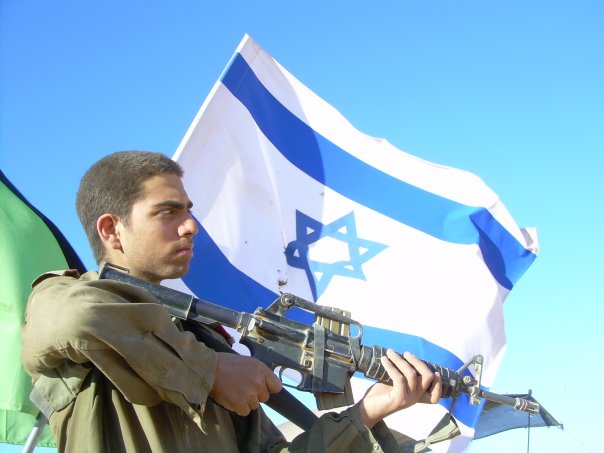

 Posts
Posts


