Over the last few weeks and months, a spurious lie has been spreading. Nothing new, perhaps, lies are told the whole time. But this one is a particularly important lie, and it needs quashing with immediate effect.
The lie goes as follows. The Palestinian people want to live in peace. They want to live in peace, alongside Israel. They want to live in peace, alongside Israel, the Jewish state. They want to live in peace, alongside Israel, the Jewish state, but Israeli Prime Minister, Benjamin Netanyahu, is an extremist and prevents them from doing so. Benjamin Netanyahu and his cohorts, the lie goes, are the sole reason why the peace process appears to be dead in the water.
To understand the claim better, we must go back some time. Earlier this year, Wikileaks collaborated with the Guardian to reveal hundreds of secret documents online. The Guardian went through the archives and found an astonishing incident. In an article entitled, "Israel spurned Palestinian offer of 'biggest Yerushalayim in history'", we are told that "Leaked papers reveal [Palestinian] negotiators proposed concessions on East Jerusalem settlements, Sheikh Jarrah and Old City holy sites" and that Palestinian chief negotiator, Saeb Erekat said the following: "It is no secret that … we are offering you the biggest Yerushalayim [the Hebrew word for Jerusalem] in history." The Guardian had a field day with this quote, using it as proof that the Palestinians were ready to make mass concessions. What was not mentioned in the headline, or in the analysis articles, was that Erekat went on to say, "But we must talk about the concept of al-Quds [Jerusalem in Arabic]."
The Guardian is quick to inform us that an "unprecedented offer” was made “on the East Jerusalem settlements”, carefully picking and mixing quotes that painted a story of Palestinian negotiators adopting a conciliatory approach, going so far as to propose "that Israel annex all Jewish settlements in Jerusalem except Har Homa." Put like this, it sounded very much like the Israelis were acting unreasonably, wantonly even.
In the ensuing debacle, Israel was roundly criticised for deliberately missing an opportunity to forge a real, lasting peace with the Palestinians. Had this been the end of the story, I would no doubt have not been writing about Palestinian lies, but about Israeli ones.
But the story does not end there. There is much that the Guardian neglected tell us in its editorials or headlines. For while Israel was indeed offered concessions by Palestinian negotiators, they were rendered obsolete and utterly invalidated when placed in the context of the greater plan put forward. Deep in the article, toward the end, we are told that Israel's negotiator was "recorded as dismissing the offer out of hand because the Palestinians had refused to concede Har Homa, as well as the settlements at Ma'ale Adumim, near Jerusalem, and Ariel, deeper in the West Bank." As this crucial fact was not afforded anywhere near the same level of prominence, Israel's reaction appears totally unreasonable.
Intriguingly, we are told that "Israel's position was fully supported by the Bush administration." Whatever one might say about the Bush administration, is worthy of note that the Israeli position was fully supported. No reservations were expressed. It was clear as day to the Americans that an offer on Jerusalem offset by a situation in which Ma'ale Adumim and Ariel would have to be ceded by the Israelis to Palestinian control was wholly unacceptable.
Not only this, but we might bear in mind recent statements made by Maen Rashid Areikat, the Palestine Liberation Organization's ambassador to the U.S., who said that the future Palestine should be free of Jews. After the firestorm that followed, Areikat then incriminated himself further when reiterating his position to the left-leaning Huffington Post stating that "Israeli soldiers and settlers -- 'persons who are amid an occupation, who are in my land illegally' -- would be rejected from the new Palestinian state." So, not only would Israel have to give Ariel and Ma'ale Adumim over to the Palestinians, but in excess of 56,000 people would be forcibly ejected from their homes and compelled to find a new place to live. Is it any wonder that Israel rejected such a proposition? The peace process is dead in the water, but not for lack of Israel trying. It is dead in the water because the Palestinian leadership has led us so far up a futile and fruitless path that there is nowhere else to turn but to yet more ridiculous measures. By acting like a petulant child, not only is the Palestinian leadership dismissing Israel's concerns and requirements, but it is effectively sabotaging the demands and needs of its own people, too.
For almost two decades now, there has been an implicit understanding that negotiations will take place based on the cease-fire line of 1949 commonly known as the "1967 borders". This line was never intended to constitute a border. How it came to be regarded as sacred has been one of the greatest deceptions of our time. So when President Obama states that Israel will need to find a solution based on this line, this is a massive break with previous agreements and understandings. Instead of focusing on the abominable racial incitement and insidious accusations of land theft being propagated by the Palestinians, a blind eye is turn to such indiscretions and the heat is turned on Israel for having the gall to demand that tens of thousands of people not be uprooted from their homes.
It is revealing that Palestinian President Mahmoud Abbas saw fit to select Latifa Abu Hmeid, the mother of several terrorists involved in multiple attacks on Israeli civilians, to be the ambassador for the Palestinian independence bid. Abbas might be a moderate relative to his predecessor Yassir Arafat, but there can be no doubt that he is absolutely not moderate. In choosing such a person to endorse the bid, we are told everything we need to know about his vision and aspirations.
It would be bad enough if this was an aberration from the norm. But it’s not. Previously, Abbas has overseen the dedication of a town square near Ramallah to another Palestinian national icon, Dalal Al Mughrabi, the terrorist who killed 37 people, including 13 children, after hijacking an Israeli bus in 1979. At least two schools and numerous summer camps are amongst the recipients of having the dubious honour of being named after this murderer. Such are the heroes of the Palestinian people.
Even more disturbingly, you might have missed such enthralling television as this, in which little children are shown dressing up as suicide bombers and clutching mock AK-47 rifles. Similarly, another odious clip depicts a little girl facing the screen telling viewers that Israel “stole” all the land, and “changed the names”. It’s bad enough that the current generation make unreasonable demands of Israel. Much, much worse is that the current generation are being indoctrinated before our eyes, being led to believe that Israel – in its totality – has no right to exist at all.
So. Do the Palestinian people want to live in peace? To be fair, I imagine the answer is that many do. Most people in the world do. But do the Palestinian people want to live peace alongside Israel? Well, no, not if repeated attempts to portray the residents of Tel Aviv, Haifa, west Jerusalem and other internationally undisputed Israel-controlled areas as land thieves and aliens are anything to go by. As long as the entire Jewish state is repeatedly deemed illegal and a travesty of justice, then it follows that the Palestinians are not prepared to accept an Israeli state alongside it. As long as such agitation reigns unchecked, what hope is there for peace?
It would take someone with all the vision of a Cyclops to believe that Netanyahu is responsible for Abbas’s endorsement and glorification of terror and his subsequent refusal to engage in negotiations. Benjamin Netanyahu's fault? Israel wilfully spurning opportunities to make peace? Palestinians forced to a final resort? Hardly. Don’t believe the lie, no matter how many times you hear it.
Showing posts with label Israel. Show all posts
Showing posts with label Israel. Show all posts
Tuesday, September 20, 2011


Friday, August 19, 2011
A letter I wrote to the British media...
Sir,
As a Londoner who has made his home in Jerusalem, I write to you with a tear in my eye. Yesterday's dreadful attack on Israeli citizens was not the first, nor will likely be the last, in a long chain.
September draws closer and the possibility of a Palestinian state becomes imminent, it is pertinent for us to ask ourselves whether the Palestinian leadership truly desire to live in peace with their Israeli neighbours. For all the talk of the evil of the occupation, Israelis have no assurances that the Palestinians seek to root out terrorism. Palestinian President Mahmoud Abbas might sound moderate, but scratch the surface and we see that terrorism is still glorified in the Territories. Just last year, Abbas dedicated a town square in the memory of Dalal Al-Mughrabi, a terrorist who hijacked a bus and murdered 37 Israelis in cold blood in 1978. Two summer camps also have the dubious honour of being named after this woman. It is evident that the Palestinian leadership is not interested in peaceful relations with Israel. Peace will only come when the Palestinians demonstrate their commitment to bring to justice and cease raising their children in an atmosphere of hate. Why is the Palestinian government not being pressured more to stop this wicked incitement? And why is Israel expected to allow a state characterised by such evil to arise?
Yours sincerely,
Elan Miller
Jerusalem
As a Londoner who has made his home in Jerusalem, I write to you with a tear in my eye. Yesterday's dreadful attack on Israeli citizens was not the first, nor will likely be the last, in a long chain.
September draws closer and the possibility of a Palestinian state becomes imminent, it is pertinent for us to ask ourselves whether the Palestinian leadership truly desire to live in peace with their Israeli neighbours. For all the talk of the evil of the occupation, Israelis have no assurances that the Palestinians seek to root out terrorism. Palestinian President Mahmoud Abbas might sound moderate, but scratch the surface and we see that terrorism is still glorified in the Territories. Just last year, Abbas dedicated a town square in the memory of Dalal Al-Mughrabi, a terrorist who hijacked a bus and murdered 37 Israelis in cold blood in 1978. Two summer camps also have the dubious honour of being named after this woman. It is evident that the Palestinian leadership is not interested in peaceful relations with Israel. Peace will only come when the Palestinians demonstrate their commitment to bring to justice and cease raising their children in an atmosphere of hate. Why is the Palestinian government not being pressured more to stop this wicked incitement? And why is Israel expected to allow a state characterised by such evil to arise?
Yours sincerely,
Elan Miller
Jerusalem
Thursday, April 28, 2011
Back to Down to Earth With a Bump
They say that the best way to compliment a pilot is to congratulate them on a smooth landing. From what I understand, it appears that one of pilots' pet peeves is when passengers complain about turbulence - "it's not as if we are jolting the controls or intentionally going through air pockets" - but landings, however, are far more within a pilot's domain and as such are seen as a good barometer of their skill.
Today, I came back home to Israel after a brief excursion in London to be with my family for Pesach. Upon arriving, I made my way to the airport shul (synagogue). There were only two or three other people about. Before I commenced my prayers, I noticed someone else coming in. From his position at the entrance, he was unable to see how many people were inside and so asked me whether there would be a minyan (group of 10 males) so that he may recite the traditional Kadish prayer for the deceased. I explained that there was not.
Realising that time was running out before the end of the time in which it is permissible to pray (until dusk), we eventually decided to pray by ourselves. In line with Jewish custom, the gentleman took a few steps backward as he was about to start, but before he started, I quickly interrupted his thoughts.
"Tfilati tihiyeh l'aliyat haneshamah shel?" I asked. (Loosely: "My prayer should be in the memory of who, exactly...?)
"Daniel Arieh ben Tamar".
And then he continued, "MeHapigua... Ani Ha'Aba Shelo." ([The boy] "From the terror attack. I'm his father.")
We exchanged weak, clichéd smiles. I nodded my head in recognition, and he nodded to thank me for my gesture. Wordlessly, we both turned forward to resume our prayers.
The second blessing of the "Shmona Esre", the central Jewish prayer that we then recited, reads thus:
"You are mighty forever, Hashem, Reviver of the dead; You are great[ly able] to save, Sustainer of the living with kindness, Reviver of the dead with abundant mercy, Supporter of the fallen, Healer of the sick, and Freer of the bound, and Maintainer of faith with those who sleep in the dust: who is like You, O Master of mighty deeds and who compares to You, O King who causes life death and death and causes salvation to flourish; and faithful are you to revive the dead. Blessed are You, Hashem, He who revives the dead."
As I said these words, I felt a deep, painful connection with the bereft father to my right. I'd landed back in Israel with bump, and it hurt.
Terrorism has many effects. It causes polarisation, and we must be wary of holding overly-extreme postions and believing unwise and often plain untrue things. No, not everyone is out to get Israel. No, not all Arabs hate Israel or support terrorism. Terrorism often causes people to adopt fundamentalist views. It has the double-effect of not only causing real damage, but also in making people cynical and less willing to deal with their enemies peacefully. Victims of terrorism are susceptible to making extreme responses, retaliating rashly and permitting many forms of behaviour that are otherwise deemed inadmissible. But I am glad that it seems that most Israelis refuse to. Israelis recognise, for the most part, that our enemy is not an entire people.
Nevertheless, I am reminded of just how differently the present conflict is perceived from abroad and from within Israel. People outside cannot possibly understand just how profoundly people here are affected by a conflict that has been going on for the best part of 100 years. This is not something which will be easily resolved. Sometimes I think it may not ever be solved at all, the way we are going.
For once, I won't make a political point other than to say that people can never understand us truly without spending a significant amount of time here. Of the many Jews I know and have met who live outisde of Israel, most think that they grasp the situation. But in reality, only very few people do see things as Israelis do. I am not pointing my finger or blaming anyone, but when Israel is described as more right wing than other Western societies, it is important to understand that this is not the result of latent hatred but of fear and pain.
Liberal values are all well and good, but in a scenario as explosive and volatile as ours, such values are open to exploitation. In order to safeguard them, Israel turns to the right. Again, I am not talking normatively, but it is important that we can identify this pattern of cause and effect. Judging, or better still, helping Israel can only be done effectively after this. We have a real enemy here, after all. It can't simply be ignored.
Today, I came back home to Israel after a brief excursion in London to be with my family for Pesach. Upon arriving, I made my way to the airport shul (synagogue). There were only two or three other people about. Before I commenced my prayers, I noticed someone else coming in. From his position at the entrance, he was unable to see how many people were inside and so asked me whether there would be a minyan (group of 10 males) so that he may recite the traditional Kadish prayer for the deceased. I explained that there was not.
Realising that time was running out before the end of the time in which it is permissible to pray (until dusk), we eventually decided to pray by ourselves. In line with Jewish custom, the gentleman took a few steps backward as he was about to start, but before he started, I quickly interrupted his thoughts.
"Tfilati tihiyeh l'aliyat haneshamah shel?" I asked. (Loosely: "My prayer should be in the memory of who, exactly...?)
"Daniel Arieh ben Tamar".
And then he continued, "MeHapigua... Ani Ha'Aba Shelo." ([The boy] "From the terror attack. I'm his father.")
We exchanged weak, clichéd smiles. I nodded my head in recognition, and he nodded to thank me for my gesture. Wordlessly, we both turned forward to resume our prayers.
The second blessing of the "Shmona Esre", the central Jewish prayer that we then recited, reads thus:
"You are mighty forever, Hashem, Reviver of the dead; You are great[ly able] to save, Sustainer of the living with kindness, Reviver of the dead with abundant mercy, Supporter of the fallen, Healer of the sick, and Freer of the bound, and Maintainer of faith with those who sleep in the dust: who is like You, O Master of mighty deeds and who compares to You, O King who causes life death and death and causes salvation to flourish; and faithful are you to revive the dead. Blessed are You, Hashem, He who revives the dead."
As I said these words, I felt a deep, painful connection with the bereft father to my right. I'd landed back in Israel with bump, and it hurt.
Terrorism has many effects. It causes polarisation, and we must be wary of holding overly-extreme postions and believing unwise and often plain untrue things. No, not everyone is out to get Israel. No, not all Arabs hate Israel or support terrorism. Terrorism often causes people to adopt fundamentalist views. It has the double-effect of not only causing real damage, but also in making people cynical and less willing to deal with their enemies peacefully. Victims of terrorism are susceptible to making extreme responses, retaliating rashly and permitting many forms of behaviour that are otherwise deemed inadmissible. But I am glad that it seems that most Israelis refuse to. Israelis recognise, for the most part, that our enemy is not an entire people.
Nevertheless, I am reminded of just how differently the present conflict is perceived from abroad and from within Israel. People outside cannot possibly understand just how profoundly people here are affected by a conflict that has been going on for the best part of 100 years. This is not something which will be easily resolved. Sometimes I think it may not ever be solved at all, the way we are going.
For once, I won't make a political point other than to say that people can never understand us truly without spending a significant amount of time here. Of the many Jews I know and have met who live outisde of Israel, most think that they grasp the situation. But in reality, only very few people do see things as Israelis do. I am not pointing my finger or blaming anyone, but when Israel is described as more right wing than other Western societies, it is important to understand that this is not the result of latent hatred but of fear and pain.
Liberal values are all well and good, but in a scenario as explosive and volatile as ours, such values are open to exploitation. In order to safeguard them, Israel turns to the right. Again, I am not talking normatively, but it is important that we can identify this pattern of cause and effect. Judging, or better still, helping Israel can only be done effectively after this. We have a real enemy here, after all. It can't simply be ignored.
Monday, April 18, 2011
Pesach - פסח
Tonight, Jews around the world will read at the Seder the command: "בכל דור ודור חייב אדם לראות את עצמו כאילו הוא יצא ממצרים." (In each and every generation, one is obligated to see himself as if he left Egypt.)
The words above form the basis for the Seder night experience; all that we do is meant to remind us of the events of that dramatic period. But for all the props, texts and ceremonies, all our efforts are worthless unless we actively try to imagine ourselves as being part of the miraculous liberation from Egypt. Note that we are all *obligated* to see ourselves leaving Egypt. It's not just good practice; this is an outright command. While we can certainly appreciate that the events of the time were hugely important to the Jewish nation, what on earth is so crucial about our seeing ourselves as part of the generation that left Egypt?
This question is answered in part by the Sfat Emet, who notes that this phrase makes use of two different levels; one of the generation and one of the individual. The point is that there were two different aspects to the miracle of Pesach; one of a social scale and one on an individual scale. Whereas the social miracle was clearly evident on a physical level, the individual miracle was somewhat more discreet. Unfortunately for us, we seem to think that the command is for us to remember the physical exodus of the Jews from Egypt, but actually the command also exists on another, somewhat more neglected, level. It is often noted that the Hebrew word Mitzrayim (Egypt in English,) is related to the word Maytzar, which means constraints.
The Sfat Emet also tenders that every generation experiences its own version of the Redemption from Egypt. As each successive generation sinks to successively lower levels, we can claim with some justification that it is only by the mercy of God that we are permitted to continue our existence, even though we live our lives in opposition to the way we are instructed. With that belief under our belts, the Sfat Emet teaches us, we can then go on to relive the original and prototypical redemption as a private experience.
The two strands connect deeply. The constraints spoken about above were the spiritual constraints of the land of Egypt. In the text of Birkat Hamazon, we declare the land of Israel to be "Eretz Chemdah, Tovah ur'chava," a land that is delightful, good and wide." Now, it might seem reasonable to use the first two terms to describe Israel, but anyone who has looked at a map of Israel will tell you that it is anything but wide. The land of Israel is a narrow strip of land, even at it's widest section, and it's range from top to bottom is far more than it's range from side to side. The word Mitzrayim, Egypt, suffers from a similar poser; the root letters צ and ר make up the word Tzar, which means thin. Once again, anyone who recognises Egypt on a map will tell you that this it odds with Egypt's physical nature. What can this all mean?
I have learned that the way to reconcile these two problems is to understand that the width and the narrowness we learn of are not descriptions of the physical aspects of these two countries. Israel's "width" exists in it's spiritual richness. The narrowness of Egypt referred to it's limited connection to the spiritual. Returning to the point above, we may understand the command properly now; in each and every generation, one must see himself as not only being physically delivered from the oppression of the Egyptians, but also as having been spiritually redeemed by God. We are to imagine ourselves as having sunken to the lowest level possible and yet for Hashem to have come riding to the rescue and take us home to the land of Israel. I find this message very powerful; despite the fractures in the Jewish community (fractures that are often the most intractable when different parts of Jewry disagree on Israel and Judaism itself,) and despite the terrible sense of alienation and feeling of being different and alone in this world, we know that all will be alright in the end.
Wishing you a chag kasher v'sameach!
The words above form the basis for the Seder night experience; all that we do is meant to remind us of the events of that dramatic period. But for all the props, texts and ceremonies, all our efforts are worthless unless we actively try to imagine ourselves as being part of the miraculous liberation from Egypt. Note that we are all *obligated* to see ourselves leaving Egypt. It's not just good practice; this is an outright command. While we can certainly appreciate that the events of the time were hugely important to the Jewish nation, what on earth is so crucial about our seeing ourselves as part of the generation that left Egypt?
This question is answered in part by the Sfat Emet, who notes that this phrase makes use of two different levels; one of the generation and one of the individual. The point is that there were two different aspects to the miracle of Pesach; one of a social scale and one on an individual scale. Whereas the social miracle was clearly evident on a physical level, the individual miracle was somewhat more discreet. Unfortunately for us, we seem to think that the command is for us to remember the physical exodus of the Jews from Egypt, but actually the command also exists on another, somewhat more neglected, level. It is often noted that the Hebrew word Mitzrayim (Egypt in English,) is related to the word Maytzar, which means constraints.
The Sfat Emet also tenders that every generation experiences its own version of the Redemption from Egypt. As each successive generation sinks to successively lower levels, we can claim with some justification that it is only by the mercy of God that we are permitted to continue our existence, even though we live our lives in opposition to the way we are instructed. With that belief under our belts, the Sfat Emet teaches us, we can then go on to relive the original and prototypical redemption as a private experience.
The two strands connect deeply. The constraints spoken about above were the spiritual constraints of the land of Egypt. In the text of Birkat Hamazon, we declare the land of Israel to be "Eretz Chemdah, Tovah ur'chava," a land that is delightful, good and wide." Now, it might seem reasonable to use the first two terms to describe Israel, but anyone who has looked at a map of Israel will tell you that it is anything but wide. The land of Israel is a narrow strip of land, even at it's widest section, and it's range from top to bottom is far more than it's range from side to side. The word Mitzrayim, Egypt, suffers from a similar poser; the root letters צ and ר make up the word Tzar, which means thin. Once again, anyone who recognises Egypt on a map will tell you that this it odds with Egypt's physical nature. What can this all mean?
I have learned that the way to reconcile these two problems is to understand that the width and the narrowness we learn of are not descriptions of the physical aspects of these two countries. Israel's "width" exists in it's spiritual richness. The narrowness of Egypt referred to it's limited connection to the spiritual. Returning to the point above, we may understand the command properly now; in each and every generation, one must see himself as not only being physically delivered from the oppression of the Egyptians, but also as having been spiritually redeemed by God. We are to imagine ourselves as having sunken to the lowest level possible and yet for Hashem to have come riding to the rescue and take us home to the land of Israel. I find this message very powerful; despite the fractures in the Jewish community (fractures that are often the most intractable when different parts of Jewry disagree on Israel and Judaism itself,) and despite the terrible sense of alienation and feeling of being different and alone in this world, we know that all will be alright in the end.
Wishing you a chag kasher v'sameach!
Friday, February 11, 2011
Parshat T'tzaveh - פרשת תצוה
"ואתה תצוה את בני ישראל ויקחו אליך שמן זית זך כתית למאור להעלות נר תמיד - Now you shall command Bnei Yisrael that they shall take for you pure, pressed olive oil for illumination, to kindle the lamp continually." (שמות כז:כא)
Rashi writes in his commentary on this Pasuk that the word כתית, crushed, means that the olives should be crushed so that the resulting oil may be used for the Menorah. He then explains that after this oil had been crushed and the first drop removed, the remaining oil would be unfit for this purpose and would be utilised for another task in the Mishkan; namely for use in the מנחות, the meal offerings.
HaRav Chanoch Ehrentreu, author of Kometz Hamincha, writes that if the two oils were of the same quality, of the same colour and essentially of the same stock, why should the second batch be proscribed from use in the Menorah? After all, if the only difference is that the first round of oil was produced by crushing and pressing and the second was made by being ground up, what was really so different about them that they would be assigned different roles?
Rav Ehrentreu answers by examing the functions of the tools in which these oil were to be used. He explains that if we stop to think what the Menorah represents, we may understand why this halacha exists. The light of the Menorah, so we learn, is meant to symbolise the Torah. The Torah is described as being a light in the darkness, dispelling ignorance and a lack of knowledge. The Menorah is the instrument that makes use of the oil we talk about above. The oil itself is described as being pure by necessity. That the oil should be pure seems obvious enough - would you expect all the tools and objects used in God's house to be anything less than of the very highest quality? The reason why the word pure is mentioned will be put in perspective later on. For the moment, we can make do with the basic explanation that just as the Torah is utterly pure, so too must the oil used for the lighting of the Menorah be pure.
The second halacha we learn in the verse above is that the oil is to be crushed. This, as Rashi elaborates, is pertaining to the oil used for the Menorah. Once that very first drop of oil had been extracted though, the oil processing continues. The crushed olives are then ground up so as to get every last bit of juice out of them. Rashi points out that for the first batch of oil, the oil destined for use in the Menorah, there may be no "שמרים" (sediments), in this batch, it is an inevitability that there will be sediments in the oil. In pointing us to the difference between the step of merely crushing the olives and then totally grinding them, Rashi hints to us how we are supposed to "acquire" Torah. Whereas kings may leave their kindgom as an inheritance for their children and while the rich may leave behind a large portion for their descendents, Torah is not something that can simply be acquired through inheritance. Each and every person has to make the effort to learn and to take his own portion, we learn.
Chazal, the sages of Israel, found a hint to this in the verse where the making of the Aron Hakodesh is described. There the word "ועשו", meaning "and you," is used. The usage of this word is not without significance; with all the other tools in the Bet Hamikdash, the word "ועשית", which also means "and you," is used. The difference is that when detailing the Aron Hakodesh, the ark that was to house the Torah within it, the plural version of the word was selected for usage. The reason for this subtle discrepancy, Chazal tender, is because each and every Jew has to take part in the Mitzvah of learning Torah. Other mitzvot are geared towards certain parts of the population, but in this mitzvah, everyone must work.
As such, it makes perfect sense to refer to the Shulchan, the table upon which the meal offerings were issued. Here the more normative form is used, as it says "ועשית שולחן", and you (singluar) shall make the table (שמות כה:כג). Just as a kingdom and wealth may be passed on, so too may physical possessions. Not every person has the need to work to acquire physical objects in his life. The meal offerings upon which were offered, though, were something that were designed to help bring us closer to Hashem. Now if we may make a contrast with the pure oil that was to be used for the Menorah, we can understand why the oil here had to be ground. Whereas there the oil had to be of the finest quality as it was representative of the total purity of Torah, here it was not just acceptable but even part of the process that it should include sediment. The toil by which this oil was produced resulted in part of the olive being left behind in the oil. For us to acquire that purest of things, the Torah, we learn that we have to invest ourselves. So, now we may understand why it is that the two kinds of oil were produced from the same stock, and yet one was banned from use in the other's role - the way they were each manufactured has a deep significance for us.
Wishing you a Shabbat Shalom!
Rashi writes in his commentary on this Pasuk that the word כתית, crushed, means that the olives should be crushed so that the resulting oil may be used for the Menorah. He then explains that after this oil had been crushed and the first drop removed, the remaining oil would be unfit for this purpose and would be utilised for another task in the Mishkan; namely for use in the מנחות, the meal offerings.
HaRav Chanoch Ehrentreu, author of Kometz Hamincha, writes that if the two oils were of the same quality, of the same colour and essentially of the same stock, why should the second batch be proscribed from use in the Menorah? After all, if the only difference is that the first round of oil was produced by crushing and pressing and the second was made by being ground up, what was really so different about them that they would be assigned different roles?
Rav Ehrentreu answers by examing the functions of the tools in which these oil were to be used. He explains that if we stop to think what the Menorah represents, we may understand why this halacha exists. The light of the Menorah, so we learn, is meant to symbolise the Torah. The Torah is described as being a light in the darkness, dispelling ignorance and a lack of knowledge. The Menorah is the instrument that makes use of the oil we talk about above. The oil itself is described as being pure by necessity. That the oil should be pure seems obvious enough - would you expect all the tools and objects used in God's house to be anything less than of the very highest quality? The reason why the word pure is mentioned will be put in perspective later on. For the moment, we can make do with the basic explanation that just as the Torah is utterly pure, so too must the oil used for the lighting of the Menorah be pure.
The second halacha we learn in the verse above is that the oil is to be crushed. This, as Rashi elaborates, is pertaining to the oil used for the Menorah. Once that very first drop of oil had been extracted though, the oil processing continues. The crushed olives are then ground up so as to get every last bit of juice out of them. Rashi points out that for the first batch of oil, the oil destined for use in the Menorah, there may be no "שמרים" (sediments), in this batch, it is an inevitability that there will be sediments in the oil. In pointing us to the difference between the step of merely crushing the olives and then totally grinding them, Rashi hints to us how we are supposed to "acquire" Torah. Whereas kings may leave their kindgom as an inheritance for their children and while the rich may leave behind a large portion for their descendents, Torah is not something that can simply be acquired through inheritance. Each and every person has to make the effort to learn and to take his own portion, we learn.
Chazal, the sages of Israel, found a hint to this in the verse where the making of the Aron Hakodesh is described. There the word "ועשו", meaning "and you," is used. The usage of this word is not without significance; with all the other tools in the Bet Hamikdash, the word "ועשית", which also means "and you," is used. The difference is that when detailing the Aron Hakodesh, the ark that was to house the Torah within it, the plural version of the word was selected for usage. The reason for this subtle discrepancy, Chazal tender, is because each and every Jew has to take part in the Mitzvah of learning Torah. Other mitzvot are geared towards certain parts of the population, but in this mitzvah, everyone must work.
As such, it makes perfect sense to refer to the Shulchan, the table upon which the meal offerings were issued. Here the more normative form is used, as it says "ועשית שולחן", and you (singluar) shall make the table (שמות כה:כג). Just as a kingdom and wealth may be passed on, so too may physical possessions. Not every person has the need to work to acquire physical objects in his life. The meal offerings upon which were offered, though, were something that were designed to help bring us closer to Hashem. Now if we may make a contrast with the pure oil that was to be used for the Menorah, we can understand why the oil here had to be ground. Whereas there the oil had to be of the finest quality as it was representative of the total purity of Torah, here it was not just acceptable but even part of the process that it should include sediment. The toil by which this oil was produced resulted in part of the olive being left behind in the oil. For us to acquire that purest of things, the Torah, we learn that we have to invest ourselves. So, now we may understand why it is that the two kinds of oil were produced from the same stock, and yet one was banned from use in the other's role - the way they were each manufactured has a deep significance for us.
Wishing you a Shabbat Shalom!
Friday, December 31, 2010
Parshat Va'era - פרשת וארא
"לָכֵן אֱמר לִבְנֵי-יִשְׂרָאֵל: אֲנִי יְהוָה, וְהוֹצֵאתִי אֶתְכֶם מִתַּחַת סִבְלת מִצְרַיִם, וְהִצַּלְתִּי אֶתְכֶם מֵעֲבדָתָם, וְגָאַלְתִּי אֶתְכֶם בִּזְרוֹעַ נְטוּיָה וּבִשְׁפָטִים גְּדלִים. וְלָקַחְתִּי אֶתְכֶם לִי לְעָם, וְהָיִיתִי לָכֶם לֵאלהִים; וִידַעְתֶּם, כִּי אֲנִי יְהוָה אֱלֹהֵיכֶם, הַמּוֹצִיא אֶתְכֶם מִתַּחַת סִבְלוֹת מִצְרָיִם. - Therefore say to the children of Israel: I am the Lord, and I will bring you out from under the burdens of Egypt, and I will deliver you from their servitude, and I will redeem you with an outstretched arm and with great judgments. And I will take you to Me for a people, and I will be to you a God; and you shall know that I am the Lord your God, who takes you out from under the burdens of Egypt."
(Exodus 6: 6-7)
The first part of this week's D'var Torah is taken from the Ma'ayanei HaTorah, which cites Chidushei HaRim. It is written there that the ten plagues we read about during the course of this week's and next week's parsha readings are linked to the utterances with which the world was created (Pirkei Avot 5:1). There were ten of those, too, but the link goes a lot deeper than just that.
As the Chidushei HaRim explains, the ten utterances which caused the creation of the world acted to codify the laws of nature. As a result, it became impossible to observe the supernatural wonder of nature. In Jewish mystical thought, there is a concept of constriction - that God had to somehow contrain His eternal and omnipotent Self in a way conducive to forging the world as we know it. God effectively hid Himself through His acts of creation.
In a similar fashion, the ten plagues that are unleashed upon the unwitting Egyptians were directly related to each of these utterances. Step by step, they served to peel back the layers and reveal Hashem's presence in the world to one and all, that there is a creator and there does exist such a thing as an administrator of the universe who can change the rules of nature as He so wishes. Moreover, these ten plagues paved the path for the Jews to leave Egypt in a blaze of glory and made possible the ultimate revelation later on at Sinai. The ten plagues were not merely punishments for the Egyptians' oppression of the Jews; they also served to make a very strong statement about the nature of this world.
The relevance of the insight above is made apparent by something I read a few p'sukim later in verse 9: " וַיְדַבֵּר מֹשֶׁה כֵּן, אֶל-בְּנֵי יִשְׂרָאֵל; וְלֹא שָׁמְעוּ אֶל-מֹשֶׁה מִקֹּצֶר רוּחַ וּמֵעֲבֹדָה קָשָׁה. - And so Moshe spoke to the children of Israel; but they did not hearken Moshe because of shortness of wind and for hard bondage." The verse seems simple enough, but the Meshech Chochmah explains that Moshe chose his words very carefully. His people were under extreme stress and were unable to listen to him. Had he told anyone that "Everything's going to be alright - God is going to save us all in the close future", he would have likely been completely ignored. Anyone who is experiencing such severe trouble simply cannot pay attention to the future; they are instead preocuppied with the present. As such, Hashem instructed Moshe to speak in the present tense and let them know that their redemption was imminent.
Returning to the first part of this D'var Torah, we may now understand just how vital it was for Hashem to perform these miracles. It wasn't just for the Egyptians. It was for the generation of Jews who never knew their forefathers and foremothers. They had never witnessed the miracles that Avraham, Yitzchak and Ya'akov had. They barely knew what it meant to be Jewish. As such, the ten plagues allowed them to be liberated from the oppression of being limited and bound to nature. When they saw Hashem's hand behind nature, they were able to set out on the road that took them out of Egypt and home to Israel.
Wishing you a Shabbat Shalom.
(Exodus 6: 6-7)
The first part of this week's D'var Torah is taken from the Ma'ayanei HaTorah, which cites Chidushei HaRim. It is written there that the ten plagues we read about during the course of this week's and next week's parsha readings are linked to the utterances with which the world was created (Pirkei Avot 5:1). There were ten of those, too, but the link goes a lot deeper than just that.
As the Chidushei HaRim explains, the ten utterances which caused the creation of the world acted to codify the laws of nature. As a result, it became impossible to observe the supernatural wonder of nature. In Jewish mystical thought, there is a concept of constriction - that God had to somehow contrain His eternal and omnipotent Self in a way conducive to forging the world as we know it. God effectively hid Himself through His acts of creation.
In a similar fashion, the ten plagues that are unleashed upon the unwitting Egyptians were directly related to each of these utterances. Step by step, they served to peel back the layers and reveal Hashem's presence in the world to one and all, that there is a creator and there does exist such a thing as an administrator of the universe who can change the rules of nature as He so wishes. Moreover, these ten plagues paved the path for the Jews to leave Egypt in a blaze of glory and made possible the ultimate revelation later on at Sinai. The ten plagues were not merely punishments for the Egyptians' oppression of the Jews; they also served to make a very strong statement about the nature of this world.
The relevance of the insight above is made apparent by something I read a few p'sukim later in verse 9: " וַיְדַבֵּר מֹשֶׁה כֵּן, אֶל-בְּנֵי יִשְׂרָאֵל; וְלֹא שָׁמְעוּ אֶל-מֹשֶׁה מִקֹּצֶר רוּחַ וּמֵעֲבֹדָה קָשָׁה. - And so Moshe spoke to the children of Israel; but they did not hearken Moshe because of shortness of wind and for hard bondage." The verse seems simple enough, but the Meshech Chochmah explains that Moshe chose his words very carefully. His people were under extreme stress and were unable to listen to him. Had he told anyone that "Everything's going to be alright - God is going to save us all in the close future", he would have likely been completely ignored. Anyone who is experiencing such severe trouble simply cannot pay attention to the future; they are instead preocuppied with the present. As such, Hashem instructed Moshe to speak in the present tense and let them know that their redemption was imminent.
Returning to the first part of this D'var Torah, we may now understand just how vital it was for Hashem to perform these miracles. It wasn't just for the Egyptians. It was for the generation of Jews who never knew their forefathers and foremothers. They had never witnessed the miracles that Avraham, Yitzchak and Ya'akov had. They barely knew what it meant to be Jewish. As such, the ten plagues allowed them to be liberated from the oppression of being limited and bound to nature. When they saw Hashem's hand behind nature, they were able to set out on the road that took them out of Egypt and home to Israel.
Wishing you a Shabbat Shalom.
Monday, July 19, 2010
Tisha B'Av, Sinat Chinam, and the Relevance of Fasting in Our Time
Last Friday, I came across an article on Haaretz's English website that absolutely incensed me. To summarise, Anshel Pfeffer, one of Haaretz's columnists, writes that "It is wrong to fast on Tisha B'Av" and calls for an end to the Jewish practice of fasting on this day.
While Pfeffer seems to think that he is justified in claiming that there is no need to fast on Tisha B'Av anymore — a claim I will firmly rebutt — to go so far as to call a continuation of such a custom "wrong" is objectionable indeed. Putting aside questions such as where he his new-found religious authority comes from, this article is highly distasteful and disrespectful to the generations before us. Beyond that, it is presumptuous and founded on a fatal mistake.
The Jewish fast of Tisha B'Av is one of the most significant of the Jewish calendar. Pfeffer opens his article with the following well-known tale to illustrate just how fastidiously the Jews have observed it:
This story serves not just to introduce Tisha B'Av to readers, but also to make a point; that the Jewish nation will be eventually be rewarded and will return to the land of Israel. Unfortunately, it is at this point that Pfeffer departs from the realm of the historical and starts to interpolate Jewish history with his own suppositions.
It is explained in the Talmud, (in the tractate of Chulin I believe,) that the reason for the destruction of the temple was an episode known as the story of Kamtza and Bar Kamtza. To keep a long story short (quite literally), the tale characterises the fatal flaw of the Jews of the time; baseless hatred. After being slighted in public, Bar Kamtza goes to Casear and, employing twisted logic, slanders all those present at the scene of his embarrassment. Bar Kamtza's deeds set in action a chain of events that eventually led to the destruction of the temple in Jerusalem.
In his article, Pfeffer claims that Tisha B'Av is "a date that has lost any relevance beyond the historical." Quite a remarkable claim to make, really. Apparently, his reasoning is that the Jews have returned to the land of Israel, and although there are those who have not yet made the move, they are not unable to, and so we cannot truly call them in exile. Moreover, he claims, the only reason that the temple has not as yet been rebuilt is because Jews don't really care enough for it to happen. Ironically, I agree with this last statement, but not with Pfeffer's logic.
"The exile is over," Pfeffer says. That is the crux of our debate, so let us consider the two positions. The gap between orthodox Judaism's stance on the exile of the Jews and the patriotic Israeli perspective is the most marked so they serve us well for drawing a comparison. (They also happen to be the camps within which Pfeffer and I fall.) The patriotic secular Israeli views the exile of the Jews from the land of Israel as a thing of the past. After all, the Jews now have a state in the Holy Land. What more could we want? Those subscribing to the orthodox Jewish view beg to differ, though. We do not deny that the existence of the State of Israel signals that the exile is drawing to a close. But without peace between Israel and its neighbours, we are still in exile. What's the difference between the Jews living in a ghetto in Europe and the Jews living in a larger ghetto called Israel, surrounded by hostile armies on all sides? We might have sovereignty and our own army, but if (G-d forbid) Israel loses but one war, it will have been defeated permanently. The exile is not over merely because we are surviving. The exile will only be over once we are allowed to flourish.
It is crucial to note that the reason for our mourning is not the resulting exile from Jerusalem and the Holy Land, though we are terribly upset about that, too. As a child, I learned that God 'explained' his actions, saying words to the effect of "I prefer pouring my wrath on an inanimate object such as the temple than having to wipe the Jews out completely." The exile is not merely that we were divorced from our homeland, the land of Israel. Over the last one hundred and fifty years, a great commotion has been raised over the importance of the land of Israel to the Jewish people, but the truth of the matter is that Judaism is not a faith which centres around the land of Israel. No, the real reason we mourn on this day is because the Jews at that time were guilty of an inexcusable sin. Moreover, it is a sin that we are still guilty of to this very day.
'Sinat Chinam,' or baseless hatred as it may be rendered in English, has sadly not disappeared. The reason the temple was destroyed, we are in exile and we have fasted on Tisha B'Av ever since is because we dispayed a lack of unity. My umbrage with Anshel Pfeffer's article is not that he correctly points out that the Jews have returned to the land of Israel and that we should be grateful for this. This is true and we would indeed do well to celebrate this. Rather, I take issue with his mistaken assumption that exile is based merely on a physical connection with the land. I can assure you that it is much, much more than that. The land of Israel is worth a tremendous amount to us, but it is not the crux of Judaism. Judaism is far greater than just this; it is a system for developing realising ourselves. It is a system for connecting to God. And it is for building relationships between ourselves with one another.
The call to drop the ages-old practice of fasting on Tisha b'Av smacks of the Zionistic desire to leave behind the "old Jew", that stereotypical, superstitious, meek European weakling in favour of the New Jew of Zionism. While it is undeniable that the Jews have indeed returned to their ancestral homeland, not all is well on these shores. There are deep rifts between Jews. Terribly bitter feelings exist between the Orthodox and the Reform. The Haredim and then we have the National Religious sector are all too often at each other's throats, as well.
Politically, we are divided too. Has Anshel Pfeffer not noticed that the attacks by the Left and the Right on one another are only growing increasingly vitriolic? Each side shouts slogans, points the finger and blames the other. And in the process, we only get further away from peace.
The call to drop the old Jewish customs of the exile is an understandable one, but it based on a false assumption. We did not go through 2,000 years of exile for nothing. As a Jew, I believe that we may glean valuable lessons from everything that happens to us in life. We would do well to consider the value of these past two millenia and not do away with our traditions too hastily.
There's a lot to these "simplistic" traditions; they aren't mere superstition. We need to realise that coming back to Israel is a wonderful start, but it is only that. We know need to learn how to live with one another. Might I suggest that this Tisha B’Av we each take some time out to think of the conflicts that exist within the Jewish nation and ponder them.
I can give one example to start us off. As an orthodox Jew, I am aware that most in my community regard the reform and conservative movements in Judaism with a degree of distrust.* I too am worried by what these streams will lead to. I don't think it can be denied that this is a legitimate concern for an orthodox Jew to have. Unfortunately though, some people seem to think that this concern grants orthodox Jews carte blanche to attack people from these branches of Judaism. But this is counter-productive, and only serves to create and fuel animosity between ourselves. Orthodox Jewry needs to consider its relationship with reform Jews and make it unacceptable to hound and harass those who belong to other streams of Judaism. While we may disagree, we need to learn to respect one another.
If we can all take five minutes this Tisha B’Av to reconsider our relationships with one another, we may be able to bridge the gaps that exist between us. The Jewish nation might be returning to the land of Israel, but only once we are happy bedfellows with one another here will we see the end of the exile. Amen.
*Please leave a comment if you find this distasteful. I will consider rephrasing this passage if it comes across as offensive in any way. My point is to highlight a genuine concern of mine, but one that I can at least act rationally upon. I take this opportunity to repeat a saying of mine; "I don't value reform Judaism, but that needn't, and doesn't, stop me from valuing reform Jews."
While Pfeffer seems to think that he is justified in claiming that there is no need to fast on Tisha B'Av anymore — a claim I will firmly rebutt — to go so far as to call a continuation of such a custom "wrong" is objectionable indeed. Putting aside questions such as where he his new-found religious authority comes from, this article is highly distasteful and disrespectful to the generations before us. Beyond that, it is presumptuous and founded on a fatal mistake.
The Jewish fast of Tisha B'Av is one of the most significant of the Jewish calendar. Pfeffer opens his article with the following well-known tale to illustrate just how fastidiously the Jews have observed it:
There are variants to the apocryphal story, but all in essence are the same. Napoleon Bonaparte went for a walk one summer night (it could have been Paris or elsewhere in France or his empire ) and heard voices lamenting in a strange language. They may have come from a grand synagogue or a miserable hovel. Upon asking why the men inside were sitting on the floor and mourning, he was told these were Jews grieving for their destroyed temple in Jerusalem. "How long ago did this happen?" asked Bonaparte. "Eighteen-hundred years" was the answer.
"A nation that can mourn for so long the loss of its land and temple," the emperor is supposed to have said prophetically, "will return one day to their land and see it rebuilt."
This story serves not just to introduce Tisha B'Av to readers, but also to make a point; that the Jewish nation will be eventually be rewarded and will return to the land of Israel. Unfortunately, it is at this point that Pfeffer departs from the realm of the historical and starts to interpolate Jewish history with his own suppositions.
It is explained in the Talmud, (in the tractate of Chulin I believe,) that the reason for the destruction of the temple was an episode known as the story of Kamtza and Bar Kamtza. To keep a long story short (quite literally), the tale characterises the fatal flaw of the Jews of the time; baseless hatred. After being slighted in public, Bar Kamtza goes to Casear and, employing twisted logic, slanders all those present at the scene of his embarrassment. Bar Kamtza's deeds set in action a chain of events that eventually led to the destruction of the temple in Jerusalem.
In his article, Pfeffer claims that Tisha B'Av is "a date that has lost any relevance beyond the historical." Quite a remarkable claim to make, really. Apparently, his reasoning is that the Jews have returned to the land of Israel, and although there are those who have not yet made the move, they are not unable to, and so we cannot truly call them in exile. Moreover, he claims, the only reason that the temple has not as yet been rebuilt is because Jews don't really care enough for it to happen. Ironically, I agree with this last statement, but not with Pfeffer's logic.
"The exile is over," Pfeffer says. That is the crux of our debate, so let us consider the two positions. The gap between orthodox Judaism's stance on the exile of the Jews and the patriotic Israeli perspective is the most marked so they serve us well for drawing a comparison. (They also happen to be the camps within which Pfeffer and I fall.) The patriotic secular Israeli views the exile of the Jews from the land of Israel as a thing of the past. After all, the Jews now have a state in the Holy Land. What more could we want? Those subscribing to the orthodox Jewish view beg to differ, though. We do not deny that the existence of the State of Israel signals that the exile is drawing to a close. But without peace between Israel and its neighbours, we are still in exile. What's the difference between the Jews living in a ghetto in Europe and the Jews living in a larger ghetto called Israel, surrounded by hostile armies on all sides? We might have sovereignty and our own army, but if (G-d forbid) Israel loses but one war, it will have been defeated permanently. The exile is not over merely because we are surviving. The exile will only be over once we are allowed to flourish.
It is crucial to note that the reason for our mourning is not the resulting exile from Jerusalem and the Holy Land, though we are terribly upset about that, too. As a child, I learned that God 'explained' his actions, saying words to the effect of "I prefer pouring my wrath on an inanimate object such as the temple than having to wipe the Jews out completely." The exile is not merely that we were divorced from our homeland, the land of Israel. Over the last one hundred and fifty years, a great commotion has been raised over the importance of the land of Israel to the Jewish people, but the truth of the matter is that Judaism is not a faith which centres around the land of Israel. No, the real reason we mourn on this day is because the Jews at that time were guilty of an inexcusable sin. Moreover, it is a sin that we are still guilty of to this very day.
'Sinat Chinam,' or baseless hatred as it may be rendered in English, has sadly not disappeared. The reason the temple was destroyed, we are in exile and we have fasted on Tisha B'Av ever since is because we dispayed a lack of unity. My umbrage with Anshel Pfeffer's article is not that he correctly points out that the Jews have returned to the land of Israel and that we should be grateful for this. This is true and we would indeed do well to celebrate this. Rather, I take issue with his mistaken assumption that exile is based merely on a physical connection with the land. I can assure you that it is much, much more than that. The land of Israel is worth a tremendous amount to us, but it is not the crux of Judaism. Judaism is far greater than just this; it is a system for developing realising ourselves. It is a system for connecting to God. And it is for building relationships between ourselves with one another.
The call to drop the ages-old practice of fasting on Tisha b'Av smacks of the Zionistic desire to leave behind the "old Jew", that stereotypical, superstitious, meek European weakling in favour of the New Jew of Zionism. While it is undeniable that the Jews have indeed returned to their ancestral homeland, not all is well on these shores. There are deep rifts between Jews. Terribly bitter feelings exist between the Orthodox and the Reform. The Haredim and then we have the National Religious sector are all too often at each other's throats, as well.
Politically, we are divided too. Has Anshel Pfeffer not noticed that the attacks by the Left and the Right on one another are only growing increasingly vitriolic? Each side shouts slogans, points the finger and blames the other. And in the process, we only get further away from peace.
The call to drop the old Jewish customs of the exile is an understandable one, but it based on a false assumption. We did not go through 2,000 years of exile for nothing. As a Jew, I believe that we may glean valuable lessons from everything that happens to us in life. We would do well to consider the value of these past two millenia and not do away with our traditions too hastily.
There's a lot to these "simplistic" traditions; they aren't mere superstition. We need to realise that coming back to Israel is a wonderful start, but it is only that. We know need to learn how to live with one another. Might I suggest that this Tisha B’Av we each take some time out to think of the conflicts that exist within the Jewish nation and ponder them.
I can give one example to start us off. As an orthodox Jew, I am aware that most in my community regard the reform and conservative movements in Judaism with a degree of distrust.* I too am worried by what these streams will lead to. I don't think it can be denied that this is a legitimate concern for an orthodox Jew to have. Unfortunately though, some people seem to think that this concern grants orthodox Jews carte blanche to attack people from these branches of Judaism. But this is counter-productive, and only serves to create and fuel animosity between ourselves. Orthodox Jewry needs to consider its relationship with reform Jews and make it unacceptable to hound and harass those who belong to other streams of Judaism. While we may disagree, we need to learn to respect one another.
If we can all take five minutes this Tisha B’Av to reconsider our relationships with one another, we may be able to bridge the gaps that exist between us. The Jewish nation might be returning to the land of Israel, but only once we are happy bedfellows with one another here will we see the end of the exile. Amen.
*Please leave a comment if you find this distasteful. I will consider rephrasing this passage if it comes across as offensive in any way. My point is to highlight a genuine concern of mine, but one that I can at least act rationally upon. I take this opportunity to repeat a saying of mine; "I don't value reform Judaism, but that needn't, and doesn't, stop me from valuing reform Jews."
Monday, June 07, 2010
How to Start a Blood Libel in Four Easy Steps
This is a guest post by Yedidya Kennard.
STEP ONE - WRITE THE STORY
This is important. This is the story that you will have to stick to till the end, no matter what. It helps if part of the story is already well known - not true, but well known. For example, if your target is known to be an agressor, whether he is or isn't, this saves you a lot of work. For this reason it is important to keep a running campaign of libels, making all of them easily accepted.
The setting for your story is important. Boats are good, they bring to mind sun, beaches, deck chairs etc. If you can make it look like your target is bringing violence to a peaceful place, its always good. Of course, if your target is an army, you have an added advantage - soldiers are always associated with violence.
Try to link words with yourself that are associated with non-violence, that way even if you clearly are shown to be violent people will still be more inclined to believe you. Words like 'humanitarian' are good. Try and create a name for yourself involving words like 'freedom' or similar. It doesnt have to be relevant or true in any way, but if you can make it stick in the media they won't change it, no matter how clearly it is wrong.
STEP TWO - THE ACTION
It is important to be seen to lose. People like an underdog. Most people won't care who started or what happened; the main thing is the result. It may seem strange, but here you only win if you are seen to lose. After that, nothing else is really important. Also important is equipment, again you want to be seen here as the underdog. Words again are key. 'Guns' sounds bad, 'sticks' sound like a playground fight - even if you can kill people with them. 'Slingshots' are great too, remember, they are effective, they were once the long range weapon of choice, but now they sound like toys. Even knives and broken bottles sound harmless when put against guns. If you have to provoke at long range then you can still use this - call your rockets 'homemade' and all people will see is Grandma baking cookies. Harmless.
STEP THREE - GET YOUR STORY OUT FAST.
Speed is key here. Once the story is out there it won't stop being out there. Remember, journalists need stuff to report all the time, so if you get your story out there even 2 or 3 hours before the target gets his version out, you have a massive advantage. Journalists wont check if your story is true or not, as long as it is said by someone, they can report it. Once it is out there and there is no response from the other side, it becomes accepted as fact. It is far harder to change a story, or to challenge an established narrative, than it is to start one.
STEP FOUR - STICK TO THE SCRIPT!
This is perhaps the most difficult and most critical part. Once the other side get their act together they will of course challenge your account, and may even have evidence to back themselves up. What you have to understand here is that evidence is irrelevant. A story, however obviously wrong, will never die. However, some skill is needed to keep it as the mainstream version of events. You need to be able to lie with a straight face, despite the evidence against being right in front of you. You can practise this by looking at the sky and declaring 'The sky is green!". Once you can say this and even believe it, try to make other people believe it.
Remember, someone out there already believes your story; he will want to keep on believing it instead of seeing it being proven wrong. Help him - if he sees someone else denying the evidence, then it's easier for him to do so as well.
A great tactic to use here is emotive language. Put evidence against emotion, emotion always wins. Words again are key. If your side is seen using violence, call it 'passive resistance', it sounds good even if it's wrong. It has the word 'resistance' in it so it sounds plausible. If you can say it enough times, instead of seeing your person stabbing someone, all the viewer will see is an old wisened man in a loincloth. Also, if your words stick, then anyone challenging them is seen to be obviously changing the accepted version of events, which is very hard to do.
That's it! It all comes down to the words, whether they have any bearing on reality at all is totally irrelevant. Get your story out first, get the media to accept your words and the story will run and run. Of course, if you have a media and a population for some other reason ready to accept your version, so much the better! Always remember, the truth is irrelevant, it's the Story that counts.
STEP ONE - WRITE THE STORY
This is important. This is the story that you will have to stick to till the end, no matter what. It helps if part of the story is already well known - not true, but well known. For example, if your target is known to be an agressor, whether he is or isn't, this saves you a lot of work. For this reason it is important to keep a running campaign of libels, making all of them easily accepted.
The setting for your story is important. Boats are good, they bring to mind sun, beaches, deck chairs etc. If you can make it look like your target is bringing violence to a peaceful place, its always good. Of course, if your target is an army, you have an added advantage - soldiers are always associated with violence.
Try to link words with yourself that are associated with non-violence, that way even if you clearly are shown to be violent people will still be more inclined to believe you. Words like 'humanitarian' are good. Try and create a name for yourself involving words like 'freedom' or similar. It doesnt have to be relevant or true in any way, but if you can make it stick in the media they won't change it, no matter how clearly it is wrong.
STEP TWO - THE ACTION
It is important to be seen to lose. People like an underdog. Most people won't care who started or what happened; the main thing is the result. It may seem strange, but here you only win if you are seen to lose. After that, nothing else is really important. Also important is equipment, again you want to be seen here as the underdog. Words again are key. 'Guns' sounds bad, 'sticks' sound like a playground fight - even if you can kill people with them. 'Slingshots' are great too, remember, they are effective, they were once the long range weapon of choice, but now they sound like toys. Even knives and broken bottles sound harmless when put against guns. If you have to provoke at long range then you can still use this - call your rockets 'homemade' and all people will see is Grandma baking cookies. Harmless.
STEP THREE - GET YOUR STORY OUT FAST.
Speed is key here. Once the story is out there it won't stop being out there. Remember, journalists need stuff to report all the time, so if you get your story out there even 2 or 3 hours before the target gets his version out, you have a massive advantage. Journalists wont check if your story is true or not, as long as it is said by someone, they can report it. Once it is out there and there is no response from the other side, it becomes accepted as fact. It is far harder to change a story, or to challenge an established narrative, than it is to start one.
STEP FOUR - STICK TO THE SCRIPT!
This is perhaps the most difficult and most critical part. Once the other side get their act together they will of course challenge your account, and may even have evidence to back themselves up. What you have to understand here is that evidence is irrelevant. A story, however obviously wrong, will never die. However, some skill is needed to keep it as the mainstream version of events. You need to be able to lie with a straight face, despite the evidence against being right in front of you. You can practise this by looking at the sky and declaring 'The sky is green!". Once you can say this and even believe it, try to make other people believe it.
Remember, someone out there already believes your story; he will want to keep on believing it instead of seeing it being proven wrong. Help him - if he sees someone else denying the evidence, then it's easier for him to do so as well.
A great tactic to use here is emotive language. Put evidence against emotion, emotion always wins. Words again are key. If your side is seen using violence, call it 'passive resistance', it sounds good even if it's wrong. It has the word 'resistance' in it so it sounds plausible. If you can say it enough times, instead of seeing your person stabbing someone, all the viewer will see is an old wisened man in a loincloth. Also, if your words stick, then anyone challenging them is seen to be obviously changing the accepted version of events, which is very hard to do.
That's it! It all comes down to the words, whether they have any bearing on reality at all is totally irrelevant. Get your story out first, get the media to accept your words and the story will run and run. Of course, if you have a media and a population for some other reason ready to accept your version, so much the better! Always remember, the truth is irrelevant, it's the Story that counts.
Monday, May 31, 2010
The Dual Tragedy of The Flotilla
The events off the coast of Gaza in the early hours of Monday morning were a significant moment in the history of the State of Israel. More than that, they were a dual tragedy.
Before we go any further, it must be made abundantly clear that neither I nor anyone I know rejoices in the deaths of these activists. It is not in our nature to celebrate the deaths of anyone, not even those who were part of a group that had earlier chanted “Khaybar Khaybar ya yahud, Jaish Muhammad saya'ud," meaning "Jews remember Khaybar, the army of Mohammed is returning," a reference to a seventh-century Muslim massacre and expulsion of Jews from Khaybar, which is in modern-day Saudi Arabia. Despite this despicable loathsomeness, with the benefit of hindsight, I'd much rather that the ships had safely docked in Gaza than lives being needlessly wasted.
At the time of going to press, 15 people have died as a result of the IDF’s boarding the flotilla as it approached Gaza, but this does not mean that I criticize the actions of the IDF. Neither do I reserve criticism of the actions of these "human rights" activists. Taking a glance at some of the headlines from the world media, one would be forgiven that Israel had stormed aid ships for no particular reason. "Deadly clashes at sea as Israel intercepts Gaza-bound aid ships," reports the Times of London. "10 Reported Killed as Israel Raids Boats Headed to Gaza" announces the New York Times.
Even reading the headline on the Jerusalem Post, "At least 15 activists dead, dozens hurt in flotilla clashes", it is hard to get away from the pervading sense of injustice felt from that now all too familiar of situations; Israeli troops acting heavy-handedly and killing unarmed civilians. Irrespective of whether their actions were right or wrong, the balance appears so lop-sided, peace activists on the one hand and soldiers on the other, that most people's minds are made up well before they read the articles themselves.
But a serious question lies at the heart of the affair. How and why did a supposedly passive peace demonstration turn rowdy to the degree for the military forces who had boarded the boat to feel threatened enough to open fire? The answer has been stated repeatedly of the last few days and stares us in the face: these were no peace activists. These were no human rights activists, these people had a very clear agenda in mind: the delegitimization of Israel.
Much has been said of this deligitimization of Israel, but what is it? What is being delegitimized, exactly? Well, Israel's right to defense, for one. When every single defense operation is questioned, criticized and consequently condemned, we would do well to realize that we are witnessing the systematic denial of Israel’s right to defend herself.
Similarly, when events like the death of Mohammed Al-Dura in 2000, the so-called “Massacre in Jenin” in 2002, the bombing of Hezballah forces in Qana, Lebanon in 2006, and the “disproportional” Israeli offensive on Hamas in Operation Cast Lead are spun out of all proportion, we must understand that the damage done to Israel’s image is long lasting and its ability to strike out at terrorists is being methodically wiped out.
There’s one question I’ve asked myself repeatedly over the last few years: “And how would you handle it?” I’ve imagined this question being asked of Kofi Annan, Barack Obama, Gordon Brown and now I ask it of these activists and their supporters. Maybe Israel’s actions aren’t always correct, but Israel has the sovereign right to act in the way it deems fit. If you don’t like the way we deal with terrorists, how about proposing an alternative solution to prevent Hamas proliferating its stockpile of military grade weaponry? If you don’t like human shields, and you shouldn’t if you care about human rights, how do you propose that the IDF tackles Hamas, an extremist group bent on Israel’s destruction that also happens to make extensive use of this tactic?
News agencies worldwide reported that the Israeli Navy stormed a flotilla carrying hundreds of pro-Palestinian activists and tons of supplies for Gaza on Monday morning. But they didn’t give more than passing mention to the fact that these pro-Palestinian activists had intentionally and deliberately provoked the IDF into acting. Amid reports from the IDF which claims that soldiers were met by well-planned lynch involving concealed handguns, knives, bats and metal pipes, we would do well to note that prior to boarding the flotilla, Maj. Gen. Eliezer Marom, Commander of the Israeli Navy, briefed the forces who participated in the interception of these protest boats, and called on them not be dragged into provocations with the passengers of the ship.
Referring to previous experience with such protesters, Marom explained that no matter what “provocation that they may create, and there are here a number of soldiers that participated in past events, for example to throw cigarettes, spitting, cursing, and so forth; we do not respond to these types of actions.” While Marom correctly identified these “peace activists” as paradoxically unpleasant to deal with, even he could not have predicted that there would be those amongst their number who would attempt to steal the soldiers’ guns, let alone stab them. But that is precisely what occurred. For us to regard these people as genuine peace activists would be a real tragedy.
Gen. Maj. Marom explained that “we have no intention of harming any of these people”, but that was sadly not the case with the activists. Beyond physically hurting the soldiers, their intention to give Israel’s image a good hiding could not be clearer. We may call them pro-Palestinian activists, but that would be a fib, for they had plenty of other options available to them, but instead went for the cheap PR stunt. And yet the PR stunt is the one way that wins. Israel yet again emerges as the loser, it’s entitlement to protect its population damaged. Worse still, this affair sets a dangerous precedent. Even after the criticism has faded and the media move on to the next big story, Israel will be left as many as 15 “Rachel Corries” to explain, 15 more images of Israeli brutality, injustice, violent excess. No matter whether the deceased foolishly tried to provoke soldiers in their last moments, they will become icons for the anti-Israel movement for an eternity.
The events off the coast of Gaza in the early hours of Monday morning were a dual tragedy. People died, and for that I grieve. But if Israel’s right to defend itself continues to be eroded, and if a precedent has been set here, more people will die. And that would be an even greater tragedy.
Before we go any further, it must be made abundantly clear that neither I nor anyone I know rejoices in the deaths of these activists. It is not in our nature to celebrate the deaths of anyone, not even those who were part of a group that had earlier chanted “Khaybar Khaybar ya yahud, Jaish Muhammad saya'ud," meaning "Jews remember Khaybar, the army of Mohammed is returning," a reference to a seventh-century Muslim massacre and expulsion of Jews from Khaybar, which is in modern-day Saudi Arabia. Despite this despicable loathsomeness, with the benefit of hindsight, I'd much rather that the ships had safely docked in Gaza than lives being needlessly wasted.
At the time of going to press, 15 people have died as a result of the IDF’s boarding the flotilla as it approached Gaza, but this does not mean that I criticize the actions of the IDF. Neither do I reserve criticism of the actions of these "human rights" activists. Taking a glance at some of the headlines from the world media, one would be forgiven that Israel had stormed aid ships for no particular reason. "Deadly clashes at sea as Israel intercepts Gaza-bound aid ships," reports the Times of London. "10 Reported Killed as Israel Raids Boats Headed to Gaza" announces the New York Times.
Even reading the headline on the Jerusalem Post, "At least 15 activists dead, dozens hurt in flotilla clashes", it is hard to get away from the pervading sense of injustice felt from that now all too familiar of situations; Israeli troops acting heavy-handedly and killing unarmed civilians. Irrespective of whether their actions were right or wrong, the balance appears so lop-sided, peace activists on the one hand and soldiers on the other, that most people's minds are made up well before they read the articles themselves.
But a serious question lies at the heart of the affair. How and why did a supposedly passive peace demonstration turn rowdy to the degree for the military forces who had boarded the boat to feel threatened enough to open fire? The answer has been stated repeatedly of the last few days and stares us in the face: these were no peace activists. These were no human rights activists, these people had a very clear agenda in mind: the delegitimization of Israel.
Much has been said of this deligitimization of Israel, but what is it? What is being delegitimized, exactly? Well, Israel's right to defense, for one. When every single defense operation is questioned, criticized and consequently condemned, we would do well to realize that we are witnessing the systematic denial of Israel’s right to defend herself.
Similarly, when events like the death of Mohammed Al-Dura in 2000, the so-called “Massacre in Jenin” in 2002, the bombing of Hezballah forces in Qana, Lebanon in 2006, and the “disproportional” Israeli offensive on Hamas in Operation Cast Lead are spun out of all proportion, we must understand that the damage done to Israel’s image is long lasting and its ability to strike out at terrorists is being methodically wiped out.
There’s one question I’ve asked myself repeatedly over the last few years: “And how would you handle it?” I’ve imagined this question being asked of Kofi Annan, Barack Obama, Gordon Brown and now I ask it of these activists and their supporters. Maybe Israel’s actions aren’t always correct, but Israel has the sovereign right to act in the way it deems fit. If you don’t like the way we deal with terrorists, how about proposing an alternative solution to prevent Hamas proliferating its stockpile of military grade weaponry? If you don’t like human shields, and you shouldn’t if you care about human rights, how do you propose that the IDF tackles Hamas, an extremist group bent on Israel’s destruction that also happens to make extensive use of this tactic?
News agencies worldwide reported that the Israeli Navy stormed a flotilla carrying hundreds of pro-Palestinian activists and tons of supplies for Gaza on Monday morning. But they didn’t give more than passing mention to the fact that these pro-Palestinian activists had intentionally and deliberately provoked the IDF into acting. Amid reports from the IDF which claims that soldiers were met by well-planned lynch involving concealed handguns, knives, bats and metal pipes, we would do well to note that prior to boarding the flotilla, Maj. Gen. Eliezer Marom, Commander of the Israeli Navy, briefed the forces who participated in the interception of these protest boats, and called on them not be dragged into provocations with the passengers of the ship.
Referring to previous experience with such protesters, Marom explained that no matter what “provocation that they may create, and there are here a number of soldiers that participated in past events, for example to throw cigarettes, spitting, cursing, and so forth; we do not respond to these types of actions.” While Marom correctly identified these “peace activists” as paradoxically unpleasant to deal with, even he could not have predicted that there would be those amongst their number who would attempt to steal the soldiers’ guns, let alone stab them. But that is precisely what occurred. For us to regard these people as genuine peace activists would be a real tragedy.
Gen. Maj. Marom explained that “we have no intention of harming any of these people”, but that was sadly not the case with the activists. Beyond physically hurting the soldiers, their intention to give Israel’s image a good hiding could not be clearer. We may call them pro-Palestinian activists, but that would be a fib, for they had plenty of other options available to them, but instead went for the cheap PR stunt. And yet the PR stunt is the one way that wins. Israel yet again emerges as the loser, it’s entitlement to protect its population damaged. Worse still, this affair sets a dangerous precedent. Even after the criticism has faded and the media move on to the next big story, Israel will be left as many as 15 “Rachel Corries” to explain, 15 more images of Israeli brutality, injustice, violent excess. No matter whether the deceased foolishly tried to provoke soldiers in their last moments, they will become icons for the anti-Israel movement for an eternity.
The events off the coast of Gaza in the early hours of Monday morning were a dual tragedy. People died, and for that I grieve. But if Israel’s right to defend itself continues to be eroded, and if a precedent has been set here, more people will die. And that would be an even greater tragedy.
The Terrorists Speak of Morality
This is a guest post by a friend, Channah Barkhordari.
I read an article in The Jerusalem Post tonight that has made me more sickened than perhaps any other I have read this year.
As many of you may know, there is a bill pending ratification in the Knesset that is meant to take away some of the supreme benefits being afforded to the Hamas terrorists in Israel's prisons. The logic behind the bill is that since Gilad Schalit has been held captive by Hamas for over four years, (the terrorist group refusing to reveal one iota of information regarding his whereabouts and living conditions, and continually breaking international law by restricting access to him by even the Red Cross,) it seems quite superfluous to provide amenities to Hamas terrorist prisoners that stretch over and above the legal requirements. Removing them is meant to provide some pressure on Hamas to return Gilad. (Jerusalem Post Editorial, 25/5/10)
At first I was relieved that Gilad was once again being focussed upon and that we are doing something. But if you asked me yesterday whether I thought the move would affect any serious progress, I would have said no — not because, as I discovered tonight, I should have known the sickening depth with which the leaders of Hamas deal in unconditional terror, but because the bill is simply not enough.
For one thing, I was unaware that Hamas terrorists were receiving such a range of stimulating benefits in Israel's prisons, from the option of pursuing higher education at Israel's Open University, to multi-channel cable TV. Yes, this is horribly ironic. Hamas restricts these basic rights, objective higher education and free press, from the Palestinians under their control on a consistent basis. What could make the situation clearer when the best place for a Hamas terrorist to go, or any Palestinian of Gaza for that matter, is an Israeli prison?
Do you think that maybe, just maybe, it makes sense that when your own soldiers (yes, soldiers plural—for Gilad we have the most hope, but there are more of our brothers missing—) are hidden behind circumstances so precarious we daily wonder at their life or death, that perhaps we shouldn’t make our enemies so comfortable?
But I digress. The source of my disgust was not that article, but this one. As I read, it became clear that Hamas’ reaction to the bill was an immediate threat against Gilad. And this does not mean taking away his books, TV, or visitation rights. He, of course, has none of these, and as we may guess has suffered far worse than we know. Though Israel has considered quarantine for Hamas prisoners, Gilad is already in the remotest of isolation. The exact wording of Hamas representatives is that he will “suffer,” that they will not stop those guarding him from “retaliating,” and that they would treat Schalit “according to what its religion tells it and in a way that satisfies its God.” We know what this implies; the Hamas charter spells it out clearly. This is their desire for the destruction of our people in the symbol of one IDF soldier. This may well be, G-d forbid, a threat to torture him, possibly maintaining the vitals of his physical life so they can continue to use him as a bargaining chip for freeing over a thousand Israel-kept prisoners…or possibly eventually returning him to us, G-d forbid, as they did Eldad Regev and Ehud Goldwasser...
Yet I would expect that from Hamas. I would expect the threat, in its all-too-well-understood gravity, as they have continually called for our destruction and total annihilation, continually attempted to make it a reality. But what made me sick, though I can’t explain why, was what Jamal Nassar, Hamas legislator in Gaza, then proceeded to say. And I quote The Jerusalem Post, “The ‘Gilad Schalit Bill’ reflected the ‘moral decline’ of the Israeli government and signaled the beginning of its collapse, Nassar said” (Khaled Abu Toameh, The Jerusalem Post, 26/5/10). The “moral decline” of the Israeli government…
Many people this year have told me that things bother me too much; that I ought not let them bother me. That I’m too sensitive, that I allow things get to me, that if I learned how to let go I would be happier. "What do I care if he says it?" they say. "Let him say it." And perhaps they are right. But something so unjust, so inverted, so absolutely evil is embodied in that one statement that the word “hypocrite” is like a weak and trite pebble in the mountain of what is being invoked here. Something indescribably black and foul is hiding in the soul of its message, something that goes against humanity itself.
I will acknowledge, but not concede to those who say I have wasted my time in writing this. Perhaps I felt it simply needed to be said, or that I needed to say it. Perhaps in truth I believe that it is our sensitivity that makes us human, and that it is specifically the G-d given sensitivity of עם ישראל that defines being a “light unto the nations.” But one thing I know for sure — what happens to Gilad will be so much more than the life of a single soldier. What happens to Gilad will serve as the emotional and political barometer of a nation who has had enough of terror, a nation that seeks peace and pursues it. There can be no other outcome, because like Jerusalem, we will never forget Gilad.
Awaiting the speedy return of our brother in safety and peace.
I read an article in The Jerusalem Post tonight that has made me more sickened than perhaps any other I have read this year.
As many of you may know, there is a bill pending ratification in the Knesset that is meant to take away some of the supreme benefits being afforded to the Hamas terrorists in Israel's prisons. The logic behind the bill is that since Gilad Schalit has been held captive by Hamas for over four years, (the terrorist group refusing to reveal one iota of information regarding his whereabouts and living conditions, and continually breaking international law by restricting access to him by even the Red Cross,) it seems quite superfluous to provide amenities to Hamas terrorist prisoners that stretch over and above the legal requirements. Removing them is meant to provide some pressure on Hamas to return Gilad. (Jerusalem Post Editorial, 25/5/10)
At first I was relieved that Gilad was once again being focussed upon and that we are doing something. But if you asked me yesterday whether I thought the move would affect any serious progress, I would have said no — not because, as I discovered tonight, I should have known the sickening depth with which the leaders of Hamas deal in unconditional terror, but because the bill is simply not enough.
For one thing, I was unaware that Hamas terrorists were receiving such a range of stimulating benefits in Israel's prisons, from the option of pursuing higher education at Israel's Open University, to multi-channel cable TV. Yes, this is horribly ironic. Hamas restricts these basic rights, objective higher education and free press, from the Palestinians under their control on a consistent basis. What could make the situation clearer when the best place for a Hamas terrorist to go, or any Palestinian of Gaza for that matter, is an Israeli prison?
Do you think that maybe, just maybe, it makes sense that when your own soldiers (yes, soldiers plural—for Gilad we have the most hope, but there are more of our brothers missing—) are hidden behind circumstances so precarious we daily wonder at their life or death, that perhaps we shouldn’t make our enemies so comfortable?
But I digress. The source of my disgust was not that article, but this one. As I read, it became clear that Hamas’ reaction to the bill was an immediate threat against Gilad. And this does not mean taking away his books, TV, or visitation rights. He, of course, has none of these, and as we may guess has suffered far worse than we know. Though Israel has considered quarantine for Hamas prisoners, Gilad is already in the remotest of isolation. The exact wording of Hamas representatives is that he will “suffer,” that they will not stop those guarding him from “retaliating,” and that they would treat Schalit “according to what its religion tells it and in a way that satisfies its God.” We know what this implies; the Hamas charter spells it out clearly. This is their desire for the destruction of our people in the symbol of one IDF soldier. This may well be, G-d forbid, a threat to torture him, possibly maintaining the vitals of his physical life so they can continue to use him as a bargaining chip for freeing over a thousand Israel-kept prisoners…or possibly eventually returning him to us, G-d forbid, as they did Eldad Regev and Ehud Goldwasser...
Yet I would expect that from Hamas. I would expect the threat, in its all-too-well-understood gravity, as they have continually called for our destruction and total annihilation, continually attempted to make it a reality. But what made me sick, though I can’t explain why, was what Jamal Nassar, Hamas legislator in Gaza, then proceeded to say. And I quote The Jerusalem Post, “The ‘Gilad Schalit Bill’ reflected the ‘moral decline’ of the Israeli government and signaled the beginning of its collapse, Nassar said” (Khaled Abu Toameh, The Jerusalem Post, 26/5/10). The “moral decline” of the Israeli government…
Many people this year have told me that things bother me too much; that I ought not let them bother me. That I’m too sensitive, that I allow things get to me, that if I learned how to let go I would be happier. "What do I care if he says it?" they say. "Let him say it." And perhaps they are right. But something so unjust, so inverted, so absolutely evil is embodied in that one statement that the word “hypocrite” is like a weak and trite pebble in the mountain of what is being invoked here. Something indescribably black and foul is hiding in the soul of its message, something that goes against humanity itself.
I will acknowledge, but not concede to those who say I have wasted my time in writing this. Perhaps I felt it simply needed to be said, or that I needed to say it. Perhaps in truth I believe that it is our sensitivity that makes us human, and that it is specifically the G-d given sensitivity of עם ישראל that defines being a “light unto the nations.” But one thing I know for sure — what happens to Gilad will be so much more than the life of a single soldier. What happens to Gilad will serve as the emotional and political barometer of a nation who has had enough of terror, a nation that seeks peace and pursues it. There can be no other outcome, because like Jerusalem, we will never forget Gilad.
Awaiting the speedy return of our brother in safety and peace.
Sunday, May 30, 2010
Evil Zionists At It Again
My brother just posted the following link to his Facebook page. The title, "Palestinian Fatah Fighters Rehabilitate in Israel", only hints at the many hours of effort and the masses of resources that the Israeli government has invested in nursing these fighters; men committed to a cause that yearns for Israel's destruction.
It makes me wonder how Israel time and again is portrayed in such a negative light when things like this are routine in Israel. Yes, Israel engages in scary, dangerous and often lethal military operations, but it does not embark on these missions lightly; we care passionately about life and our fighting is to protect it, not to endanger it.
It makes me wonder how Israel time and again is portrayed in such a negative light when things like this are routine in Israel. Yes, Israel engages in scary, dangerous and often lethal military operations, but it does not embark on these missions lightly; we care passionately about life and our fighting is to protect it, not to endanger it.
Monday, May 24, 2010
Help the poor people of Gaza!
Supported by trendy-lefties*, hippies and anarchists, a new flotilla has set sail from Western Europe with the aim of "breaching the Israeli blockade" of Gaza and providing much needed supplies to the residents of the Gaza Strip.
Of course, this now well-established PR stunt will serve to stoke the anti-Israel rhetoric and will most likely give people whose moral compasses are somewhat wonky a chance to holler their crazed beliefs and consipracy theories into the microphones of the world's press.
Unfortunately for them, their efforts are unlikely to help the average Gazan on the street, as it were. Aside from relentlessly shooting rockets at Israeli villages and cities and public executions of anyone who publicly disagrees with its extreme religious or political stance, Hamas should also be known for its repeated stealing of supplies intended for the very citizens it is supposed to be governing and looking after.
But this does not concern the jolly group of solidarity activists; this is more about decrying Israel as a despicable country that perpetrates war crimes than it is about supporting and caring for their fellow human beings. No, if they really cared, they would go to countries where real abuses of human rights take place, where no one is permitted to strike a balance for minorities, where there is no journalistic freedom, where there is no judicial review. They could go to Sudan, Somalia, Zimbabwe but that none of these are a real cause celebre is telling.
Meanwhile, 97 trucks laden with building materials were permitted into the Gaza Strip earlier today. And this is no one-off. So much aid has been entering Gaza, that MFA Spokesman Yigal Palmor announced earlier today that, "Since the ceasefire in January 2009, well over a million tons of humanitarian supplies entered Gaza from Israel - that is almost a ton of aid for each man, woman and child in the Strip." (Source: here)
If this is a siege, Israel's mighty and imperious evil war machine isn't exactly doing its job efficiently, is it? The truth is that there is no seige of Gaza, there is no blockade, there is no illegal collective punishment being wreaked upon the Palestinian people. There undoubtedly are shortages of many goods, but none to the point where people are desperate for them. In any case, for as long as the tunnel industry is able to smuggle in items as large as cars, (in addition to augmenting Hamas's massive stockpile of rifles, rockets and other weaponry) it is quite clear that Gazans are not in a dire need for anything. The unfortunate truth is that the blockade is a lie; something these activists are unwilling to admit.
So it seems to me like these "pro-Palestinian" activists are no more than a rowdy bunch of hate-filled nuts who need to mouth off about the "despotism" of the Israeli government. I would say that they would be better served by reading the news, but no doubt they'd find some way to twist what they read to their agenda, too.
In the meantime, I post this video below. It makes for highly recommended viewing and serves to set the record straight about the people these activists plan to meet with.
* You know the type; the kind who invariably have immense trouble placing Israel on a map, let alone answering correctly questions about its size relative to the countries surrounding it. Or indeed those who posit that Israel has a population of over 100 million or some such exorbitant figure, that it's national language is Jewish and that it practices apartheid. You can spot them a mile away; they like to wear designer spectacle, T shirts bearing slogans such as "End Poverty Now!" (any suggestions on how to overthrow corrupt African regimes without sparking a war, sweethearts?) and with that most sickeningly omnipresent of fashion statements — the keffiyeh — carefully draped around their necks.
Of course, this now well-established PR stunt will serve to stoke the anti-Israel rhetoric and will most likely give people whose moral compasses are somewhat wonky a chance to holler their crazed beliefs and consipracy theories into the microphones of the world's press.
Unfortunately for them, their efforts are unlikely to help the average Gazan on the street, as it were. Aside from relentlessly shooting rockets at Israeli villages and cities and public executions of anyone who publicly disagrees with its extreme religious or political stance, Hamas should also be known for its repeated stealing of supplies intended for the very citizens it is supposed to be governing and looking after.
But this does not concern the jolly group of solidarity activists; this is more about decrying Israel as a despicable country that perpetrates war crimes than it is about supporting and caring for their fellow human beings. No, if they really cared, they would go to countries where real abuses of human rights take place, where no one is permitted to strike a balance for minorities, where there is no journalistic freedom, where there is no judicial review. They could go to Sudan, Somalia, Zimbabwe but that none of these are a real cause celebre is telling.
Meanwhile, 97 trucks laden with building materials were permitted into the Gaza Strip earlier today. And this is no one-off. So much aid has been entering Gaza, that MFA Spokesman Yigal Palmor announced earlier today that, "Since the ceasefire in January 2009, well over a million tons of humanitarian supplies entered Gaza from Israel - that is almost a ton of aid for each man, woman and child in the Strip." (Source: here)
If this is a siege, Israel's mighty and imperious evil war machine isn't exactly doing its job efficiently, is it? The truth is that there is no seige of Gaza, there is no blockade, there is no illegal collective punishment being wreaked upon the Palestinian people. There undoubtedly are shortages of many goods, but none to the point where people are desperate for them. In any case, for as long as the tunnel industry is able to smuggle in items as large as cars, (in addition to augmenting Hamas's massive stockpile of rifles, rockets and other weaponry) it is quite clear that Gazans are not in a dire need for anything. The unfortunate truth is that the blockade is a lie; something these activists are unwilling to admit.
So it seems to me like these "pro-Palestinian" activists are no more than a rowdy bunch of hate-filled nuts who need to mouth off about the "despotism" of the Israeli government. I would say that they would be better served by reading the news, but no doubt they'd find some way to twist what they read to their agenda, too.
In the meantime, I post this video below. It makes for highly recommended viewing and serves to set the record straight about the people these activists plan to meet with.
* You know the type; the kind who invariably have immense trouble placing Israel on a map, let alone answering correctly questions about its size relative to the countries surrounding it. Or indeed those who posit that Israel has a population of over 100 million or some such exorbitant figure, that it's national language is Jewish and that it practices apartheid. You can spot them a mile away; they like to wear designer spectacle, T shirts bearing slogans such as "End Poverty Now!" (any suggestions on how to overthrow corrupt African regimes without sparking a war, sweethearts?) and with that most sickeningly omnipresent of fashion statements — the keffiyeh — carefully draped around their necks.
Tuesday, May 18, 2010
Shavuot - שבועות
Shavuot is a festival that goes by many names. Known variously as Atzeret, Chag Habikkurim, Zman Matan Torateinu, Chag Kaztzir and Shavuot, it has many dimensions which can be explored and interpreted in differing ways. Previously, I have looked at the relevance of the name Chag Habikkurim, (a highly recommended read if you have an extra five minutes,) and this year I plan on exploring the connection between the names Zman Matan Torateinu and Shavuot.
The underlying question behind this D'var Torah is simple: the festival of Shavuot is known primarily for one thing – the giving of the Torah. But the name that refers to this, Zman Matan Torateinu, is not actually to be found anywhere in the Torah. We only refer to this festival that way in our prayers. Nowhere can we find a biblical source for this name. On the other hand, we routinely call this festival by the name Shavuot, which means 'weeks'. Problem is, the weeks that we are referring to are the previous 7 weeks during which religious orthodox Jews are careful to count the Omer. Why are we referring to something in the past?
In the Yalkiut Lekach Tov, it is written that Rav Elyah Lopian poses the first part to this question in his sefer, Lev Eliyahu. There, he asks how is it that the Torah doesn't refer to this festival as Zman Matan Torateinu, but rather as Shavuot?
The answer may be drawn from a famous teaching in Pirkei Avot (Ethics of the Fathers). In the sixth chapter, we read, "שהתורה נקנית בארבעים ושמונה דברים/ That the Torah is acquired in 48 qualities." The text there then goes on to outline each one of these 48 qualities. Rav Lopian explains that the terminology "the Torah is acquired" teaches us that Torah isn't simply something that is ours – we must be active in our pursuit of it. We must acquire Torah, it is not ours by right.
An intriguing aspect to the two names Zman Matan Torateinu and Shavuot is that while one is that both are defined by time [1]. Zman Matan Torateinu literally means "The time of the giving of our Torah," and Shavuot means "Weeks". But there's a major difference between the two names; while the former is less subject to time (Torah is an eternal blessing, one that is unaffected by the passage of time,) the latter refers to seven very specific weeks.
To answer the question above, we must refer to the historical chain of events that led up to the giving of the Torah. As we know, the Jews were living in exile in Egypt prior to the giving of the Torah. They had sunk to the 49th level of impurity and, by the grace of God, were whisked out of Egypt in the nick of time. But although the Jews were then on course to receive the Torah, they could not do so straight away. 50 days elapsed between the date of the exodus itself and the giving of the Torah. Why was this? The answer is simple and fits in perfectly with the quote from Pirkei Avot, above: they had to acquire the Torah so that when it was "given" to them on Shavuot, they had already earned it to some extent. The Jews took each day as a step in building up, ascending 48 levels. On the 49th day, they went over their work in the biggest revision session the world had ever seen, and then on the 50th day, we received the Torah. (We failed the exam, but that's another story!)
Having connected the two names, it could well be that the reason why the Torah doesn't refer to Shavuot by the name of Zman Matan Torateinu is because we could only call it that after having been through the essential cleansing and rebuilding period of the seven weeks (Shavuot) before it. When the Torah refers to Shavuot, it also refers to the giving of the Torah at the same time. Only through the preceding Shavuot could we reach that final goal of receiving the Torah
Wishing you a Chag Sameach
[1] Idea found here: http://www.meaningfullife.com/torah/holidays/9a/The_Three_Names_of_Shavuot.php
The underlying question behind this D'var Torah is simple: the festival of Shavuot is known primarily for one thing – the giving of the Torah. But the name that refers to this, Zman Matan Torateinu, is not actually to be found anywhere in the Torah. We only refer to this festival that way in our prayers. Nowhere can we find a biblical source for this name. On the other hand, we routinely call this festival by the name Shavuot, which means 'weeks'. Problem is, the weeks that we are referring to are the previous 7 weeks during which religious orthodox Jews are careful to count the Omer. Why are we referring to something in the past?
In the Yalkiut Lekach Tov, it is written that Rav Elyah Lopian poses the first part to this question in his sefer, Lev Eliyahu. There, he asks how is it that the Torah doesn't refer to this festival as Zman Matan Torateinu, but rather as Shavuot?
The answer may be drawn from a famous teaching in Pirkei Avot (Ethics of the Fathers). In the sixth chapter, we read, "שהתורה נקנית בארבעים ושמונה דברים/ That the Torah is acquired in 48 qualities." The text there then goes on to outline each one of these 48 qualities. Rav Lopian explains that the terminology "the Torah is acquired" teaches us that Torah isn't simply something that is ours – we must be active in our pursuit of it. We must acquire Torah, it is not ours by right.
An intriguing aspect to the two names Zman Matan Torateinu and Shavuot is that while one is that both are defined by time [1]. Zman Matan Torateinu literally means "The time of the giving of our Torah," and Shavuot means "Weeks". But there's a major difference between the two names; while the former is less subject to time (Torah is an eternal blessing, one that is unaffected by the passage of time,) the latter refers to seven very specific weeks.
To answer the question above, we must refer to the historical chain of events that led up to the giving of the Torah. As we know, the Jews were living in exile in Egypt prior to the giving of the Torah. They had sunk to the 49th level of impurity and, by the grace of God, were whisked out of Egypt in the nick of time. But although the Jews were then on course to receive the Torah, they could not do so straight away. 50 days elapsed between the date of the exodus itself and the giving of the Torah. Why was this? The answer is simple and fits in perfectly with the quote from Pirkei Avot, above: they had to acquire the Torah so that when it was "given" to them on Shavuot, they had already earned it to some extent. The Jews took each day as a step in building up, ascending 48 levels. On the 49th day, they went over their work in the biggest revision session the world had ever seen, and then on the 50th day, we received the Torah. (We failed the exam, but that's another story!)
Having connected the two names, it could well be that the reason why the Torah doesn't refer to Shavuot by the name of Zman Matan Torateinu is because we could only call it that after having been through the essential cleansing and rebuilding period of the seven weeks (Shavuot) before it. When the Torah refers to Shavuot, it also refers to the giving of the Torah at the same time. Only through the preceding Shavuot could we reach that final goal of receiving the Torah
Wishing you a Chag Sameach
[1] Idea found here: http://www.meaningfullife.com/torah/holidays/9a/The_Three_Names_of_Shavuot.php
Wednesday, May 12, 2010
Some thoughts on Yom Yerushalayim
Last night, about an hour before the commencement of Yom Yerushalayim (Jerusalem Day), I updated my Facebook status to: "Elan Miller has changed his profile picture to the Jerusalem flag in support of the Jewish people's eternal right to live in Jerusalem, the eternal capital of the Jewish people. To deny Jews the right to live in their home on the basis of their religion and ethnicity alone is wrong."
Soon after, somebody I met last summer commented. The person in question is someone I don't know too well, save to say that they were working for Haaretz on a summer internship. Their response seemed somewhat disapproving of my original statement: "To deny Palestinians the right to live in their home on the basis of their religion and ethnicity alone is (also) wrong."
Immediately, a number of my friends and acquaintances jumped at this oppositional perspective. Concerned that the person who left the comment would feel besieged, I got in touch right away to explain my own personal position. The remainder of this blog entry is comprised of the subsequent conversation we had. I hope you find it thought-provoking. Feel free to comment below; I'd be interested to hear what you have to say, too.
Soon after, my friend responded:
The strength of this last statement stunned me somewhat. While the views expressed by some of my friends are firmly held, I honestly don't consider them a threat to peace talks. In essence, they pointed out that the overwhelming proportion of the lands of the Middle East are Arab-owned, and that Israel deserves its own patch. I consider this argument is overly simple as it does not take into account the myriad other factors involved, but I also don't consider such a point to be one that strikes a lethal blow to the peace process.
Having said that, I understood my friend; people with such strongly held convictions certainly seem to be opposed to listening to other views. I immediately set about penning my response in turn, copied below.
That, at least thus far, is the end of our conversation. What do you think?
Soon after, somebody I met last summer commented. The person in question is someone I don't know too well, save to say that they were working for Haaretz on a summer internship. Their response seemed somewhat disapproving of my original statement: "To deny Palestinians the right to live in their home on the basis of their religion and ethnicity alone is (also) wrong."
Immediately, a number of my friends and acquaintances jumped at this oppositional perspective. Concerned that the person who left the comment would feel besieged, I got in touch right away to explain my own personal position. The remainder of this blog entry is comprised of the subsequent conversation we had. I hope you find it thought-provoking. Feel free to comment below; I'd be interested to hear what you have to say, too.
Hey :)
Thanks for your comment. Excuse the quick protest put up by my friends and associates, please don't take their comments personally.
You should know that I'm not an extremist at all, and I actually agree with your sentiment to a large extent, if not fully. Your point is heard loud and clear, and bothers me too.
I am conflicted and torn when it comes to the Palestinians' rights. First and foremost, I am a human being and a Jew; one who wishes no evil or discomfort on any other caring, living, loving human being. Let there be no doubt that I wish the Palestinians any suffering. But at the same time, I cannot countenaence Israel giving up control over Jerusalem. For over 3,000 years Jerusalem has been a united, undivided city. For 19 years, however, it was a divided city with a wall down the middle, dividing Jews from Arab. That time was when the Jordanians annexed East Jerusalem and put up a wall to prevent the Jews of Israel from entering. It pains me to think that Jerusalem should ever be divided again.
As to the rights of the Palestinians, I consider two things as crucial to fully understanding the matter. Firstly, that the Palestinians' claim to the land it's historically sketchy, but second, that it doesn't make a lot of a difference; they have nowhere else to go now that Jordan, Egypt, Syria, Lebanon and Iraq have made it abundantly clear that they won't accept the Palestinians living amongst them. If they have lived in their present location for three generations already, my thinking is that Israel should try to ensure their safety and afford them defensible and contiguous borders. There need be no reason to stop Palestinians from living in Jerusalem; plenty already live in Haifa, Jaffa and Acre; Palestinian access to (, and land ownership in,) Jerusalem should be no barrier to peace.
Hope all's well with you.
Best regards,
-Elan
Soon after, my friend responded:
Hi Elan,
Thanks for your response, it means a lot to me. I will not bother in entering into a discussion with those people, as such a difference in basic moral, will not lead to a fulfilling conclusion.
I do not want to lecture you on my views, but I believe that when human beings (no matter their ethnicity or religion) are evicted, either through force or verbal discrimination from their houses, it should be considered a crime. My time at Haaretz showed me that there were two prevalent standards in Israel, one for Jews and one for Muslims, but one day I hope we can move past that and qualify each other first and foremost as human beings. That is exactly what my comment referred too. Racism and discrimination towards either Jews or Palestinians must end. As Jews have suffered throughout history at the hand of others, one would hope that they hold some sort of moral superiority or even conscience.
It is because of people like your friends and associates that the process towards peace will be elongated.
I hope all is well with you too.
The strength of this last statement stunned me somewhat. While the views expressed by some of my friends are firmly held, I honestly don't consider them a threat to peace talks. In essence, they pointed out that the overwhelming proportion of the lands of the Middle East are Arab-owned, and that Israel deserves its own patch. I consider this argument is overly simple as it does not take into account the myriad other factors involved, but I also don't consider such a point to be one that strikes a lethal blow to the peace process.
Having said that, I understood my friend; people with such strongly held convictions certainly seem to be opposed to listening to other views. I immediately set about penning my response in turn, copied below.
Hi,
Thank you. It's a shame that you don't enter into a discussion with them. Although I know that two of them will almost certainly not change their minds, it is entirely possible that one really will consider what you have to say.
I agree with you that evictions without due documentation and/or reason constitute a heinous crime and assure you that the overwhelming majority of Israelis agree with you, too.
I disagree with you about double-standards, however. Although there are most certainly double-standards vis-a-vis state relationships to Jews and Muslims, it should be noted that Muslim women living in Israel are afforded more rights than anywhere else in Middle East. There are many positive aspects for both Muslims living in Israel and Palestinian Muslims whose lives are essentially regulated by the Israeli occupation*.
Jews have indeed suffered throughout history and your point bothers me, too - Jews should hold themselves to a higher standard. I note with pride organisations like B'Tselem and Rabbis for Human Rights who make a point of protecting equality and human rights in Israel and the territories. While Israel is not yet perfect, I believe that we should take a long-term view. We must not forgive its errors and inadequacies, but neither should we condemn them without consideration for all the positive work being done. I really do believe that peace will eventually come to the region, but for that to happen, it is essential not to appropriate blame. Two reasons as to why; firstly, there is no such thing as a single reason for something going wrong here, and secondly, because no-one likes being blamed and pointing the finger only serves to embitter and entrench people's positions.
Feel free to let me know if you agree/disagree with what I say. I live and learn from everyone.
Best,
-Elan
*See, I'm no blind rightist, I acknowledge the occupation and deplore it, too. I'm actually more or less dead centre of the political spectrum.
That, at least thus far, is the end of our conversation. What do you think?
Tuesday, May 11, 2010
Why I love living in Israel
Wandering through some back-streets in downtown Jerusalem yesterday, I stumbled across a small alley (below) which had been furnished with a few benches and trees. Although it wasn't exactly pretty, this little passage had certainly been made less drab.
.jpg)
As I walked along the passage, I saw two notices, captured in the picture above, on one of the walls. I didn't pay too much attention to them at first, but as I approached I noticed that the one on the left was rather different to your average street sign. As I came over to read it, I noticed that something else came, too... a big smile over my face :) Here's the sign from closer up.

For those of you who don't read Hebrew proficiently, the sign reads:
BLESSING OF THE [FRUIT] TREES
In the month of Nissan, Jews customarily recite a blessing upon seeing two blossoming fruit trees: "Blessed are You, Hashem, Lord of the universe, that subtracts nothing from his world, and created in it good creations and good trees, so that mankind may enjoy of them."
It delighted me to see this ancient Jewish tradition being practiced and honoured. But more than that, in this most tumultuous of cities, it was nothing less than lovely to see this simple plaque.
While there can be intense friction between the Haredi sector and the more liberal end of Israeli society, and while Jews and Arabs remain locked in bitter conflict, it was beautiful to see how faith need not be thrust upon others forcefully.
It's such a simple thing, but yet something that makes me so incredibly happy and thankful. To be able to live in a place where Jewish traditions, preserved over centuries of persecution and near-extinction, are now flourishing once again really is an incredible thing. For me, this is the essence of the Jewish state; it's what separates us from all the other countries on earth. For all over the religious struggle between the different streams of Judaism, from the Haredi to the reform, we can all agree on the beauty of blessings such as this and be grateful for seeing our ages-old traditions being brought to the fore in our home city of Jerusalem.
For moments such as this, I truly do thank God.
.jpg)
As I walked along the passage, I saw two notices, captured in the picture above, on one of the walls. I didn't pay too much attention to them at first, but as I approached I noticed that the one on the left was rather different to your average street sign. As I came over to read it, I noticed that something else came, too... a big smile over my face :) Here's the sign from closer up.

For those of you who don't read Hebrew proficiently, the sign reads:
BLESSING OF THE [FRUIT] TREES
In the month of Nissan, Jews customarily recite a blessing upon seeing two blossoming fruit trees: "Blessed are You, Hashem, Lord of the universe, that subtracts nothing from his world, and created in it good creations and good trees, so that mankind may enjoy of them."
It delighted me to see this ancient Jewish tradition being practiced and honoured. But more than that, in this most tumultuous of cities, it was nothing less than lovely to see this simple plaque.
While there can be intense friction between the Haredi sector and the more liberal end of Israeli society, and while Jews and Arabs remain locked in bitter conflict, it was beautiful to see how faith need not be thrust upon others forcefully.
It's such a simple thing, but yet something that makes me so incredibly happy and thankful. To be able to live in a place where Jewish traditions, preserved over centuries of persecution and near-extinction, are now flourishing once again really is an incredible thing. For me, this is the essence of the Jewish state; it's what separates us from all the other countries on earth. For all over the religious struggle between the different streams of Judaism, from the Haredi to the reform, we can all agree on the beauty of blessings such as this and be grateful for seeing our ages-old traditions being brought to the fore in our home city of Jerusalem.
For moments such as this, I truly do thank God.
Thursday, May 06, 2010
Aluf Benn: "I really can't understand" Obama not coming to Israel.
Last night, I had the opportunity to attend a StandWithUs organised panel at the Hebrew University on the challenges of reporting in Israel.. Chaired by Michael Dickson of Stand With Us, foreign reporters Daphne Algom (a former CNN producer), Reena Ninan (FOX News) and Daniella Brick (EFE Spain) were joined Aluf Benn, editor-at-large of Ha'aretz.
Because I worked as an intern for the Jerusalem Post last summer, I was interested to see if anything particularly news-worthy would come from the panel. Although I’ve left, I have since written a couple of articles, and decided that if I found any gold, I would file a report and let the editors review it. I realised that I had a good opportunity to ask Mr. Benn a question or two and see if he had anything controversial to say. To this end, I got in touch with a friend/contact of mine, prominent Jewish blogger "Carl in Jerusalem" from the Israel Matzav blog.
I was originally thinking of asking Benn about Ha'retz's actions and overall policy with regards the recent Anat Kamm scandal. My friend suggested, however, that I ask a different question. Instead of focusing on a relatively transient issue, he chose a more far-reaching one. I adapted the question slightly, but it is essentially his suggestion:
"Aluf, you wrote an op-ed in the New York Times on July 27th last year. I imagine that a sizeable number of the people present haven't read it; so to summarise, you called on Barrack Obama for greater communication between the US and Israel. (Unless you'd like to correct me there...)
"After what's close to a year and a half in his term, it would seem that the problem is not one of communication, but one of policy. In your words, if "Israel is part of the problem, it's also part of the solution." But Obama doesn't appear to see things that way; he is still yet to make a visit to Israel as the president and chooses to focus on issues that are not immediately concerning. How are we to respond and regard such relations? How can we effectively deal when in such a position, and how may we defend our position when our greatest ally doesn't seem to want to hear?
"Seeing as you're talking to a number of potential foreign reporters... How can we, as potential foreign reporters, sell this side of the story when it's not something people are overly concerned about?"
Aluf Benn's response: “It’s great that you mentioned the date. It’s been 9 months, but I could still print it today or tomorrow. He [Obama] missed one point. Israel. He went all around the world, speaking to different leaders, but not here. Yes, I stand by it.
"I was sitting in Tel Aviv one Saturday morning in coffee shop a couple of weeks ago. I was surrounded by secular Israelis, the most open-minded types. But when the conversation turns to him, they say "We can't trust him." Even the most secular. In Tel Aviv. If he can't gain their support, how is he to gain the Israeli public's support? I really can't understand it."
Later on, Benn mentioned how he’d met with an ambassador from a European country recently. The ambassador reportedly told Benn that "If the people of my country could experience what I experience living here, they would have a completely different image... I expected it to be far more conservative - far more religious than it is." Benn’s point was that people are not out to get Israel; they just don’t know what life here is like. Then again, they don’t really care.
What intrigued me was that over the course of the panel's question and answer session, all present said that they believed that there was no deliberate bias against Israel by the international media and that though Israel finds it hard to sell its side of the story, people are willing to listen. But this stands in stark contrast to Obama's unwillingness to travel to the Jewish state. If after a year and a half in office he doesn't want to come here and work with us, it would seem that Israel will have not merely a hard sell, but a nearly impossible sell to make.
While we should remain optimistic, I’m concerned that we are remaining steadfast in our positive approach, even though the facts betray the truth that we don’t have real friends in Washington. I can’t say that Benn studiously avoided this issue, but he didn’t seem to want to consider it too seriously. He preferred to say that he “couldn’t understand it”.
Although I've only posted entry this after midday on Thursday, I sent my notes on the panel to the IsraelMatzav blog last night. In the blog entry on Benn’s comments there, I read that "a prominent Jewish leader cautioned Obama against going to Israel, because the trip would be a disaster and he would be walking into the lions' den." But wouldn't that be foolish? If Obama is even half-serious about bringing peace to the region, why on earth would he avoid the issue? For as long as he postpones this inconvenient visit, Israelis will become increasingly disgruntled at being shunned. It's a vicious cycle that has to be broken before peace spirals out of reach during his presidency. And I'm not convinced that Obama is a strong enough man for that.
Because I worked as an intern for the Jerusalem Post last summer, I was interested to see if anything particularly news-worthy would come from the panel. Although I’ve left, I have since written a couple of articles, and decided that if I found any gold, I would file a report and let the editors review it. I realised that I had a good opportunity to ask Mr. Benn a question or two and see if he had anything controversial to say. To this end, I got in touch with a friend/contact of mine, prominent Jewish blogger "Carl in Jerusalem" from the Israel Matzav blog.
I was originally thinking of asking Benn about Ha'retz's actions and overall policy with regards the recent Anat Kamm scandal. My friend suggested, however, that I ask a different question. Instead of focusing on a relatively transient issue, he chose a more far-reaching one. I adapted the question slightly, but it is essentially his suggestion:
"Aluf, you wrote an op-ed in the New York Times on July 27th last year. I imagine that a sizeable number of the people present haven't read it; so to summarise, you called on Barrack Obama for greater communication between the US and Israel. (Unless you'd like to correct me there...)
"After what's close to a year and a half in his term, it would seem that the problem is not one of communication, but one of policy. In your words, if "Israel is part of the problem, it's also part of the solution." But Obama doesn't appear to see things that way; he is still yet to make a visit to Israel as the president and chooses to focus on issues that are not immediately concerning. How are we to respond and regard such relations? How can we effectively deal when in such a position, and how may we defend our position when our greatest ally doesn't seem to want to hear?
"Seeing as you're talking to a number of potential foreign reporters... How can we, as potential foreign reporters, sell this side of the story when it's not something people are overly concerned about?"
Aluf Benn's response: “It’s great that you mentioned the date. It’s been 9 months, but I could still print it today or tomorrow. He [Obama] missed one point. Israel. He went all around the world, speaking to different leaders, but not here. Yes, I stand by it.
"I was sitting in Tel Aviv one Saturday morning in coffee shop a couple of weeks ago. I was surrounded by secular Israelis, the most open-minded types. But when the conversation turns to him, they say "We can't trust him." Even the most secular. In Tel Aviv. If he can't gain their support, how is he to gain the Israeli public's support? I really can't understand it."
Later on, Benn mentioned how he’d met with an ambassador from a European country recently. The ambassador reportedly told Benn that "If the people of my country could experience what I experience living here, they would have a completely different image... I expected it to be far more conservative - far more religious than it is." Benn’s point was that people are not out to get Israel; they just don’t know what life here is like. Then again, they don’t really care.
What intrigued me was that over the course of the panel's question and answer session, all present said that they believed that there was no deliberate bias against Israel by the international media and that though Israel finds it hard to sell its side of the story, people are willing to listen. But this stands in stark contrast to Obama's unwillingness to travel to the Jewish state. If after a year and a half in office he doesn't want to come here and work with us, it would seem that Israel will have not merely a hard sell, but a nearly impossible sell to make.
While we should remain optimistic, I’m concerned that we are remaining steadfast in our positive approach, even though the facts betray the truth that we don’t have real friends in Washington. I can’t say that Benn studiously avoided this issue, but he didn’t seem to want to consider it too seriously. He preferred to say that he “couldn’t understand it”.
Although I've only posted entry this after midday on Thursday, I sent my notes on the panel to the IsraelMatzav blog last night. In the blog entry on Benn’s comments there, I read that "a prominent Jewish leader cautioned Obama against going to Israel, because the trip would be a disaster and he would be walking into the lions' den." But wouldn't that be foolish? If Obama is even half-serious about bringing peace to the region, why on earth would he avoid the issue? For as long as he postpones this inconvenient visit, Israelis will become increasingly disgruntled at being shunned. It's a vicious cycle that has to be broken before peace spirals out of reach during his presidency. And I'm not convinced that Obama is a strong enough man for that.
Wednesday, May 05, 2010
Monday, April 19, 2010
Yom HaZikaron
Today is Yom Hazikaron; Israel's Remembrance day for Fallen Soldiers.
I haven't much to say other than to express my gratitude for their sacrifice and my hope that peace will come in our days, so that no more young men and women will need to lay down their lives to guarantee our security.

The best way I can summarise the mood of the day is a turbulent mix of sorrow, pride and hope. Israel's army is one rather different from most others; it is a people's army. There are not that many people in Israel and as an army is needed at all times, most soldiers are not career miltary men but normal people who are called upon once or more a year to do reserve duty. As such, the whole country feels bound in some sense to the military.
It is often remarked upon that the United States of America and Israel enjoy a special relationship. I believe that this can be sourced to a certain tenacity and keen sense of justice that the countries share. Americans are aware that their country is democratic and liberal, and they are proud to this day for having shaken off Britain's shackles. Israel, too, is proud of it's having broken free and it's incredible flourishing. The positive, never-say-die attitudes of these two countries is only soured by the lives that have been sacrificed along the wau to realising these ideals.
As such, I don't have the slightest hesitation in sharing the peom below. I stumbled across it online a while ago. Although it was written by a former United States serviceman, I think it's relevant and beautiful. I hope you appreciate it as least as much as I do.
IT IS THE SOLDIER
It is the Soldier, not the minister
Who has given us freedom of religion.
It is the Soldier, not the reporter
Who has given us freedom of the press.
It is the Soldier, not the poet
Who has given us freedom of speech.
It is the Soldier, not the campus organizer
Who has given us freedom to protest.
It is the Soldier, not the lawyer
Who has given us the right to a fair trial.
It is the Soldier, not the politician
Who has given us the right to vote.
It is the Soldier who salutes the flag,
Who serves beneath the flag,
And whose coffin is draped by the flag,
Who allows the protester to burn the flag.
© Copyright 1970, 2005 by Charles M. Province
I haven't much to say other than to express my gratitude for their sacrifice and my hope that peace will come in our days, so that no more young men and women will need to lay down their lives to guarantee our security.

The best way I can summarise the mood of the day is a turbulent mix of sorrow, pride and hope. Israel's army is one rather different from most others; it is a people's army. There are not that many people in Israel and as an army is needed at all times, most soldiers are not career miltary men but normal people who are called upon once or more a year to do reserve duty. As such, the whole country feels bound in some sense to the military.
It is often remarked upon that the United States of America and Israel enjoy a special relationship. I believe that this can be sourced to a certain tenacity and keen sense of justice that the countries share. Americans are aware that their country is democratic and liberal, and they are proud to this day for having shaken off Britain's shackles. Israel, too, is proud of it's having broken free and it's incredible flourishing. The positive, never-say-die attitudes of these two countries is only soured by the lives that have been sacrificed along the wau to realising these ideals.
As such, I don't have the slightest hesitation in sharing the peom below. I stumbled across it online a while ago. Although it was written by a former United States serviceman, I think it's relevant and beautiful. I hope you appreciate it as least as much as I do.
IT IS THE SOLDIER
It is the Soldier, not the minister
Who has given us freedom of religion.
It is the Soldier, not the reporter
Who has given us freedom of the press.
It is the Soldier, not the poet
Who has given us freedom of speech.
It is the Soldier, not the campus organizer
Who has given us freedom to protest.
It is the Soldier, not the lawyer
Who has given us the right to a fair trial.
It is the Soldier, not the politician
Who has given us the right to vote.
It is the Soldier who salutes the flag,
Who serves beneath the flag,
And whose coffin is draped by the flag,
Who allows the protester to burn the flag.
© Copyright 1970, 2005 by Charles M. Province
Thursday, April 15, 2010
More willful distortion courtesy of the BBC
I've taken umbrage with BBC reporting before, but this time I'm really mad.
The story in question, Religious row holds up Israeli hospital", is one that I was actually rather glad to see being reported upon as it was a story that carried national significance within Israel and made for good material on Israeli life and local affairs, as opposed to yet another one of the BBC's identikit pieces on the ongoing conflict which serves to make the region look like nothing but a bleak war zone. True, this story stems from a conflict of interest between the religious and secular factions in Israel, but I welcomed the BBC's decision to examine some other aspect of Israeli life.
The article explains that "new unit was to be fortified against the rockets often fired into Israel by Palestinian militants" because the hospital is located only 12km from the Gaza strip, well within reach of the Kassam and Grad rockets fired from there.
I was happy that the BBC would write this, but my initial feelings gave way to one of disbelief when I read an outrageous following lie slipped in the next sentence: "Nearly three-quarters of the hospital's patients had to be evacuated during Israel's military operation in Gaza last year, as there was nowhere safe for them to stay as the rockets fell in response."

To say my eyes nearly popped out of my head would be an understatement. Really? I never knew that the rockets fired at Israeli cities and towns were a response to Israel's attack on Hamas... Oh, how thoughtless of us! If only we'd known that earlier, we would have stopped attacking those poor Hamasniks. What a terrrible misunderstanding!
Of course, the truth is that the rocket fire on Israel predated Operation Cast Lead by a mere eight years. Operation Cast Lead was a response to the rocket fire, not the other way round. If the BBC wants to spread muck it should be more careful. Israel's detractors have apparently decided that the best way to do this is to malign Israel's intentions, disparaging us as wayward war criminals who wantonly kill the defenceless. The tactic works; such claims are difficult in the extreme to disprove.
But this time it would seem that the BBC hacks were a little too excited to share their perspective with the world and allowed their excitedness to get the better of them. If I'll give them the benefit of the doubt, I can only imagine that they've come to the point that they believe their own distorted perception of reality that they've forgotten that the operation was initiated after Hamas repeatedly allowed a six-month ceasefire to be broken, with the last straw coming after Israel realised that Hamas were using the lull to build tunnels with the aim of capturing more Israeli soldiers.
So they've either bought their own claptrap or they've decided to dispense with their normal method of working with reality and then spinning it to fit their own anti-Israel agenda. Either way, I'm appalled that the BBC can rewrite history like this.
Hamas struck first? No. Sod that. If the facts are inconvenient, just change them to suit your own ends. Who cares about the truth, anyway?
Oh, and another thing; do these rockets look "crude" or "home-made" (as the BBC loves to describe them) to you? Thought not.

The story in question, Religious row holds up Israeli hospital", is one that I was actually rather glad to see being reported upon as it was a story that carried national significance within Israel and made for good material on Israeli life and local affairs, as opposed to yet another one of the BBC's identikit pieces on the ongoing conflict which serves to make the region look like nothing but a bleak war zone. True, this story stems from a conflict of interest between the religious and secular factions in Israel, but I welcomed the BBC's decision to examine some other aspect of Israeli life.
The article explains that "new unit was to be fortified against the rockets often fired into Israel by Palestinian militants" because the hospital is located only 12km from the Gaza strip, well within reach of the Kassam and Grad rockets fired from there.
I was happy that the BBC would write this, but my initial feelings gave way to one of disbelief when I read an outrageous following lie slipped in the next sentence: "Nearly three-quarters of the hospital's patients had to be evacuated during Israel's military operation in Gaza last year, as there was nowhere safe for them to stay as the rockets fell in response."

To say my eyes nearly popped out of my head would be an understatement. Really? I never knew that the rockets fired at Israeli cities and towns were a response to Israel's attack on Hamas... Oh, how thoughtless of us! If only we'd known that earlier, we would have stopped attacking those poor Hamasniks. What a terrrible misunderstanding!
Of course, the truth is that the rocket fire on Israel predated Operation Cast Lead by a mere eight years. Operation Cast Lead was a response to the rocket fire, not the other way round. If the BBC wants to spread muck it should be more careful. Israel's detractors have apparently decided that the best way to do this is to malign Israel's intentions, disparaging us as wayward war criminals who wantonly kill the defenceless. The tactic works; such claims are difficult in the extreme to disprove.
But this time it would seem that the BBC hacks were a little too excited to share their perspective with the world and allowed their excitedness to get the better of them. If I'll give them the benefit of the doubt, I can only imagine that they've come to the point that they believe their own distorted perception of reality that they've forgotten that the operation was initiated after Hamas repeatedly allowed a six-month ceasefire to be broken, with the last straw coming after Israel realised that Hamas were using the lull to build tunnels with the aim of capturing more Israeli soldiers.
So they've either bought their own claptrap or they've decided to dispense with their normal method of working with reality and then spinning it to fit their own anti-Israel agenda. Either way, I'm appalled that the BBC can rewrite history like this.
Hamas struck first? No. Sod that. If the facts are inconvenient, just change them to suit your own ends. Who cares about the truth, anyway?
Oh, and another thing; do these rockets look "crude" or "home-made" (as the BBC loves to describe them) to you? Thought not.

The price one has to pay for living downtown
Fortunate as I am to reside in a property adjacent to Mahane Yehuda, Jerusalem's main market, I knew when I moved in that there would be certain complications with life in this particular area. Take for instance the noises issued by the street cleaners that only come by at 3am. Because this is part of the city centre, the workers do their job at the time that causes the least disruption to commerce and traffic; in the dead of the night. It's a pain in the backside sometimes, but I'm getting used the churning and swooshing of heavy cleaning vans driving up my road in the wee hours of the morning.
For a long time I also had to put up with almost constant noise from the construction of the Jerusalem light rail along Rehov Yafo, a road which forms a junction with mine and also happens to be Jerusalem's main artery. Again, the best time for work to go on seemed to be in the dead of the night, but I managed to acclimatise myself to the racket.
In short, I knew that there would be a price to pay for living in such a brilliant location. But I never thought I'd have anything like this:

Translation:
Dear residents of Shuk Mahane Yehuda and the surrounding area,
On this Monday, the evening of Independence day, a party will take place in Mahane Yehuda market, on the open Mahane Yehuda street.
The party is the initiative of the Students Union of the Hebrew University and with the support of the Jerusalem municipality, the communal council and the board of the market sellers.
The party will start at 23:00 at night and continue till 4:00 in the morning.
During these hours a public address system will be in use and thousands of spectators are expected to gather in the area.
The event has been fully approved and secured through the Israeli police and various law enforcement [agencies].
Thank you for your cooperation, and please accept our prior apologies for all the inconvenience that is liable to be caused following the event, and thank you for your helping us to cause a young spirit to blossom in the city.
We'll be delighted to see you in the visiting crowd!
Regards,
The Students Union and the Jerusalem Municpality.
My immediate thoughts are ones of wonder, hilarity and disgust. How on earth is it that the local residents find out about an event that is planned to run through the early hours of the night five days before it is actually due to occur? I've heard of chutzpah, but this beggars belief. While this certainly isn't the outskirts of the city, there's no real reason why a party should be held here. It's actually highly populated; many families and elderly people live in the area and I don't suppose that they are exactly thrilled by the prospect of thumping music and loud screams keeping them up till way past their bedtimes.
As a student of the Hebrew University, I find this richly amusing but am aware that a good many of my neighbours will not feel that way at all. What does "please accept our prior apologies for all the inconvenience that is liable to be caused following the event" mean? This sounds suspiciously like a vague and lame warning that drunken students are going to relieve themselves in your building entrances, smash your cars up and keep you awake till well past the event itself ends. It's actually pathetic and disgracefully disrespectful. I'm flabbergasted that this can happen.
If this is the price one has to pay for living in the area, I'm surprised that there aren't at least minor protests or demonstrations by the neighbours.
For a long time I also had to put up with almost constant noise from the construction of the Jerusalem light rail along Rehov Yafo, a road which forms a junction with mine and also happens to be Jerusalem's main artery. Again, the best time for work to go on seemed to be in the dead of the night, but I managed to acclimatise myself to the racket.
In short, I knew that there would be a price to pay for living in such a brilliant location. But I never thought I'd have anything like this:

Translation:
Dear residents of Shuk Mahane Yehuda and the surrounding area,
On this Monday, the evening of Independence day, a party will take place in Mahane Yehuda market, on the open Mahane Yehuda street.
The party is the initiative of the Students Union of the Hebrew University and with the support of the Jerusalem municipality, the communal council and the board of the market sellers.
The party will start at 23:00 at night and continue till 4:00 in the morning.
During these hours a public address system will be in use and thousands of spectators are expected to gather in the area.
The event has been fully approved and secured through the Israeli police and various law enforcement [agencies].
Thank you for your cooperation, and please accept our prior apologies for all the inconvenience that is liable to be caused following the event, and thank you for your helping us to cause a young spirit to blossom in the city.
We'll be delighted to see you in the visiting crowd!
Regards,
The Students Union and the Jerusalem Municpality.
My immediate thoughts are ones of wonder, hilarity and disgust. How on earth is it that the local residents find out about an event that is planned to run through the early hours of the night five days before it is actually due to occur? I've heard of chutzpah, but this beggars belief. While this certainly isn't the outskirts of the city, there's no real reason why a party should be held here. It's actually highly populated; many families and elderly people live in the area and I don't suppose that they are exactly thrilled by the prospect of thumping music and loud screams keeping them up till way past their bedtimes.
As a student of the Hebrew University, I find this richly amusing but am aware that a good many of my neighbours will not feel that way at all. What does "please accept our prior apologies for all the inconvenience that is liable to be caused following the event" mean? This sounds suspiciously like a vague and lame warning that drunken students are going to relieve themselves in your building entrances, smash your cars up and keep you awake till well past the event itself ends. It's actually pathetic and disgracefully disrespectful. I'm flabbergasted that this can happen.
If this is the price one has to pay for living in the area, I'm surprised that there aren't at least minor protests or demonstrations by the neighbours.
Subscribe to:
Posts (Atom)


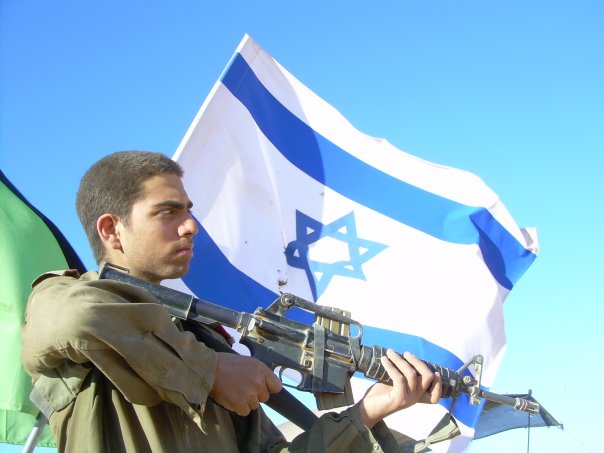

 Posts
Posts


