Over the last few weeks and months, a spurious lie has been spreading. Nothing new, perhaps, lies are told the whole time. But this one is a particularly important lie, and it needs quashing with immediate effect.
The lie goes as follows. The Palestinian people want to live in peace. They want to live in peace, alongside Israel. They want to live in peace, alongside Israel, the Jewish state. They want to live in peace, alongside Israel, the Jewish state, but Israeli Prime Minister, Benjamin Netanyahu, is an extremist and prevents them from doing so. Benjamin Netanyahu and his cohorts, the lie goes, are the sole reason why the peace process appears to be dead in the water.
To understand the claim better, we must go back some time. Earlier this year, Wikileaks collaborated with the Guardian to reveal hundreds of secret documents online. The Guardian went through the archives and found an astonishing incident. In an article entitled, "Israel spurned Palestinian offer of 'biggest Yerushalayim in history'", we are told that "Leaked papers reveal [Palestinian] negotiators proposed concessions on East Jerusalem settlements, Sheikh Jarrah and Old City holy sites" and that Palestinian chief negotiator, Saeb Erekat said the following: "It is no secret that … we are offering you the biggest Yerushalayim [the Hebrew word for Jerusalem] in history." The Guardian had a field day with this quote, using it as proof that the Palestinians were ready to make mass concessions. What was not mentioned in the headline, or in the analysis articles, was that Erekat went on to say, "But we must talk about the concept of al-Quds [Jerusalem in Arabic]."
The Guardian is quick to inform us that an "unprecedented offer” was made “on the East Jerusalem settlements”, carefully picking and mixing quotes that painted a story of Palestinian negotiators adopting a conciliatory approach, going so far as to propose "that Israel annex all Jewish settlements in Jerusalem except Har Homa." Put like this, it sounded very much like the Israelis were acting unreasonably, wantonly even.
In the ensuing debacle, Israel was roundly criticised for deliberately missing an opportunity to forge a real, lasting peace with the Palestinians. Had this been the end of the story, I would no doubt have not been writing about Palestinian lies, but about Israeli ones.
But the story does not end there. There is much that the Guardian neglected tell us in its editorials or headlines. For while Israel was indeed offered concessions by Palestinian negotiators, they were rendered obsolete and utterly invalidated when placed in the context of the greater plan put forward. Deep in the article, toward the end, we are told that Israel's negotiator was "recorded as dismissing the offer out of hand because the Palestinians had refused to concede Har Homa, as well as the settlements at Ma'ale Adumim, near Jerusalem, and Ariel, deeper in the West Bank." As this crucial fact was not afforded anywhere near the same level of prominence, Israel's reaction appears totally unreasonable.
Intriguingly, we are told that "Israel's position was fully supported by the Bush administration." Whatever one might say about the Bush administration, is worthy of note that the Israeli position was fully supported. No reservations were expressed. It was clear as day to the Americans that an offer on Jerusalem offset by a situation in which Ma'ale Adumim and Ariel would have to be ceded by the Israelis to Palestinian control was wholly unacceptable.
Not only this, but we might bear in mind recent statements made by Maen Rashid Areikat, the Palestine Liberation Organization's ambassador to the U.S., who said that the future Palestine should be free of Jews. After the firestorm that followed, Areikat then incriminated himself further when reiterating his position to the left-leaning Huffington Post stating that "Israeli soldiers and settlers -- 'persons who are amid an occupation, who are in my land illegally' -- would be rejected from the new Palestinian state." So, not only would Israel have to give Ariel and Ma'ale Adumim over to the Palestinians, but in excess of 56,000 people would be forcibly ejected from their homes and compelled to find a new place to live. Is it any wonder that Israel rejected such a proposition? The peace process is dead in the water, but not for lack of Israel trying. It is dead in the water because the Palestinian leadership has led us so far up a futile and fruitless path that there is nowhere else to turn but to yet more ridiculous measures. By acting like a petulant child, not only is the Palestinian leadership dismissing Israel's concerns and requirements, but it is effectively sabotaging the demands and needs of its own people, too.
For almost two decades now, there has been an implicit understanding that negotiations will take place based on the cease-fire line of 1949 commonly known as the "1967 borders". This line was never intended to constitute a border. How it came to be regarded as sacred has been one of the greatest deceptions of our time. So when President Obama states that Israel will need to find a solution based on this line, this is a massive break with previous agreements and understandings. Instead of focusing on the abominable racial incitement and insidious accusations of land theft being propagated by the Palestinians, a blind eye is turn to such indiscretions and the heat is turned on Israel for having the gall to demand that tens of thousands of people not be uprooted from their homes.
It is revealing that Palestinian President Mahmoud Abbas saw fit to select Latifa Abu Hmeid, the mother of several terrorists involved in multiple attacks on Israeli civilians, to be the ambassador for the Palestinian independence bid. Abbas might be a moderate relative to his predecessor Yassir Arafat, but there can be no doubt that he is absolutely not moderate. In choosing such a person to endorse the bid, we are told everything we need to know about his vision and aspirations.
It would be bad enough if this was an aberration from the norm. But it’s not. Previously, Abbas has overseen the dedication of a town square near Ramallah to another Palestinian national icon, Dalal Al Mughrabi, the terrorist who killed 37 people, including 13 children, after hijacking an Israeli bus in 1979. At least two schools and numerous summer camps are amongst the recipients of having the dubious honour of being named after this murderer. Such are the heroes of the Palestinian people.
Even more disturbingly, you might have missed such enthralling television as this, in which little children are shown dressing up as suicide bombers and clutching mock AK-47 rifles. Similarly, another odious clip depicts a little girl facing the screen telling viewers that Israel “stole” all the land, and “changed the names”. It’s bad enough that the current generation make unreasonable demands of Israel. Much, much worse is that the current generation are being indoctrinated before our eyes, being led to believe that Israel – in its totality – has no right to exist at all.
So. Do the Palestinian people want to live in peace? To be fair, I imagine the answer is that many do. Most people in the world do. But do the Palestinian people want to live peace alongside Israel? Well, no, not if repeated attempts to portray the residents of Tel Aviv, Haifa, west Jerusalem and other internationally undisputed Israel-controlled areas as land thieves and aliens are anything to go by. As long as the entire Jewish state is repeatedly deemed illegal and a travesty of justice, then it follows that the Palestinians are not prepared to accept an Israeli state alongside it. As long as such agitation reigns unchecked, what hope is there for peace?
It would take someone with all the vision of a Cyclops to believe that Netanyahu is responsible for Abbas’s endorsement and glorification of terror and his subsequent refusal to engage in negotiations. Benjamin Netanyahu's fault? Israel wilfully spurning opportunities to make peace? Palestinians forced to a final resort? Hardly. Don’t believe the lie, no matter how many times you hear it.
Showing posts with label occupation. Show all posts
Showing posts with label occupation. Show all posts
Tuesday, September 20, 2011


Friday, August 19, 2011
A letter I wrote to the British media...
Sir,
As a Londoner who has made his home in Jerusalem, I write to you with a tear in my eye. Yesterday's dreadful attack on Israeli citizens was not the first, nor will likely be the last, in a long chain.
September draws closer and the possibility of a Palestinian state becomes imminent, it is pertinent for us to ask ourselves whether the Palestinian leadership truly desire to live in peace with their Israeli neighbours. For all the talk of the evil of the occupation, Israelis have no assurances that the Palestinians seek to root out terrorism. Palestinian President Mahmoud Abbas might sound moderate, but scratch the surface and we see that terrorism is still glorified in the Territories. Just last year, Abbas dedicated a town square in the memory of Dalal Al-Mughrabi, a terrorist who hijacked a bus and murdered 37 Israelis in cold blood in 1978. Two summer camps also have the dubious honour of being named after this woman. It is evident that the Palestinian leadership is not interested in peaceful relations with Israel. Peace will only come when the Palestinians demonstrate their commitment to bring to justice and cease raising their children in an atmosphere of hate. Why is the Palestinian government not being pressured more to stop this wicked incitement? And why is Israel expected to allow a state characterised by such evil to arise?
Yours sincerely,
Elan Miller
Jerusalem
As a Londoner who has made his home in Jerusalem, I write to you with a tear in my eye. Yesterday's dreadful attack on Israeli citizens was not the first, nor will likely be the last, in a long chain.
September draws closer and the possibility of a Palestinian state becomes imminent, it is pertinent for us to ask ourselves whether the Palestinian leadership truly desire to live in peace with their Israeli neighbours. For all the talk of the evil of the occupation, Israelis have no assurances that the Palestinians seek to root out terrorism. Palestinian President Mahmoud Abbas might sound moderate, but scratch the surface and we see that terrorism is still glorified in the Territories. Just last year, Abbas dedicated a town square in the memory of Dalal Al-Mughrabi, a terrorist who hijacked a bus and murdered 37 Israelis in cold blood in 1978. Two summer camps also have the dubious honour of being named after this woman. It is evident that the Palestinian leadership is not interested in peaceful relations with Israel. Peace will only come when the Palestinians demonstrate their commitment to bring to justice and cease raising their children in an atmosphere of hate. Why is the Palestinian government not being pressured more to stop this wicked incitement? And why is Israel expected to allow a state characterised by such evil to arise?
Yours sincerely,
Elan Miller
Jerusalem
Monday, June 07, 2010
How to Start a Blood Libel in Four Easy Steps
This is a guest post by Yedidya Kennard.
STEP ONE - WRITE THE STORY
This is important. This is the story that you will have to stick to till the end, no matter what. It helps if part of the story is already well known - not true, but well known. For example, if your target is known to be an agressor, whether he is or isn't, this saves you a lot of work. For this reason it is important to keep a running campaign of libels, making all of them easily accepted.
The setting for your story is important. Boats are good, they bring to mind sun, beaches, deck chairs etc. If you can make it look like your target is bringing violence to a peaceful place, its always good. Of course, if your target is an army, you have an added advantage - soldiers are always associated with violence.
Try to link words with yourself that are associated with non-violence, that way even if you clearly are shown to be violent people will still be more inclined to believe you. Words like 'humanitarian' are good. Try and create a name for yourself involving words like 'freedom' or similar. It doesnt have to be relevant or true in any way, but if you can make it stick in the media they won't change it, no matter how clearly it is wrong.
STEP TWO - THE ACTION
It is important to be seen to lose. People like an underdog. Most people won't care who started or what happened; the main thing is the result. It may seem strange, but here you only win if you are seen to lose. After that, nothing else is really important. Also important is equipment, again you want to be seen here as the underdog. Words again are key. 'Guns' sounds bad, 'sticks' sound like a playground fight - even if you can kill people with them. 'Slingshots' are great too, remember, they are effective, they were once the long range weapon of choice, but now they sound like toys. Even knives and broken bottles sound harmless when put against guns. If you have to provoke at long range then you can still use this - call your rockets 'homemade' and all people will see is Grandma baking cookies. Harmless.
STEP THREE - GET YOUR STORY OUT FAST.
Speed is key here. Once the story is out there it won't stop being out there. Remember, journalists need stuff to report all the time, so if you get your story out there even 2 or 3 hours before the target gets his version out, you have a massive advantage. Journalists wont check if your story is true or not, as long as it is said by someone, they can report it. Once it is out there and there is no response from the other side, it becomes accepted as fact. It is far harder to change a story, or to challenge an established narrative, than it is to start one.
STEP FOUR - STICK TO THE SCRIPT!
This is perhaps the most difficult and most critical part. Once the other side get their act together they will of course challenge your account, and may even have evidence to back themselves up. What you have to understand here is that evidence is irrelevant. A story, however obviously wrong, will never die. However, some skill is needed to keep it as the mainstream version of events. You need to be able to lie with a straight face, despite the evidence against being right in front of you. You can practise this by looking at the sky and declaring 'The sky is green!". Once you can say this and even believe it, try to make other people believe it.
Remember, someone out there already believes your story; he will want to keep on believing it instead of seeing it being proven wrong. Help him - if he sees someone else denying the evidence, then it's easier for him to do so as well.
A great tactic to use here is emotive language. Put evidence against emotion, emotion always wins. Words again are key. If your side is seen using violence, call it 'passive resistance', it sounds good even if it's wrong. It has the word 'resistance' in it so it sounds plausible. If you can say it enough times, instead of seeing your person stabbing someone, all the viewer will see is an old wisened man in a loincloth. Also, if your words stick, then anyone challenging them is seen to be obviously changing the accepted version of events, which is very hard to do.
That's it! It all comes down to the words, whether they have any bearing on reality at all is totally irrelevant. Get your story out first, get the media to accept your words and the story will run and run. Of course, if you have a media and a population for some other reason ready to accept your version, so much the better! Always remember, the truth is irrelevant, it's the Story that counts.
STEP ONE - WRITE THE STORY
This is important. This is the story that you will have to stick to till the end, no matter what. It helps if part of the story is already well known - not true, but well known. For example, if your target is known to be an agressor, whether he is or isn't, this saves you a lot of work. For this reason it is important to keep a running campaign of libels, making all of them easily accepted.
The setting for your story is important. Boats are good, they bring to mind sun, beaches, deck chairs etc. If you can make it look like your target is bringing violence to a peaceful place, its always good. Of course, if your target is an army, you have an added advantage - soldiers are always associated with violence.
Try to link words with yourself that are associated with non-violence, that way even if you clearly are shown to be violent people will still be more inclined to believe you. Words like 'humanitarian' are good. Try and create a name for yourself involving words like 'freedom' or similar. It doesnt have to be relevant or true in any way, but if you can make it stick in the media they won't change it, no matter how clearly it is wrong.
STEP TWO - THE ACTION
It is important to be seen to lose. People like an underdog. Most people won't care who started or what happened; the main thing is the result. It may seem strange, but here you only win if you are seen to lose. After that, nothing else is really important. Also important is equipment, again you want to be seen here as the underdog. Words again are key. 'Guns' sounds bad, 'sticks' sound like a playground fight - even if you can kill people with them. 'Slingshots' are great too, remember, they are effective, they were once the long range weapon of choice, but now they sound like toys. Even knives and broken bottles sound harmless when put against guns. If you have to provoke at long range then you can still use this - call your rockets 'homemade' and all people will see is Grandma baking cookies. Harmless.
STEP THREE - GET YOUR STORY OUT FAST.
Speed is key here. Once the story is out there it won't stop being out there. Remember, journalists need stuff to report all the time, so if you get your story out there even 2 or 3 hours before the target gets his version out, you have a massive advantage. Journalists wont check if your story is true or not, as long as it is said by someone, they can report it. Once it is out there and there is no response from the other side, it becomes accepted as fact. It is far harder to change a story, or to challenge an established narrative, than it is to start one.
STEP FOUR - STICK TO THE SCRIPT!
This is perhaps the most difficult and most critical part. Once the other side get their act together they will of course challenge your account, and may even have evidence to back themselves up. What you have to understand here is that evidence is irrelevant. A story, however obviously wrong, will never die. However, some skill is needed to keep it as the mainstream version of events. You need to be able to lie with a straight face, despite the evidence against being right in front of you. You can practise this by looking at the sky and declaring 'The sky is green!". Once you can say this and even believe it, try to make other people believe it.
Remember, someone out there already believes your story; he will want to keep on believing it instead of seeing it being proven wrong. Help him - if he sees someone else denying the evidence, then it's easier for him to do so as well.
A great tactic to use here is emotive language. Put evidence against emotion, emotion always wins. Words again are key. If your side is seen using violence, call it 'passive resistance', it sounds good even if it's wrong. It has the word 'resistance' in it so it sounds plausible. If you can say it enough times, instead of seeing your person stabbing someone, all the viewer will see is an old wisened man in a loincloth. Also, if your words stick, then anyone challenging them is seen to be obviously changing the accepted version of events, which is very hard to do.
That's it! It all comes down to the words, whether they have any bearing on reality at all is totally irrelevant. Get your story out first, get the media to accept your words and the story will run and run. Of course, if you have a media and a population for some other reason ready to accept your version, so much the better! Always remember, the truth is irrelevant, it's the Story that counts.
Wednesday, May 12, 2010
Some thoughts on Yom Yerushalayim
Last night, about an hour before the commencement of Yom Yerushalayim (Jerusalem Day), I updated my Facebook status to: "Elan Miller has changed his profile picture to the Jerusalem flag in support of the Jewish people's eternal right to live in Jerusalem, the eternal capital of the Jewish people. To deny Jews the right to live in their home on the basis of their religion and ethnicity alone is wrong."
Soon after, somebody I met last summer commented. The person in question is someone I don't know too well, save to say that they were working for Haaretz on a summer internship. Their response seemed somewhat disapproving of my original statement: "To deny Palestinians the right to live in their home on the basis of their religion and ethnicity alone is (also) wrong."
Immediately, a number of my friends and acquaintances jumped at this oppositional perspective. Concerned that the person who left the comment would feel besieged, I got in touch right away to explain my own personal position. The remainder of this blog entry is comprised of the subsequent conversation we had. I hope you find it thought-provoking. Feel free to comment below; I'd be interested to hear what you have to say, too.
Soon after, my friend responded:
The strength of this last statement stunned me somewhat. While the views expressed by some of my friends are firmly held, I honestly don't consider them a threat to peace talks. In essence, they pointed out that the overwhelming proportion of the lands of the Middle East are Arab-owned, and that Israel deserves its own patch. I consider this argument is overly simple as it does not take into account the myriad other factors involved, but I also don't consider such a point to be one that strikes a lethal blow to the peace process.
Having said that, I understood my friend; people with such strongly held convictions certainly seem to be opposed to listening to other views. I immediately set about penning my response in turn, copied below.
That, at least thus far, is the end of our conversation. What do you think?
Soon after, somebody I met last summer commented. The person in question is someone I don't know too well, save to say that they were working for Haaretz on a summer internship. Their response seemed somewhat disapproving of my original statement: "To deny Palestinians the right to live in their home on the basis of their religion and ethnicity alone is (also) wrong."
Immediately, a number of my friends and acquaintances jumped at this oppositional perspective. Concerned that the person who left the comment would feel besieged, I got in touch right away to explain my own personal position. The remainder of this blog entry is comprised of the subsequent conversation we had. I hope you find it thought-provoking. Feel free to comment below; I'd be interested to hear what you have to say, too.
Hey :)
Thanks for your comment. Excuse the quick protest put up by my friends and associates, please don't take their comments personally.
You should know that I'm not an extremist at all, and I actually agree with your sentiment to a large extent, if not fully. Your point is heard loud and clear, and bothers me too.
I am conflicted and torn when it comes to the Palestinians' rights. First and foremost, I am a human being and a Jew; one who wishes no evil or discomfort on any other caring, living, loving human being. Let there be no doubt that I wish the Palestinians any suffering. But at the same time, I cannot countenaence Israel giving up control over Jerusalem. For over 3,000 years Jerusalem has been a united, undivided city. For 19 years, however, it was a divided city with a wall down the middle, dividing Jews from Arab. That time was when the Jordanians annexed East Jerusalem and put up a wall to prevent the Jews of Israel from entering. It pains me to think that Jerusalem should ever be divided again.
As to the rights of the Palestinians, I consider two things as crucial to fully understanding the matter. Firstly, that the Palestinians' claim to the land it's historically sketchy, but second, that it doesn't make a lot of a difference; they have nowhere else to go now that Jordan, Egypt, Syria, Lebanon and Iraq have made it abundantly clear that they won't accept the Palestinians living amongst them. If they have lived in their present location for three generations already, my thinking is that Israel should try to ensure their safety and afford them defensible and contiguous borders. There need be no reason to stop Palestinians from living in Jerusalem; plenty already live in Haifa, Jaffa and Acre; Palestinian access to (, and land ownership in,) Jerusalem should be no barrier to peace.
Hope all's well with you.
Best regards,
-Elan
Soon after, my friend responded:
Hi Elan,
Thanks for your response, it means a lot to me. I will not bother in entering into a discussion with those people, as such a difference in basic moral, will not lead to a fulfilling conclusion.
I do not want to lecture you on my views, but I believe that when human beings (no matter their ethnicity or religion) are evicted, either through force or verbal discrimination from their houses, it should be considered a crime. My time at Haaretz showed me that there were two prevalent standards in Israel, one for Jews and one for Muslims, but one day I hope we can move past that and qualify each other first and foremost as human beings. That is exactly what my comment referred too. Racism and discrimination towards either Jews or Palestinians must end. As Jews have suffered throughout history at the hand of others, one would hope that they hold some sort of moral superiority or even conscience.
It is because of people like your friends and associates that the process towards peace will be elongated.
I hope all is well with you too.
The strength of this last statement stunned me somewhat. While the views expressed by some of my friends are firmly held, I honestly don't consider them a threat to peace talks. In essence, they pointed out that the overwhelming proportion of the lands of the Middle East are Arab-owned, and that Israel deserves its own patch. I consider this argument is overly simple as it does not take into account the myriad other factors involved, but I also don't consider such a point to be one that strikes a lethal blow to the peace process.
Having said that, I understood my friend; people with such strongly held convictions certainly seem to be opposed to listening to other views. I immediately set about penning my response in turn, copied below.
Hi,
Thank you. It's a shame that you don't enter into a discussion with them. Although I know that two of them will almost certainly not change their minds, it is entirely possible that one really will consider what you have to say.
I agree with you that evictions without due documentation and/or reason constitute a heinous crime and assure you that the overwhelming majority of Israelis agree with you, too.
I disagree with you about double-standards, however. Although there are most certainly double-standards vis-a-vis state relationships to Jews and Muslims, it should be noted that Muslim women living in Israel are afforded more rights than anywhere else in Middle East. There are many positive aspects for both Muslims living in Israel and Palestinian Muslims whose lives are essentially regulated by the Israeli occupation*.
Jews have indeed suffered throughout history and your point bothers me, too - Jews should hold themselves to a higher standard. I note with pride organisations like B'Tselem and Rabbis for Human Rights who make a point of protecting equality and human rights in Israel and the territories. While Israel is not yet perfect, I believe that we should take a long-term view. We must not forgive its errors and inadequacies, but neither should we condemn them without consideration for all the positive work being done. I really do believe that peace will eventually come to the region, but for that to happen, it is essential not to appropriate blame. Two reasons as to why; firstly, there is no such thing as a single reason for something going wrong here, and secondly, because no-one likes being blamed and pointing the finger only serves to embitter and entrench people's positions.
Feel free to let me know if you agree/disagree with what I say. I live and learn from everyone.
Best,
-Elan
*See, I'm no blind rightist, I acknowledge the occupation and deplore it, too. I'm actually more or less dead centre of the political spectrum.
That, at least thus far, is the end of our conversation. What do you think?
Thursday, May 06, 2010
Aluf Benn: "I really can't understand" Obama not coming to Israel.
Last night, I had the opportunity to attend a StandWithUs organised panel at the Hebrew University on the challenges of reporting in Israel.. Chaired by Michael Dickson of Stand With Us, foreign reporters Daphne Algom (a former CNN producer), Reena Ninan (FOX News) and Daniella Brick (EFE Spain) were joined Aluf Benn, editor-at-large of Ha'aretz.
Because I worked as an intern for the Jerusalem Post last summer, I was interested to see if anything particularly news-worthy would come from the panel. Although I’ve left, I have since written a couple of articles, and decided that if I found any gold, I would file a report and let the editors review it. I realised that I had a good opportunity to ask Mr. Benn a question or two and see if he had anything controversial to say. To this end, I got in touch with a friend/contact of mine, prominent Jewish blogger "Carl in Jerusalem" from the Israel Matzav blog.
I was originally thinking of asking Benn about Ha'retz's actions and overall policy with regards the recent Anat Kamm scandal. My friend suggested, however, that I ask a different question. Instead of focusing on a relatively transient issue, he chose a more far-reaching one. I adapted the question slightly, but it is essentially his suggestion:
"Aluf, you wrote an op-ed in the New York Times on July 27th last year. I imagine that a sizeable number of the people present haven't read it; so to summarise, you called on Barrack Obama for greater communication between the US and Israel. (Unless you'd like to correct me there...)
"After what's close to a year and a half in his term, it would seem that the problem is not one of communication, but one of policy. In your words, if "Israel is part of the problem, it's also part of the solution." But Obama doesn't appear to see things that way; he is still yet to make a visit to Israel as the president and chooses to focus on issues that are not immediately concerning. How are we to respond and regard such relations? How can we effectively deal when in such a position, and how may we defend our position when our greatest ally doesn't seem to want to hear?
"Seeing as you're talking to a number of potential foreign reporters... How can we, as potential foreign reporters, sell this side of the story when it's not something people are overly concerned about?"
Aluf Benn's response: “It’s great that you mentioned the date. It’s been 9 months, but I could still print it today or tomorrow. He [Obama] missed one point. Israel. He went all around the world, speaking to different leaders, but not here. Yes, I stand by it.
"I was sitting in Tel Aviv one Saturday morning in coffee shop a couple of weeks ago. I was surrounded by secular Israelis, the most open-minded types. But when the conversation turns to him, they say "We can't trust him." Even the most secular. In Tel Aviv. If he can't gain their support, how is he to gain the Israeli public's support? I really can't understand it."
Later on, Benn mentioned how he’d met with an ambassador from a European country recently. The ambassador reportedly told Benn that "If the people of my country could experience what I experience living here, they would have a completely different image... I expected it to be far more conservative - far more religious than it is." Benn’s point was that people are not out to get Israel; they just don’t know what life here is like. Then again, they don’t really care.
What intrigued me was that over the course of the panel's question and answer session, all present said that they believed that there was no deliberate bias against Israel by the international media and that though Israel finds it hard to sell its side of the story, people are willing to listen. But this stands in stark contrast to Obama's unwillingness to travel to the Jewish state. If after a year and a half in office he doesn't want to come here and work with us, it would seem that Israel will have not merely a hard sell, but a nearly impossible sell to make.
While we should remain optimistic, I’m concerned that we are remaining steadfast in our positive approach, even though the facts betray the truth that we don’t have real friends in Washington. I can’t say that Benn studiously avoided this issue, but he didn’t seem to want to consider it too seriously. He preferred to say that he “couldn’t understand it”.
Although I've only posted entry this after midday on Thursday, I sent my notes on the panel to the IsraelMatzav blog last night. In the blog entry on Benn’s comments there, I read that "a prominent Jewish leader cautioned Obama against going to Israel, because the trip would be a disaster and he would be walking into the lions' den." But wouldn't that be foolish? If Obama is even half-serious about bringing peace to the region, why on earth would he avoid the issue? For as long as he postpones this inconvenient visit, Israelis will become increasingly disgruntled at being shunned. It's a vicious cycle that has to be broken before peace spirals out of reach during his presidency. And I'm not convinced that Obama is a strong enough man for that.
Because I worked as an intern for the Jerusalem Post last summer, I was interested to see if anything particularly news-worthy would come from the panel. Although I’ve left, I have since written a couple of articles, and decided that if I found any gold, I would file a report and let the editors review it. I realised that I had a good opportunity to ask Mr. Benn a question or two and see if he had anything controversial to say. To this end, I got in touch with a friend/contact of mine, prominent Jewish blogger "Carl in Jerusalem" from the Israel Matzav blog.
I was originally thinking of asking Benn about Ha'retz's actions and overall policy with regards the recent Anat Kamm scandal. My friend suggested, however, that I ask a different question. Instead of focusing on a relatively transient issue, he chose a more far-reaching one. I adapted the question slightly, but it is essentially his suggestion:
"Aluf, you wrote an op-ed in the New York Times on July 27th last year. I imagine that a sizeable number of the people present haven't read it; so to summarise, you called on Barrack Obama for greater communication between the US and Israel. (Unless you'd like to correct me there...)
"After what's close to a year and a half in his term, it would seem that the problem is not one of communication, but one of policy. In your words, if "Israel is part of the problem, it's also part of the solution." But Obama doesn't appear to see things that way; he is still yet to make a visit to Israel as the president and chooses to focus on issues that are not immediately concerning. How are we to respond and regard such relations? How can we effectively deal when in such a position, and how may we defend our position when our greatest ally doesn't seem to want to hear?
"Seeing as you're talking to a number of potential foreign reporters... How can we, as potential foreign reporters, sell this side of the story when it's not something people are overly concerned about?"
Aluf Benn's response: “It’s great that you mentioned the date. It’s been 9 months, but I could still print it today or tomorrow. He [Obama] missed one point. Israel. He went all around the world, speaking to different leaders, but not here. Yes, I stand by it.
"I was sitting in Tel Aviv one Saturday morning in coffee shop a couple of weeks ago. I was surrounded by secular Israelis, the most open-minded types. But when the conversation turns to him, they say "We can't trust him." Even the most secular. In Tel Aviv. If he can't gain their support, how is he to gain the Israeli public's support? I really can't understand it."
Later on, Benn mentioned how he’d met with an ambassador from a European country recently. The ambassador reportedly told Benn that "If the people of my country could experience what I experience living here, they would have a completely different image... I expected it to be far more conservative - far more religious than it is." Benn’s point was that people are not out to get Israel; they just don’t know what life here is like. Then again, they don’t really care.
What intrigued me was that over the course of the panel's question and answer session, all present said that they believed that there was no deliberate bias against Israel by the international media and that though Israel finds it hard to sell its side of the story, people are willing to listen. But this stands in stark contrast to Obama's unwillingness to travel to the Jewish state. If after a year and a half in office he doesn't want to come here and work with us, it would seem that Israel will have not merely a hard sell, but a nearly impossible sell to make.
While we should remain optimistic, I’m concerned that we are remaining steadfast in our positive approach, even though the facts betray the truth that we don’t have real friends in Washington. I can’t say that Benn studiously avoided this issue, but he didn’t seem to want to consider it too seriously. He preferred to say that he “couldn’t understand it”.
Although I've only posted entry this after midday on Thursday, I sent my notes on the panel to the IsraelMatzav blog last night. In the blog entry on Benn’s comments there, I read that "a prominent Jewish leader cautioned Obama against going to Israel, because the trip would be a disaster and he would be walking into the lions' den." But wouldn't that be foolish? If Obama is even half-serious about bringing peace to the region, why on earth would he avoid the issue? For as long as he postpones this inconvenient visit, Israelis will become increasingly disgruntled at being shunned. It's a vicious cycle that has to be broken before peace spirals out of reach during his presidency. And I'm not convinced that Obama is a strong enough man for that.
Thursday, April 15, 2010
More willful distortion courtesy of the BBC
I've taken umbrage with BBC reporting before, but this time I'm really mad.
The story in question, Religious row holds up Israeli hospital", is one that I was actually rather glad to see being reported upon as it was a story that carried national significance within Israel and made for good material on Israeli life and local affairs, as opposed to yet another one of the BBC's identikit pieces on the ongoing conflict which serves to make the region look like nothing but a bleak war zone. True, this story stems from a conflict of interest between the religious and secular factions in Israel, but I welcomed the BBC's decision to examine some other aspect of Israeli life.
The article explains that "new unit was to be fortified against the rockets often fired into Israel by Palestinian militants" because the hospital is located only 12km from the Gaza strip, well within reach of the Kassam and Grad rockets fired from there.
I was happy that the BBC would write this, but my initial feelings gave way to one of disbelief when I read an outrageous following lie slipped in the next sentence: "Nearly three-quarters of the hospital's patients had to be evacuated during Israel's military operation in Gaza last year, as there was nowhere safe for them to stay as the rockets fell in response."

To say my eyes nearly popped out of my head would be an understatement. Really? I never knew that the rockets fired at Israeli cities and towns were a response to Israel's attack on Hamas... Oh, how thoughtless of us! If only we'd known that earlier, we would have stopped attacking those poor Hamasniks. What a terrrible misunderstanding!
Of course, the truth is that the rocket fire on Israel predated Operation Cast Lead by a mere eight years. Operation Cast Lead was a response to the rocket fire, not the other way round. If the BBC wants to spread muck it should be more careful. Israel's detractors have apparently decided that the best way to do this is to malign Israel's intentions, disparaging us as wayward war criminals who wantonly kill the defenceless. The tactic works; such claims are difficult in the extreme to disprove.
But this time it would seem that the BBC hacks were a little too excited to share their perspective with the world and allowed their excitedness to get the better of them. If I'll give them the benefit of the doubt, I can only imagine that they've come to the point that they believe their own distorted perception of reality that they've forgotten that the operation was initiated after Hamas repeatedly allowed a six-month ceasefire to be broken, with the last straw coming after Israel realised that Hamas were using the lull to build tunnels with the aim of capturing more Israeli soldiers.
So they've either bought their own claptrap or they've decided to dispense with their normal method of working with reality and then spinning it to fit their own anti-Israel agenda. Either way, I'm appalled that the BBC can rewrite history like this.
Hamas struck first? No. Sod that. If the facts are inconvenient, just change them to suit your own ends. Who cares about the truth, anyway?
Oh, and another thing; do these rockets look "crude" or "home-made" (as the BBC loves to describe them) to you? Thought not.

The story in question, Religious row holds up Israeli hospital", is one that I was actually rather glad to see being reported upon as it was a story that carried national significance within Israel and made for good material on Israeli life and local affairs, as opposed to yet another one of the BBC's identikit pieces on the ongoing conflict which serves to make the region look like nothing but a bleak war zone. True, this story stems from a conflict of interest between the religious and secular factions in Israel, but I welcomed the BBC's decision to examine some other aspect of Israeli life.
The article explains that "new unit was to be fortified against the rockets often fired into Israel by Palestinian militants" because the hospital is located only 12km from the Gaza strip, well within reach of the Kassam and Grad rockets fired from there.
I was happy that the BBC would write this, but my initial feelings gave way to one of disbelief when I read an outrageous following lie slipped in the next sentence: "Nearly three-quarters of the hospital's patients had to be evacuated during Israel's military operation in Gaza last year, as there was nowhere safe for them to stay as the rockets fell in response."

To say my eyes nearly popped out of my head would be an understatement. Really? I never knew that the rockets fired at Israeli cities and towns were a response to Israel's attack on Hamas... Oh, how thoughtless of us! If only we'd known that earlier, we would have stopped attacking those poor Hamasniks. What a terrrible misunderstanding!
Of course, the truth is that the rocket fire on Israel predated Operation Cast Lead by a mere eight years. Operation Cast Lead was a response to the rocket fire, not the other way round. If the BBC wants to spread muck it should be more careful. Israel's detractors have apparently decided that the best way to do this is to malign Israel's intentions, disparaging us as wayward war criminals who wantonly kill the defenceless. The tactic works; such claims are difficult in the extreme to disprove.
But this time it would seem that the BBC hacks were a little too excited to share their perspective with the world and allowed their excitedness to get the better of them. If I'll give them the benefit of the doubt, I can only imagine that they've come to the point that they believe their own distorted perception of reality that they've forgotten that the operation was initiated after Hamas repeatedly allowed a six-month ceasefire to be broken, with the last straw coming after Israel realised that Hamas were using the lull to build tunnels with the aim of capturing more Israeli soldiers.
So they've either bought their own claptrap or they've decided to dispense with their normal method of working with reality and then spinning it to fit their own anti-Israel agenda. Either way, I'm appalled that the BBC can rewrite history like this.
Hamas struck first? No. Sod that. If the facts are inconvenient, just change them to suit your own ends. Who cares about the truth, anyway?
Oh, and another thing; do these rockets look "crude" or "home-made" (as the BBC loves to describe them) to you? Thought not.

Tuesday, March 16, 2010
Sorry, it's not newsworthy.
Today has been a tumultuous day in Jerusalem. Following the rededication ceremony of the newly rebuilt Hurva synagogue in the Old City, Arabs across the Middle East have been protesting this latest act of "aggression" by the Israelis. Of course, the fact that this synagogue has been rebuilt after being twice destroyed, once by the Jordanian army in 1948, certainly can be seen as a sign of defiance, but let's not get carried away. It's not a statement of intent or a declaration that we are about to ethnically cleanse all of historical Eretz Yisrael.
Last Thursday, the Elder of Ziyon blog explained that "ever since Ha'aretz reported a (pretty much unfounded) rumor that the Vilna Gaon had predicted that the Third Temple would be built on March 16, 2010, they have been convinced that Israel has evil plans". Disturbed by such Israeli insolence, no doubt, the Wakf, the Islamic authority that controls the Temple Mount, declared that today, the day after the rededication ceremony, will be a "Day of Rage".
Needless to say, nobody argues with the Islamic Authorities, whether they have reason to act and order as they do or not. And so today has proved to be a rather stressful one for the Israeli police, to put it mildly. Take a look at the Muqata Blog's excellent documentation of the ongoing violence. His notes start at 10:20am, and have been updated at least once every hour since.*
Elder of Ziyon has already noted how the headlines in the media have been primarily anti-Israel, framing the events in such a way as to suggest that the rioting was almost passive. (Click here to see this entry.) But there is something else that bothers me; our old friends at the BBC have decided thus far that the issue is unworthy of reporting. I refer you to the screengrab of its main Middle East page:
As clear an example of burying the lead as you will find. The top item states that George Mitchell, the US envoy, will not be coming to the region, as was originally planned. Underneath the headline, a cursory and vague reference to "clashes" is made. Not a hint as to the fact that Arab riots are going on in Jerusalem. Certainly nothing to say that said riots are entirely unprovoked.
I should make clear at this point that if you think that I am being overly-sensitive, we should all remember how the last intifada started; over perceived provocations by Israel regarding the Temple Mount. Provocations that were fictitious but acted on, vigorously, by a willing Arab mob that had been stirred up by its own leadership. And what does the BBC have to say about the matter? Nothing.
*At time of posting, which is 7:25pm.
Last Thursday, the Elder of Ziyon blog explained that "ever since Ha'aretz reported a (pretty much unfounded) rumor that the Vilna Gaon had predicted that the Third Temple would be built on March 16, 2010, they have been convinced that Israel has evil plans". Disturbed by such Israeli insolence, no doubt, the Wakf, the Islamic authority that controls the Temple Mount, declared that today, the day after the rededication ceremony, will be a "Day of Rage".
Needless to say, nobody argues with the Islamic Authorities, whether they have reason to act and order as they do or not. And so today has proved to be a rather stressful one for the Israeli police, to put it mildly. Take a look at the Muqata Blog's excellent documentation of the ongoing violence. His notes start at 10:20am, and have been updated at least once every hour since.*
Elder of Ziyon has already noted how the headlines in the media have been primarily anti-Israel, framing the events in such a way as to suggest that the rioting was almost passive. (Click here to see this entry.) But there is something else that bothers me; our old friends at the BBC have decided thus far that the issue is unworthy of reporting. I refer you to the screengrab of its main Middle East page:
 |
| Spot the non-story. |
As clear an example of burying the lead as you will find. The top item states that George Mitchell, the US envoy, will not be coming to the region, as was originally planned. Underneath the headline, a cursory and vague reference to "clashes" is made. Not a hint as to the fact that Arab riots are going on in Jerusalem. Certainly nothing to say that said riots are entirely unprovoked.
I should make clear at this point that if you think that I am being overly-sensitive, we should all remember how the last intifada started; over perceived provocations by Israel regarding the Temple Mount. Provocations that were fictitious but acted on, vigorously, by a willing Arab mob that had been stirred up by its own leadership. And what does the BBC have to say about the matter? Nothing.
*At time of posting, which is 7:25pm.
Monday, October 05, 2009
Goldstone the fool?
I stumbled an interesting article on the Muqata blog last week that I want to share with you.
'JoeSettler,' the blogger who penned this entry, points out that “there seems to be a lot of confirmation that this story is true, and it doesn’t say much for Goldstone's credibility as an investigator of war crimes.”
In 1995, the International Criminal Tribunal for the former Yugoslavia (ICTY) prosecutor’s office listed a certain Serb named Gruban as a serious war criminal. Very serious. They had a lot of details of his war crimes.
But it seems that the Prosecutor’s office had mistakenly identified the criminal involved. The person linked to this case of mistaken identy was none other than head prosecutor himself; Richard Goldstone.
From 1994 until 1996 Goldstone was the head Prosecutor at the Office of the Prosecutor (OTP) for the International Criminal Tribunal for the former Yugoslavia in the UN, and here is a link to the text of his indictment against Gruban. The ICTY's PDF is extracted here:
'JoeSettler,' the blogger who penned this entry, points out that “there seems to be a lot of confirmation that this story is true, and it doesn’t say much for Goldstone's credibility as an investigator of war crimes.”
In 1995, the International Criminal Tribunal for the former Yugoslavia (ICTY) prosecutor’s office listed a certain Serb named Gruban as a serious war criminal. Very serious. They had a lot of details of his war crimes.
But it seems that the Prosecutor’s office had mistakenly identified the criminal involved. The person linked to this case of mistaken identy was none other than head prosecutor himself; Richard Goldstone.
From 1994 until 1996 Goldstone was the head Prosecutor at the Office of the Prosecutor (OTP) for the International Criminal Tribunal for the former Yugoslavia in the UN, and here is a link to the text of his indictment against Gruban. The ICTY's PDF is extracted here:
THE INTERNATIONAL CRIMINAL TRIBUNAL FOR THE FORMER YUGOSLAVIA
THE PROSECUTOR OF THE TRIBUNAL
AGAINSTZELJKO MEAKIC, MIROSLAV KVOCKA, DRAGOLJUB PRCAC, MLADEN RADIC a.k.a. "KRKAN," MILOJICA KOS a.k.a. "KRLE," MOMCILO GRUBAN a.k.a. "CKALJA," ZDRAVKO GOVEDARICA, GRUBAN
INDICTMENT
Richard J. Goldstone, Prosecutor of the International Criminal Tribunal for the former Yugoslavia, pursuant to his authority under Article 18 of the Statute of the International Criminal Tribunal for the former Yugoslavia ("The Statute of the Tribunal"), charges...
But in 1998 the ICTY dropped all charges against the above-named Gruban:CC/PIU/314-E
The Hague, 8 May 1998
STATEMENT BY THE PROSECUTOR FOLLOWING THE WITHDRAWAL OF THE CHARGES AGAINST 14 ACCUSED
On 5 May and 8 May respectively, Judge Vohrah and Judge Riad granted the leave requested by the Office of the Prosecutor to withdraw the charges against 14 accused in the Omarska and Keraterm indictments:
The charges against the following 11 accused in the Omarska indictment are withdrawn: Zdravko GOVEDARICA, GRUBAN, Predrag KOSTIC, Nedeljko PASPALJ, Milan PAVLIC, Milutin POPOVIC, Drazenko PREDOJEVIC, Zeljko SAVIC, Mirko BABIC, Nikica JANJIC and Dragomir SAPONJA
(Note that this Gruban is not to be confused with Momcilo Gruban who was imprisoned in 2002 and is also mentioned in that first document and indictment. The charges are maintained against 5 accused who are still at large, namely:
Zeljko MEAKIC (alleged Omarska camp commander, charged with genocide), Dragoljub PRCAC (one of the two alleged deputy commanders), Milojica KOS, Momcilo GRUBAN (one the three alleged guards shift commanders) and Du{an KNEZEVIC (one of the five persons who allegedly visited the camp to commit atrocities).
There are two Grubans here and this Gruban is obviously a different Gruban entirely than the one who had the charges against him dropped. So who was this “Gruban” who turned out to be completely innocent?
Gruban Malić, given his full name, is a very well known character in Serbia. And a character he is; Gruban Malić is a fictional character in the book “Hero on a Donkey” written by Miodrag Bulatović'.
Not to comment at all on that war, but Goldstone fell for a joke someone pulled on him and his court. All the Serbs were laughing at how stupid he and his court was. It certainly destroyed any credibility they might have had for the court.
Sound familiar? Is this any different then what happened in Gaza?
The Gazans of Pallywood told Goldstone stories which he willingly and unquestioning swallowed up whole, and spit back at us. Like in Serbia, the Gazans are laughing at him while Goldstone uses their lies to attack Israel.
What is more interesting is that besides in Serbia, in the office of the ICTY this embarrassing mistake was apparently well known, and of course it wasn't publicized outward, instead they tried to basically cover up Goldstone's mistake by "dropping the charges".
That's a shame about the cover-up, because certainly everyone should remember to associate Richard Goldstone's name with the Serbian war criminal Gruban Malic' - and his donkey.
Now, is it any wonder why Goldstone was sent to Gaza to investigate Israel for war crimes?
-------------------------------------------
(Source: M'kor Rishon online newspaper)
Monday, September 21, 2009
A cause for hope
Although I blog fairly regularly, I don't think I've ever posted an entry of a personal nature here. Last week, I attended the Nefesh b'Nefesh International Jewish Bloggers Convention in Jerusalem (read my report for the Jerusalem Post here) and one of the speakers mentioned that while blogs often have specific topics, it's still nice to write those "slice of life" entries and share your experiences with others. The speaker went on to explain that for a person living in Efrat, for example, it might not seem all too interesting at first to describe one's daily commute, but to someone living on the other side of the world the idea of waking up and facing the Judaean hills, driving through biblical landscape on the way to work in the knowledge that the only traffic jam one might encounter would be from a wayward flock of sheep - well, that might be almost exotic to some. With this in mind, I've decided that it's high time that I share some of my experiences.
The first thing I want to relate is an event that occured last Monday. I had locked my bike outside the Shuk and after retrieving it, noticed that somebody had touched my gears, as they had been reset from 21st gear (3 and 7) to something like 8, as the numbers were lower around 2 and 4. I was a little bit annoyed, but I soon became genuinely irritated when I saw that the gear chain had been knocked off, too. For those readers who haven't had to put a bike's chain back on the gears, I should explain that you get your hands dirty and oily from touching the greasy chain. After realising that I had no option, I set about fixing the bike.
Just as I was about to get started, an elderly man stopped to ask me if I could help him by taking his heavy bags as he walked to the bus stop on the other side of the road. I told him that I needed to fix my bike, but that I would be with him in a second. The man was rather insistent, but I explained that I would need a little time first.
 Putting a bicycle chain back in place (illustrative)
After fidgeting with the bike's chain for a few seconds to no avail, an Arab teenager, almost certainly one of the many Arab workers in the Shuk, strode towards my bike, took it from me gently and in a split-second had the chain back on. Hugely impressed and appreciative of his kindness, I thanked him and shook his hand. It was truly heartening to see that despite what the media makes out to be total disharmony between Jews and Arabs, there's still co-operation between the two groups and away from the media spotlight, there are still instances like this that give you hope. But the boy, unaware of my goofy smile, then turned round to the old man, took his bags and walked him across the road. If there's one thing I can take from this it is that while we can never work with extremists, there will definitely be people "on the other side" who are not extreme and who want peace too. It is up to us to find a way of working with them and alienating terrorists and those who incite hatred and violence against us.
The first thing I want to relate is an event that occured last Monday. I had locked my bike outside the Shuk and after retrieving it, noticed that somebody had touched my gears, as they had been reset from 21st gear (3 and 7) to something like 8, as the numbers were lower around 2 and 4. I was a little bit annoyed, but I soon became genuinely irritated when I saw that the gear chain had been knocked off, too. For those readers who haven't had to put a bike's chain back on the gears, I should explain that you get your hands dirty and oily from touching the greasy chain. After realising that I had no option, I set about fixing the bike.
Just as I was about to get started, an elderly man stopped to ask me if I could help him by taking his heavy bags as he walked to the bus stop on the other side of the road. I told him that I needed to fix my bike, but that I would be with him in a second. The man was rather insistent, but I explained that I would need a little time first.
 Putting a bicycle chain back in place (illustrative)
After fidgeting with the bike's chain for a few seconds to no avail, an Arab teenager, almost certainly one of the many Arab workers in the Shuk, strode towards my bike, took it from me gently and in a split-second had the chain back on. Hugely impressed and appreciative of his kindness, I thanked him and shook his hand. It was truly heartening to see that despite what the media makes out to be total disharmony between Jews and Arabs, there's still co-operation between the two groups and away from the media spotlight, there are still instances like this that give you hope. But the boy, unaware of my goofy smile, then turned round to the old man, took his bags and walked him across the road. If there's one thing I can take from this it is that while we can never work with extremists, there will definitely be people "on the other side" who are not extreme and who want peace too. It is up to us to find a way of working with them and alienating terrorists and those who incite hatred and violence against us.
Monday, June 15, 2009
Bibi responds to Obama
A few hours ago, Israeli PM Benjamin Netanyahu spoke at Bar Ilan University in his first major public appearance since Barack Obama's "message of peace" at Cairo University last week. Netanyahu's reaction was hotly anticipated, and he certainly did not let the press down, stating for the first time in Israel's history, support for the creation of a Palestinian state. The one caveat to this support is that it must be a demilitarised state - a suggestion that many will find unacceptable.
Overall, the reaction from Israelis has been one of appreciation and approval. My facebook page was swamped with messages posted such as "Have we found a leader?" and "Bibi gave a good, eloquent and uplifting speech." Such sentiments seem typical of the general Israeli reception of the speech. Whereas the biggest story in the foreign press was the historic call for the Palestinians to finally have a state of their own, Israelis seemed generally unperturbed by such a statement; even if hasn't actually happened yet, most Israelis have accepted the need for a two state solution to the Israeli-Palestinian conflict.
Because Israel has never seen true peace, its Prime Ministers have tended to be men who previously served as high ranking officers in the IDF. Moreover, as the prospects of a Palestinian state being formed next to Israel become more and more realistic, Israelis increasingly feel that any leader who gives land to the Palestinians must not be construed as "weak." As such, Benjamin Netanyahu stands in a different category entirely to the competition - he is trusted by a large swathe of the public in a way that no other politician in Israel is. There is no doubt that he cares desperately. Although Netanyahu does not make a habit of mentioning his late brother, Yoni, (a hero who was the sole casualty of an extraordinary IDF rescue mission in 1976) today he did. Speaking as one who understands the pain and emotion his country has undergone, Netanyahu said clearly "I do not want war. No one in Israel wants war" to great applause. Whereas often Israelis feel that displaying our exhaustion is a interpreted by our enemies as a sign of weakness, Netanyahu sounded absolutely honest and crucially avoided coming across as sounding weak or resigned to American coercion.
While Prime Minister Netanyahu's statement was the first time an official had gone on record to lend support to a future Palestinian state, it is not really a shock. Last week, I read newspaper headlines saying that Netanyahu "may give in to Obama's demands," or "cave to American pressure," but here the reality couldn't be further from the truth; in 1997 Yassir Arafat and Benjamin Netanyahu, during his first stint as the Israeli PM, agreed to hand over control of Hebron to the PA. This was well before Obama came to power. The withdrawal from this city was made against huge internal pressure, and serves to prove that Netanyahu, a man who is perceived as being right-wing and hawkish, actually wants a Palestinian state to be built alongside Israel.
For a Prime Minister's first major policy speech, it is undeniable that Mr. Netanyahu spoke extremely well and made a very solid case for Israel, but I still have reservations as to whether he has done enough. Many people in the western world are misinformed (or worse) and believe that the settlements are a major stumbling block to peace in the region, whereas many Israelis know that this simply isn't the case. Despite this, Netanyahu conceded that settlement building needs to stop - a statement that should go some way to appeasing Obama's insistence on a freeze on all settlement activity. Truth be told, Netanyahu only presented a minor bargaining chip there - even though no he agreed that no more settlements can be built, and that Israel is obligated to dismantle a number of settlements, he refused to make the natural growth of existing settlements illegal. I think that the majority of Israelis agree with this position, and that even those who don't (on either extreme of the political spectrum) will be able to deal with this solution.
And yet, I was disappointed with the speech. It's not that Netanyahu said anything wrong - far from it - without understatement I can say that I agreed with every word. Importantly, Netanyahu set Barack Obama straight on the issue the historical rights of the Jewish People to the Land of Israel, including Judea and Samaria. (Something which is not connected to the Holocaust.)
There's an element of Israelis and Jews who are convinced that Obama is anti-Zionistic and anti-Semitic. They refer to his middle name, Hussein, and his religious background, and say that he either is a Muslim, or at the very least sympathises with Muslims. I don't buy into this theory at all. I prefer to believe that Obama is an highly ideological man, a true liberal who wants to see both Palestine and Israel flourish. Unfortunately, no matter how much Barack Obama wants to bring peace to the Middle East, he will only be allowed to fulfill his dream if the Palestinians want to share in his vision. For as long as the Palestinian people are engaged in terrorism, they compromise their ability to be true partners in a real peace process, and forcing Israel to accept a two-state solution at such a time is recklessly naive. Netanyahu has invited the Palestinians to talk peace, but we all know that talking peace is cheap - doing peace is so much more expensive. At the present time, we have no signs that the Palestinians are ready for peace, neither spoken or in action, and as such it would be foolish to create a Palestinian state at this moment in time.
It is not by chance that Netanyahu spoke at the Begin-Sadat Center, which was named after the Israeli and Egyptian leaders who signed the historic 1979 Egypt-Israel Peace treaty. The centre was named after two leaders who put an end to a longstanding bloody conflict with the declaration of "no more wars," a statement that resonates deeply within the Israeli psyche. This centre is part of Bar Ilan University, a campus universally recognised as the most conservative in Israel. Yet, no one objects to the naming of a peace research institute after an Arab man. Such a thing would be unthinkable in an Arab state, but in Israel this is a cause for pride. Twice in his speech, Netanyahu mentioned Anwar Sadat and Menachem Begin and expressed admiration for their work and Israel's hope that we can follow in their footsteps. Regrettably though, neither Mahmoud Abbas (leader of the PA) and Ismail Haniyeh, (one of Hamas' chief leaders) are good candidates for making peace with Israel. Both are committed to stifling a Jewish state from thriving - Haniyeh by taking the extremist and belicose stance, and Abbas by playing the role of the reasonable moderate who argues that a Jewish state is racist.
I am disappointed that while Netanyahu expressed support for a Palestinian state and offered to meet Arab leaders "in any place and at any time, in Damascus, Riyadh and Beirut, and of course Jerusalem," he didn't at least mention his disappointment with the Arab world for their continued denial of the existence of the Jewish state and their stubborn refusal to even set foot in Israeli territory. I am disappointed that while Netanyahu endorsed the creation of a future Palestinian state that will neighbour Israel, he didn't stress his dismay that Palestinian terrorism has killed hundreds, maimed thousands and bereaved families will be affected for the rest of their lives. Netanyahu invited the Palestinians to the table without any "pre-conditions," but shouldn't a pre-condition be that Hamas stops firing rockets at the civilians of Sderot and that Fatah accept the concept of Jewish sovereignty in Israel just as the overwhelming majority of Israelis accept that Palestinians deserve autonomy?
For all the sweet talk for Obama's benefit, Netanyahu's speech was met by disgust in the Arab world. To quote Melanie Phillips: "How can there be a ‘two state solution’ when the Palestinians refuse to accept the existence of Israel as a Jewish state? Quite obviously, such a solution is off the table as far as the Palestinians are concerned."
Overall, the reaction from Israelis has been one of appreciation and approval. My facebook page was swamped with messages posted such as "Have we found a leader?" and "Bibi gave a good, eloquent and uplifting speech." Such sentiments seem typical of the general Israeli reception of the speech. Whereas the biggest story in the foreign press was the historic call for the Palestinians to finally have a state of their own, Israelis seemed generally unperturbed by such a statement; even if hasn't actually happened yet, most Israelis have accepted the need for a two state solution to the Israeli-Palestinian conflict.
Because Israel has never seen true peace, its Prime Ministers have tended to be men who previously served as high ranking officers in the IDF. Moreover, as the prospects of a Palestinian state being formed next to Israel become more and more realistic, Israelis increasingly feel that any leader who gives land to the Palestinians must not be construed as "weak." As such, Benjamin Netanyahu stands in a different category entirely to the competition - he is trusted by a large swathe of the public in a way that no other politician in Israel is. There is no doubt that he cares desperately. Although Netanyahu does not make a habit of mentioning his late brother, Yoni, (a hero who was the sole casualty of an extraordinary IDF rescue mission in 1976) today he did. Speaking as one who understands the pain and emotion his country has undergone, Netanyahu said clearly "I do not want war. No one in Israel wants war" to great applause. Whereas often Israelis feel that displaying our exhaustion is a interpreted by our enemies as a sign of weakness, Netanyahu sounded absolutely honest and crucially avoided coming across as sounding weak or resigned to American coercion.
While Prime Minister Netanyahu's statement was the first time an official had gone on record to lend support to a future Palestinian state, it is not really a shock. Last week, I read newspaper headlines saying that Netanyahu "may give in to Obama's demands," or "cave to American pressure," but here the reality couldn't be further from the truth; in 1997 Yassir Arafat and Benjamin Netanyahu, during his first stint as the Israeli PM, agreed to hand over control of Hebron to the PA. This was well before Obama came to power. The withdrawal from this city was made against huge internal pressure, and serves to prove that Netanyahu, a man who is perceived as being right-wing and hawkish, actually wants a Palestinian state to be built alongside Israel.
For a Prime Minister's first major policy speech, it is undeniable that Mr. Netanyahu spoke extremely well and made a very solid case for Israel, but I still have reservations as to whether he has done enough. Many people in the western world are misinformed (or worse) and believe that the settlements are a major stumbling block to peace in the region, whereas many Israelis know that this simply isn't the case. Despite this, Netanyahu conceded that settlement building needs to stop - a statement that should go some way to appeasing Obama's insistence on a freeze on all settlement activity. Truth be told, Netanyahu only presented a minor bargaining chip there - even though no he agreed that no more settlements can be built, and that Israel is obligated to dismantle a number of settlements, he refused to make the natural growth of existing settlements illegal. I think that the majority of Israelis agree with this position, and that even those who don't (on either extreme of the political spectrum) will be able to deal with this solution.
And yet, I was disappointed with the speech. It's not that Netanyahu said anything wrong - far from it - without understatement I can say that I agreed with every word. Importantly, Netanyahu set Barack Obama straight on the issue the historical rights of the Jewish People to the Land of Israel, including Judea and Samaria. (Something which is not connected to the Holocaust.)
There's an element of Israelis and Jews who are convinced that Obama is anti-Zionistic and anti-Semitic. They refer to his middle name, Hussein, and his religious background, and say that he either is a Muslim, or at the very least sympathises with Muslims. I don't buy into this theory at all. I prefer to believe that Obama is an highly ideological man, a true liberal who wants to see both Palestine and Israel flourish. Unfortunately, no matter how much Barack Obama wants to bring peace to the Middle East, he will only be allowed to fulfill his dream if the Palestinians want to share in his vision. For as long as the Palestinian people are engaged in terrorism, they compromise their ability to be true partners in a real peace process, and forcing Israel to accept a two-state solution at such a time is recklessly naive. Netanyahu has invited the Palestinians to talk peace, but we all know that talking peace is cheap - doing peace is so much more expensive. At the present time, we have no signs that the Palestinians are ready for peace, neither spoken or in action, and as such it would be foolish to create a Palestinian state at this moment in time.
It is not by chance that Netanyahu spoke at the Begin-Sadat Center, which was named after the Israeli and Egyptian leaders who signed the historic 1979 Egypt-Israel Peace treaty. The centre was named after two leaders who put an end to a longstanding bloody conflict with the declaration of "no more wars," a statement that resonates deeply within the Israeli psyche. This centre is part of Bar Ilan University, a campus universally recognised as the most conservative in Israel. Yet, no one objects to the naming of a peace research institute after an Arab man. Such a thing would be unthinkable in an Arab state, but in Israel this is a cause for pride. Twice in his speech, Netanyahu mentioned Anwar Sadat and Menachem Begin and expressed admiration for their work and Israel's hope that we can follow in their footsteps. Regrettably though, neither Mahmoud Abbas (leader of the PA) and Ismail Haniyeh, (one of Hamas' chief leaders) are good candidates for making peace with Israel. Both are committed to stifling a Jewish state from thriving - Haniyeh by taking the extremist and belicose stance, and Abbas by playing the role of the reasonable moderate who argues that a Jewish state is racist.
I am disappointed that while Netanyahu expressed support for a Palestinian state and offered to meet Arab leaders "in any place and at any time, in Damascus, Riyadh and Beirut, and of course Jerusalem," he didn't at least mention his disappointment with the Arab world for their continued denial of the existence of the Jewish state and their stubborn refusal to even set foot in Israeli territory. I am disappointed that while Netanyahu endorsed the creation of a future Palestinian state that will neighbour Israel, he didn't stress his dismay that Palestinian terrorism has killed hundreds, maimed thousands and bereaved families will be affected for the rest of their lives. Netanyahu invited the Palestinians to the table without any "pre-conditions," but shouldn't a pre-condition be that Hamas stops firing rockets at the civilians of Sderot and that Fatah accept the concept of Jewish sovereignty in Israel just as the overwhelming majority of Israelis accept that Palestinians deserve autonomy?
For all the sweet talk for Obama's benefit, Netanyahu's speech was met by disgust in the Arab world. To quote Melanie Phillips: "How can there be a ‘two state solution’ when the Palestinians refuse to accept the existence of Israel as a Jewish state? Quite obviously, such a solution is off the table as far as the Palestinians are concerned."
Thursday, May 21, 2009
Land grab? NO!
 Ever since construction of the West Bank barrier began, it has been the subject of controversy and intense debate. Although almost everyone agrees that it does serve to save lives, many people have dismissed the barrier's building as an unnecessarily strong and permanent measure; one that effectively takes away land from Palestinians.
The issue here is one of intent; while Israel claims it's intention is to save lives by denying suicide bombers access to Israeli cities and towns, this has been rejected as a front by Palestinians and anti-Zionists who have dubbed the move a "land grab."
While many accuse the barrier of effectively isolating Palestinians and cutting them off from their land, it is my belief that the West Bank barrier was not designed as a stealthy lang grab, and truly is a worthy method of reducing the effectiveness of terrorism. As recently as last week I mentioned to a member of my family how I can't remember the last time a terrorist infiltrated Israeli security and successfully bombed Jerusalem or Tel Aviv, thank God. During the intifada, terrorism was something Israelis had almost become used to, even though the IDF were doing their best to prevent suicide bombers and the like from entering into Israel. Love it or hate it, the effectiveness of the wall in saving Israeli lives is indisputable.
With this in mind, I was intrigued to read this story on the BBC website yesterday morning. The BBC reports the head of Israel's security service, Shin Bet chief Yuval Diskin as saying, "there is no security reason for continuing construction of Israel's barrier through the West Bank."
At first my reaction to what I had read was to reject Mr. Diskin's claim out of hand, dismissing him as an ideologically weak officer who had bowed to the pressure of the peace lobby without giving due consideration to Israel's security concerns. But the more I think about the issue, the more I feel compelled to agree with Mr. Diskin. If Israel is experiencing a calm period as a result of the wall, it would seem that the wall is doing it's job and that further building is not necessary.
Moreover, if Israel should halt construction of the barrier now it will conclusively prove to the world that the West Bank barrier is no land grab. While I cannot advocate tearing down the wall just yet - that would be reckless without at least assurances of prevention of terrorism from the Palestinians - I believe Israel is now in a position to halt construction of the barrier. If Israel's security remains as stable as it has been for the last two years or so, then maybe it would be possible to leave the wall as it is, without completing it as originally intended.
Ultimately Israel's most stubborn detractors will most likely continue to deny Israel's stated objectives of the barrier, decrying Israeli actions as an attempt to steal the Palestinians' olive groves and suchlike, but I believe the statement issued by Mr. Diskin proves Israel's real intention. I heard somebody talk about Israel on Sunday, and he said that there are only two ways to judge a country - by what it's officials say and by what it's officials do. What Israel's officials were doing when they commissioned the barrier is still being debated, but what they are saying is indisputable - this is no land grab. I only hope the world pays attention.
Wednesday, May 20, 2009
Media Boycott of Israel
Despite the fact that it is terribly subjective, the BBC website is typically my first port of call for checking the news. I can imagine a fair few readers might be disappointed by that, but you needn't worry too much though; I am familiar enough with the warped mindset of the politically correct British that I can "translate" the babble that passes as reporting into an educated guess as to what has actually occurred.
This afternoon I read an interesting story, detailing how the Edinburgh International Film Festival has returned a £300 grant to the Israeli government after a prominent film director called for the event to be boycotted. The director in question, one Ken Loach, is a socialist and was upset by the Israeli government potentially subsidising the cost of a film festival.
I wasn't particularly surprised that somebody who was involved in the arts had decided to boycott Israel - it's really rather trendy to be anti-Zionistic these days, and even more so if you are hatefully and intolerantly anti-Zionistic. Ken Loach, a man who described a report on rsing anti-semitism as a fraud and stating that: "If there has been a rise I am not surprised. In fact, it is perfectly understandable because Israel feeds feelings of anti-Semitism."
Funnily enough, actor and ex-Manchester United footballer Eric Cantona recently compared his famously vocal and blunt former manager, Sir Alex Ferguson to Ken Loach: "Ferguson and Ken Loach are where they are because they have an enormous amount of humility." Although Eric was being quite serious, his suggestion is hugely ironic given both parties' well-documented lack of humility.
While I am not surpised that a left-winger has decided to denounce Israel publicly and petulantly make a point that they know Israel will not be able to defend, I was slightly peeveed by the statement consequently put out by the spineless chaps at the Edinburgh International Film Festival: "Although the Festival is considered wholly cultural and apolitical, we always acknowledge and consider the opinions of the film industry as a whole, and as such accept that one filmmaker's recent statement speaks on behalf of the film community."
Unfortunately, being spineless doesn't detract from the festival boss's ability to be downright pompous and act as spokesmen for an entire industry. Their claim that Loach's objectionable statement is no less than a universal truth is an assertion that even the staunchest of anti-Zionists might realise as being rather uncredible.
Of course, if Mr Loach and the film industry want to make an example out of injustice and abuse in the Middle East, they need not look further than the case of Farfur the fake Disney mouse. Alternatively, they might want to sample the atttiude of Israeli children towards Palestinians (first video clip below) and contrast that with the way Palestinian children are brought up to regard Israel. (Second clip below.)
Ultimately, instead of dismissing Israel out of hand, the world would do well to pay close attention to what really happens in Israel, and try to understand what's happening when the TV cameras aren't rolling. This heart-warming video speak volumes about how Israel truly regards the Palestinians:
This afternoon I read an interesting story, detailing how the Edinburgh International Film Festival has returned a £300 grant to the Israeli government after a prominent film director called for the event to be boycotted. The director in question, one Ken Loach, is a socialist and was upset by the Israeli government potentially subsidising the cost of a film festival.
I wasn't particularly surprised that somebody who was involved in the arts had decided to boycott Israel - it's really rather trendy to be anti-Zionistic these days, and even more so if you are hatefully and intolerantly anti-Zionistic. Ken Loach, a man who described a report on rsing anti-semitism as a fraud and stating that: "If there has been a rise I am not surprised. In fact, it is perfectly understandable because Israel feeds feelings of anti-Semitism."
Funnily enough, actor and ex-Manchester United footballer Eric Cantona recently compared his famously vocal and blunt former manager, Sir Alex Ferguson to Ken Loach: "Ferguson and Ken Loach are where they are because they have an enormous amount of humility." Although Eric was being quite serious, his suggestion is hugely ironic given both parties' well-documented lack of humility.
While I am not surpised that a left-winger has decided to denounce Israel publicly and petulantly make a point that they know Israel will not be able to defend, I was slightly peeveed by the statement consequently put out by the spineless chaps at the Edinburgh International Film Festival: "Although the Festival is considered wholly cultural and apolitical, we always acknowledge and consider the opinions of the film industry as a whole, and as such accept that one filmmaker's recent statement speaks on behalf of the film community."
Unfortunately, being spineless doesn't detract from the festival boss's ability to be downright pompous and act as spokesmen for an entire industry. Their claim that Loach's objectionable statement is no less than a universal truth is an assertion that even the staunchest of anti-Zionists might realise as being rather uncredible.
Of course, if Mr Loach and the film industry want to make an example out of injustice and abuse in the Middle East, they need not look further than the case of Farfur the fake Disney mouse. Alternatively, they might want to sample the atttiude of Israeli children towards Palestinians (first video clip below) and contrast that with the way Palestinian children are brought up to regard Israel. (Second clip below.)
Ultimately, instead of dismissing Israel out of hand, the world would do well to pay close attention to what really happens in Israel, and try to understand what's happening when the TV cameras aren't rolling. This heart-warming video speak volumes about how Israel truly regards the Palestinians:
Monday, February 02, 2009
The Power of A Letter
A letter that was printed in the Israeli daily, Ma'ariv, has been circulating on the internet recently; on facebook, emails and blogs. The letter in question had apparently been written by an Israeli soldier, a reservist who was called up by the IDF and who consequently found himself in Gaza. The letter was purportedly left to the owners of a property held by the IDF in which the soldier spent an unspecified period of time during Operation Cast Lead.
The letter provoked some heated debate. Many doubted its veracity; some voiced their scepticism loudly, dubbing the letter shameless "propaganda," while others like myself were more passive and took the letter at face value. In the end, (and I suppose that it is a shame that more people don't know this,) the letter was proved to be a fake; a friend of mine who is currently serving in Golani stated quite clearly that no reserve soldiers actually entered Gaza and so this letter cannot have been authentic.
I still feel however that there is something very telling about this letter. While it transpires that it was not really written by an Israeli soldier who entered Gaza, I still find it deeply revealing of Israeli culture and Israelis' attitude to the Palestinian people. The "JBlogosphere," (a term coined for the worldwide network of jewish blogs,) seized upon this letter and quickly republished it. Arutz Sheva, a 'parallel' media outlet that leans very much to the right-wing, did too. All over the world, dedicated Zionists and Jews read this letter and felt connected to the letter's compassion for the Palestinian people. The letter is in no way apologetic for Israeli actions; it makes very clear that the writer believes that Israel's actions were just and neccessitated by Hamas' callous terrorism, but it nevertheless does reach out to the Palestinians, and attempts to empathise and sympathise with their pain.
What made this letter so believable is that its tone is very much in line with the norm in Israel. After terror attacks people often are polarised and given to repeating mindless mantras like "Kill all the Arabs," or "Carpet-bomb Gaza, that'll teach Hamas," but to be honest that is not the way most people think most of the time. The average Israeli, while proud of his country, also recognises the effect that this operation, and ones like it before, have had on the people "on the other side."
Yes, it is most likely that this letter is cleverly crafted propaganda, but that somebody who aligns themselves with the Israeli side of this conflict would so much as dream of writing a letter like this to people on the other side is already rather telling.
Any Palestinian who goes out of their way to make peace with Israelis is immediately dismissed as an apologist or is slurred and termed a "puppet" of the evil Zionists. Note how Hamas accuse Mahmoud Abbas (leader of Fatah and self-proclaimed Holocaust denier) of being exactly that.
The Israeli peace lobby, on the other hand, has a very real place in Israeli society. Dissenting voices are not demonised, they are respected, and ultimately have a very real (and, take note Hamas, *truly democratic*,) effect on the military's actions. Organisations such as B'Tselem, Yesh Din and Machsom Watch all place a tremendous amount of value on Palestinian human rights, often to the detriment of Jewish and Israeli human rights.
The reason why the letter touched so many people is because it was a perfect reflection of Israeli and Jewish attitudes to the people of our enemy. Though we might be engaged in a bloody war with Hamas (and even with a great number of other Palestinians, too) we never celebrate the spilling of blood, even of our enemies. Though Israel is locked in a painful war of attrition with Hamas, we do not wish our enemies dead; we would much rather that they prosper. There is very rarely an absolute proof for anything in this world, but while the so-called "civilised" countries in the West might well accuse us of war crimes, the best proof I can think of is that such atrocities are completely out of character with the genuine compassion that is so innate within the Jewish people.
This letter may well be propaganda, but for it to flourish it required another crucial ingredient; that it would be well received by Israelis and Jews around the world. The letter has spread around the world like wildfire, and it is no surprise to me why that is so. The point of this letter is one that resonates profoundly within Jews around the world. The point of the letter is that beyond the politics and the posturing, many of us Jews and Israelis are acutely uncomfortable with the effects of this (and any other) military operation on the people of "the other side." We are not apportioning blame, though we might make it exceedingly clear where we feel the blame lies for this needless and tragic loss of life, rather we are lamenting the hideous suffering that we have been compelled to impose upon another people.
The letter provoked some heated debate. Many doubted its veracity; some voiced their scepticism loudly, dubbing the letter shameless "propaganda," while others like myself were more passive and took the letter at face value. In the end, (and I suppose that it is a shame that more people don't know this,) the letter was proved to be a fake; a friend of mine who is currently serving in Golani stated quite clearly that no reserve soldiers actually entered Gaza and so this letter cannot have been authentic.
I still feel however that there is something very telling about this letter. While it transpires that it was not really written by an Israeli soldier who entered Gaza, I still find it deeply revealing of Israeli culture and Israelis' attitude to the Palestinian people. The "JBlogosphere," (a term coined for the worldwide network of jewish blogs,) seized upon this letter and quickly republished it. Arutz Sheva, a 'parallel' media outlet that leans very much to the right-wing, did too. All over the world, dedicated Zionists and Jews read this letter and felt connected to the letter's compassion for the Palestinian people. The letter is in no way apologetic for Israeli actions; it makes very clear that the writer believes that Israel's actions were just and neccessitated by Hamas' callous terrorism, but it nevertheless does reach out to the Palestinians, and attempts to empathise and sympathise with their pain.
What made this letter so believable is that its tone is very much in line with the norm in Israel. After terror attacks people often are polarised and given to repeating mindless mantras like "Kill all the Arabs," or "Carpet-bomb Gaza, that'll teach Hamas," but to be honest that is not the way most people think most of the time. The average Israeli, while proud of his country, also recognises the effect that this operation, and ones like it before, have had on the people "on the other side."
Yes, it is most likely that this letter is cleverly crafted propaganda, but that somebody who aligns themselves with the Israeli side of this conflict would so much as dream of writing a letter like this to people on the other side is already rather telling.
Any Palestinian who goes out of their way to make peace with Israelis is immediately dismissed as an apologist or is slurred and termed a "puppet" of the evil Zionists. Note how Hamas accuse Mahmoud Abbas (leader of Fatah and self-proclaimed Holocaust denier) of being exactly that.
The Israeli peace lobby, on the other hand, has a very real place in Israeli society. Dissenting voices are not demonised, they are respected, and ultimately have a very real (and, take note Hamas, *truly democratic*,) effect on the military's actions. Organisations such as B'Tselem, Yesh Din and Machsom Watch all place a tremendous amount of value on Palestinian human rights, often to the detriment of Jewish and Israeli human rights.
The reason why the letter touched so many people is because it was a perfect reflection of Israeli and Jewish attitudes to the people of our enemy. Though we might be engaged in a bloody war with Hamas (and even with a great number of other Palestinians, too) we never celebrate the spilling of blood, even of our enemies. Though Israel is locked in a painful war of attrition with Hamas, we do not wish our enemies dead; we would much rather that they prosper. There is very rarely an absolute proof for anything in this world, but while the so-called "civilised" countries in the West might well accuse us of war crimes, the best proof I can think of is that such atrocities are completely out of character with the genuine compassion that is so innate within the Jewish people.
This letter may well be propaganda, but for it to flourish it required another crucial ingredient; that it would be well received by Israelis and Jews around the world. The letter has spread around the world like wildfire, and it is no surprise to me why that is so. The point of this letter is one that resonates profoundly within Jews around the world. The point of the letter is that beyond the politics and the posturing, many of us Jews and Israelis are acutely uncomfortable with the effects of this (and any other) military operation on the people of "the other side." We are not apportioning blame, though we might make it exceedingly clear where we feel the blame lies for this needless and tragic loss of life, rather we are lamenting the hideous suffering that we have been compelled to impose upon another people.
Monday, December 29, 2008
The trouble with "impartial" reporting.
Reporters working on the recently resumed hostilities in the Gaza strip on major news agencies, news websites and newspapers tend to take a supposedly neutral standpoint on events there. Unfortunately, what theey perceive as "unbiased" reporting, especially such as seen on the BBC website is particularly misleading. Allow me to explain.
The BBC website is good enough at taking isolated events of "Israeli oppression" and highlighting how Israel is relentlessly hounding the poor Palestinians. That kind of journalism is easy enough to single out as prejudiced or biased. This is mostly because even the BBC wouldn't argue against claims that these articles are one-sided; such articles are supposed to take one particular incident at a time and as such naturally tend to only examine one particular event.
What irks me however, is when the media reports on a chain of inter-related events in a fashion that does not make clear what the causes and effects are, consequently blurring the lines and equating the two. Additionally, the media repeatedly prints condemnation of Israel by the UN, even when such condemnation has no verifiable basis in reality. For example:
A UN human rights monitor accused Israel of "shocking atrocities".
Richard Falk - the special rapporteur for human rights in the Palestinian territories - said the international community must put more pressure on Israel to end its attacks on Gaza.
"Israel is committing a shocking series of atrocities by using modern weaponry against a defenceless population - attacking a population that has been enduring a severe blockade for many months," Mr Falk said in a BBC interview.
In a similar fashion, when we see quotes like this by clearly biased sources, we expect a minimal addendum to explain that Israel is, in actual fact, conforming to international law, and is not perpetrating any war crimes or otherwise:
The exiled leader of Hamas, Khaled Meshaal, has called for a new intifada, or uprising, against Israel.
Hamas's advisor on foreign policy, Dr Ahmed Yousef, warned that the Israeli operation could lead to suicide attacks.
"The scale of damage, they're destroying all the government buildings and mosques, schools, amenities," he told the BBC's World Tonight programme.
"When the people look to these crimes and the scale of damage that's happened here, yes, some of the people will go to get revenge."
Sensationalist language is something we expect to see in the tabloids, not in a publicly-funded internationally reknowned corporation the size of the BBC. Unfortunately, by refusing to place individual acts within context, time and again Israel is framed to appear aggressive and unreasonable when that is absolutely not the case. The only time I have seen mention of Hamas' continued use of human shields is at the end of one article, as a quote from a married Jewish couple. There are no statements of fact, only a quote by "biased Jews."
Similarly, after the ceasefire was broken in October, I read on the BBC website how there had been "a heavy reduction in rocket fire and Israeli incursions" during the ceasefire. Again, this happened today when the BBC published an article detailing the targeting of the Egypt-Gaza tunnels which are regularly used for smuggling weaponry. On the side of the page, a boxout details the "Run-up to Gaza raids." The page is available here. Below is a screen-grab of the page:

Notice the ambiguous wording which only partially decribes the situation accurately. The word "reduced" is employed in a way that cleverly decieves all but the most attentive of readers. Hamas has indeed overseen a reduction in rocket fire towards Israel. Israel however, has not similarly "reduced" incursions into Gaza. In fact, until the ceasefire fell apart, Israel suspended all violence towards Hamas. (Take note Hamas, ceasefire means ceasefire.)
While terrorists in Gaza made a mockery of the ceasefire, and from start to end launched rockets into (internationally recognised) Israeli territory, Israel did not Admittedly, there was a heavy reduction of these rockets being fired, but launching as much as one solitary rocket was a breach of the ceasefire. On the last day of the ceasefire, Noam Bedein of Sderot Media Center wrote that "377 missiles were launched towards Israel during the 'relaxation' period."
By grouping Israel and Hamas into one phrase together, the BBC made it seem as if we were equal in our efforts and commitment to the ceasefire. The reality was that this ceasefire had been repeatedly ignored by Hamas and that it had been respected by Israel, depsite the vast amount of rockets launched at her civilians. The phrasing suggested that Israel and Hamas had *equally* reduced attacks on one another. This was absolutely not the case.
It is totally wrong to equate Israeli air strikes on specific targets and Palestinian terrorists launching rockets at civilians in Sderot during the morning rush hour in an attempt to kill children on their way to school. Admittedly both are violent acts, but one is an act of unmitigated aggression and evil, whereas the other is an attempt by Israel to rid herself of an imminent threat to people's lives.
By refusing to overtly take sides, some media are placing the unssuspecting public in in the trap of condemning the Israelis and the Palestinians as being the same. I understand that people across the world will take sides in this war, but isn't it possible to condemn rocket strikes on a civilian centre like Sderot? Doesn't that appeal to the liberal mind, doesn't that equate to a humanitarian crisis, or do those only occur in Gaza at the hands of the Israeli aggressors? Do Jewish lives not count? The UN have condemned the attacks in Sderot, but only occasionally as an afterthought after vilifying Israel for defending herself.
It was interesting to read the following article a month or two ago:
Four Palestinians were killed during an Israeli air raid in the Gaza Strip, medical officials said. They were hit by an air-to-surface missile at the Shajaiye area of the city of Gaza. The Israeli military confirms the airstrike.
The dead were members of the Popular Resistance Committees. A spokesman for the group calling himself Abu Attaya conveyed the four were firing mortars into Israel when they were killed.
Earlier, two Palestinian rockets landed inside Israel on Sunday. According to Israeli reports, the rockets struck open areas and did not cause any casualties or property damage.
-Article quoted from albawaba.com
It was particularly pleasing to see that an Arab news agency has no problem telling the truth, and helps make chronological order of events clear: "the four were firing mortars into Israel when they were killed." Israel was responding to a terrorist attack, and they don't mind saying so.
Tim Franks, a reporter for the BBC has a page on their site called "Jerusalem Diary" - a blog on the BBC website documenting the news and people's views of current events here in Jerusalem. Tim particularly likes talking to settlers as he knows that their views clash with those of most Westerners, and making them sound extreme is easy fodder for him. Last month, he interviewed one man, Itamar Ben-Gvir, and the following quotes made it into this blog entry:
"The Jewish people don't have another country, and the Arabs have 21 countries. We have a small country, and from this they want to uproot us."
His wish is simple: "When you have a people that rise against you, kills you, massacres you, wants to take your home - you shouldn't let them stay. They should be deported."
The sub-headline was based on this last line (I suppose this should be unsurprising given his uncompromising stance is great fodder for journalists,) but was reworded and given a little twist. The end result - 'Deport The Arabs.'
Talk about quotes being taken out of context.
The BBC website is good enough at taking isolated events of "Israeli oppression" and highlighting how Israel is relentlessly hounding the poor Palestinians. That kind of journalism is easy enough to single out as prejudiced or biased. This is mostly because even the BBC wouldn't argue against claims that these articles are one-sided; such articles are supposed to take one particular incident at a time and as such naturally tend to only examine one particular event.
What irks me however, is when the media reports on a chain of inter-related events in a fashion that does not make clear what the causes and effects are, consequently blurring the lines and equating the two. Additionally, the media repeatedly prints condemnation of Israel by the UN, even when such condemnation has no verifiable basis in reality. For example:
A UN human rights monitor accused Israel of "shocking atrocities".
Richard Falk - the special rapporteur for human rights in the Palestinian territories - said the international community must put more pressure on Israel to end its attacks on Gaza.
"Israel is committing a shocking series of atrocities by using modern weaponry against a defenceless population - attacking a population that has been enduring a severe blockade for many months," Mr Falk said in a BBC interview.
In a similar fashion, when we see quotes like this by clearly biased sources, we expect a minimal addendum to explain that Israel is, in actual fact, conforming to international law, and is not perpetrating any war crimes or otherwise:
The exiled leader of Hamas, Khaled Meshaal, has called for a new intifada, or uprising, against Israel.
Hamas's advisor on foreign policy, Dr Ahmed Yousef, warned that the Israeli operation could lead to suicide attacks.
"The scale of damage, they're destroying all the government buildings and mosques, schools, amenities," he told the BBC's World Tonight programme.
"When the people look to these crimes and the scale of damage that's happened here, yes, some of the people will go to get revenge."
Sensationalist language is something we expect to see in the tabloids, not in a publicly-funded internationally reknowned corporation the size of the BBC. Unfortunately, by refusing to place individual acts within context, time and again Israel is framed to appear aggressive and unreasonable when that is absolutely not the case. The only time I have seen mention of Hamas' continued use of human shields is at the end of one article, as a quote from a married Jewish couple. There are no statements of fact, only a quote by "biased Jews."
Similarly, after the ceasefire was broken in October, I read on the BBC website how there had been "a heavy reduction in rocket fire and Israeli incursions" during the ceasefire. Again, this happened today when the BBC published an article detailing the targeting of the Egypt-Gaza tunnels which are regularly used for smuggling weaponry. On the side of the page, a boxout details the "Run-up to Gaza raids." The page is available here. Below is a screen-grab of the page:

Notice the ambiguous wording which only partially decribes the situation accurately. The word "reduced" is employed in a way that cleverly decieves all but the most attentive of readers. Hamas has indeed overseen a reduction in rocket fire towards Israel. Israel however, has not similarly "reduced" incursions into Gaza. In fact, until the ceasefire fell apart, Israel suspended all violence towards Hamas. (Take note Hamas, ceasefire means ceasefire.)
While terrorists in Gaza made a mockery of the ceasefire, and from start to end launched rockets into (internationally recognised) Israeli territory, Israel did not Admittedly, there was a heavy reduction of these rockets being fired, but launching as much as one solitary rocket was a breach of the ceasefire. On the last day of the ceasefire, Noam Bedein of Sderot Media Center wrote that "377 missiles were launched towards Israel during the 'relaxation' period."
By grouping Israel and Hamas into one phrase together, the BBC made it seem as if we were equal in our efforts and commitment to the ceasefire. The reality was that this ceasefire had been repeatedly ignored by Hamas and that it had been respected by Israel, depsite the vast amount of rockets launched at her civilians. The phrasing suggested that Israel and Hamas had *equally* reduced attacks on one another. This was absolutely not the case.
It is totally wrong to equate Israeli air strikes on specific targets and Palestinian terrorists launching rockets at civilians in Sderot during the morning rush hour in an attempt to kill children on their way to school. Admittedly both are violent acts, but one is an act of unmitigated aggression and evil, whereas the other is an attempt by Israel to rid herself of an imminent threat to people's lives.
By refusing to overtly take sides, some media are placing the unssuspecting public in in the trap of condemning the Israelis and the Palestinians as being the same. I understand that people across the world will take sides in this war, but isn't it possible to condemn rocket strikes on a civilian centre like Sderot? Doesn't that appeal to the liberal mind, doesn't that equate to a humanitarian crisis, or do those only occur in Gaza at the hands of the Israeli aggressors? Do Jewish lives not count? The UN have condemned the attacks in Sderot, but only occasionally as an afterthought after vilifying Israel for defending herself.
It was interesting to read the following article a month or two ago:
Four Palestinians were killed during an Israeli air raid in the Gaza Strip, medical officials said. They were hit by an air-to-surface missile at the Shajaiye area of the city of Gaza. The Israeli military confirms the airstrike.
The dead were members of the Popular Resistance Committees. A spokesman for the group calling himself Abu Attaya conveyed the four were firing mortars into Israel when they were killed.
Earlier, two Palestinian rockets landed inside Israel on Sunday. According to Israeli reports, the rockets struck open areas and did not cause any casualties or property damage.
-Article quoted from albawaba.com
It was particularly pleasing to see that an Arab news agency has no problem telling the truth, and helps make chronological order of events clear: "the four were firing mortars into Israel when they were killed." Israel was responding to a terrorist attack, and they don't mind saying so.
Tim Franks, a reporter for the BBC has a page on their site called "Jerusalem Diary" - a blog on the BBC website documenting the news and people's views of current events here in Jerusalem. Tim particularly likes talking to settlers as he knows that their views clash with those of most Westerners, and making them sound extreme is easy fodder for him. Last month, he interviewed one man, Itamar Ben-Gvir, and the following quotes made it into this blog entry:
"The Jewish people don't have another country, and the Arabs have 21 countries. We have a small country, and from this they want to uproot us."
His wish is simple: "When you have a people that rise against you, kills you, massacres you, wants to take your home - you shouldn't let them stay. They should be deported."
The sub-headline was based on this last line (I suppose this should be unsurprising given his uncompromising stance is great fodder for journalists,) but was reworded and given a little twist. The end result - 'Deport The Arabs.'
Talk about quotes being taken out of context.
Sunday, August 17, 2008
Israel possibly a sensitive country? (Perish the thought!)

I try to keep up with the news around the world as best I can, and along with local radio stations and word of mouth, the internet has a role to play. I regularly check the Jerusalem Post Ha'aretz, BBC, The Times (of London), Ynet, and Arutz Sheva websites. I also read blogs, and find that Aish.com has many interesting articles.
Aside from Middle Eastern news, I try to keep abreast of world affairs, and the above mentioned news websites all keep me fairly updated. The recent Russian military response to Georgia's sending in of ground troops into South Ossetia has been well documented, and although this region is nominally part of Georgia, their attempt to regain control has sparked a swift and strong response for Russia. The forcefulness of the Russian response has seen it bomb Georgian airports and city centres (thereby killing many innocent civilians) and drive out many others. According to the BBC, "some 100,000 people are estimated to have been displaced by the conflict." A conflict which lasted all of four days.
The situation has caused much consternation worldwide, and as with every other country, Israel has found itself involved, as approximately 400 Israeli civilians were caught in a war zone. Quoting Israelnationalnews.com, "A third rescue flight for Israelis and Jews in the combat zones of Georgia landed in Ben Gurion International Airport early Wednesday morning as a fragile ceasefire began to take hold in the volatile region. More than 500 people have stepped on to the tarmac in Israel since the first El Al plane arrived from Tbilisi Tuesday evening, bearing 210 returning Israelis and 30 new Georgian immigrants making a hasty aliyah." Israel, as far as I am aware, is the only country in the world to have laid on such flights, might it be that Israel is the only country that really cares about it's citizens? Just a thought...
But it's not just Israeli citizens. In 1999, Turkey suffered a massive earthquake and Israel's expertly trained Zaka (terrorist response) teams were the first to aid the Turks. Turkish people now recognise Israelis as miracle workers. The Home Front Command rescue team returned home after a week in Turkey during which they rescued 12 survivors of the earthquake and uncovered 146 bodies. Additionally, the Israeli public launched a spontaneous campaign to assist the earthquake victims in Turkey, in an impressive display of friendship and goodwill. In the course of a single day, thousands of Israelis stood in line to donate 25 tons of equipment - blankets, clothing, food and more. The New York Times website reported, "Amid the scenes of horror and death that have afflicted this city since the earthquake last week, the brightest sign of life is a field hospital operated by doctors and nurses from the Israeli Army. Eight babies have been born here since the quake. One boy was named Israel, and one girl is called Ziona. Their names are symbols of how firmly the earthquake has sealed the alliance between Israel and Turkey. ''God bless the Israelis,'' said one new mother, Serap Balcioglu, whose child was born blue and seemingly lifeless but was revived by an emergency team at the hospital. ''They're taking beautiful care of me. What would we do without them?''
Sometimes we fail to realise just how ethical Israel is, and how desperate it is for peace. A storm has been brewing recently over an event that happened near Nilin, a small Arab village in the Shomron (West Bank). Two Israeli soldiers shot a blindfolded and masked suspect they had apprehended in the foot, and were caught on camera by a young girl who had been given a camera by B'Tselem, an Israeli human rights organisation. The shooting was most definitely inexcusable and certainly unacceptable, and the soldiers involved deserve severe punishment. But while this was worthy of news coverage, Britain would do well to remember that it's own soldiers are no stranger to controversy. Only in June did a private of the British Armed Forces die of exhaustion after being subjected to what amounted to torture. Private Gavin Williams, 22, collapsed and then suffered a heart attack following the extreme exercise session which was so intense it brought on hyperthermia and pushed his body temperature nine degrees Fahrenheit above the norm. Before he died in hospital, one of the officers who oversaw it was boasting to colleagues in the mess that it was the "best beasting of his life". Consider that this horrendous punishment was meted out to one of their own, and now take into account that such a thing never, never happens in the Israeli military. By way of comparison, it would seem that punishments like these are not unheard of in both the British and American armies. The BBC would also be advised to bear in mind the Abu Ghraib prison scandal, where grotesque pictures of routine abuse of detainees were leaked. Inmates were pictured stripped naked, humiliated and horrifically abused by American troops in direct contradiction of the Geneva Convention.
Although many regard the BBC as being vehemently Anti-Zionist, myself included, I have to say that I find their website a credible source of information. They have many good features and reports, that although often betray an anti-Israel stance are informative and dare I say it, balanced. Unfortunately they are often too short and concise so as to give a full impression as to what is happening, but then again, do I really expect the BBC to know exactly what's happening in the world? :D
One such article I read recently really struck a chord. It was explaining Israel's mentality and how Israelis feel that they can do no good, and are really honest people, who have no desire for war. I'll let you decide what you think of it - click here.
Subscribe to:
Posts (Atom)


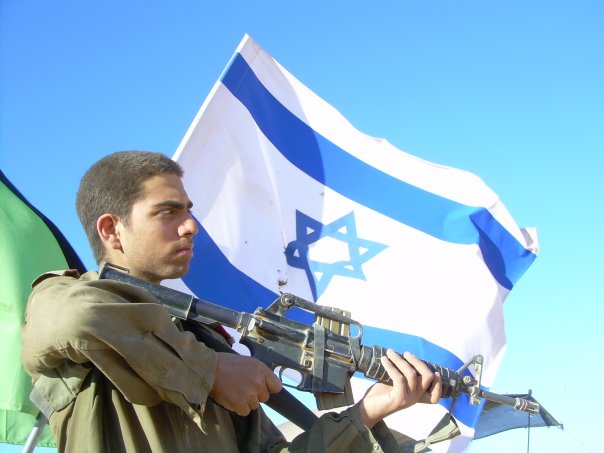

 Posts
Posts


