This week I don't have a single central D'var Torah, but I have two smaller ones.
In the first Aliyah, we read how the Aron Hakodesh was to be constructed. The materials used are specified, as are the embellishments and it's dimensions. It all seems very elaborate.
But if we think about it, something is very odd about the dimensions. Why are they not whole measures? The Aron haKodesh was to be one of the focal points of Judaism - surely there shouldn't be half-measures, quite literally, in it's dimensions. The pasuk (25:10) states, "A cubit and a half it's width, a cubit and a half it's height." Why not one cubit or two cubits?
Rav Zalman Zorotskin suggests that philospohically we may derive a lesson from the Aron. There is debate as to what the Aron housed exactly, but the consensus is that it held the Shnai Luchot - The Two Tablets. The Luchot (and the Sefer Torah that may have been contained there too,) were the ultimate representation of the Written Law. But the written law is nothing by itself - it truly is incomplete.
We learn from the dimensions of that which contained the Torah SheBichtav, that the written law alone is incomplete, and that the Oral law, the Torah Sh'Baal Peh is needed for us to fully understand, to properly appreciate its beauty and wisdom.
---
Something that was interesting me this week was that the Aron had three layers, one main Wooden box, and one inner and one outer layer of gold. The basic concept to be understood is that the gold is there so that there the Aron would have a pleasing appearance, both inside and out. But there was a word that was troubling me that was used to describe the outer layer, זר. This word has another meaning - stranger. What is the link between the two different meanings? And what has the concept of a stranger got to do with the Aron?
I tender the following answer: that the gold was not used to merely look nice. Nothing is for show in Judaism - everything has a deep meaning. We must understand that something that is good and serves a good purpose naturally will look good. Of course, after the sin of Adam HaRishon, our perception of this reality was changed, but the Bet Hamikdash still had to be perfect. Either way, the two layers of gold used, although seemingly separate from the "main" wooden box, were actually intrinsically connected to the function of the box. They were also important, after all they merited a mention in the Torah. On a similar level, we can see strangers as people who are separate from us, who are different and seemingly "irrelevant" to us, or we can choose to see things as they truly are. Just as they external layers of the Aron seemed different and apparently unconnected, but were really deeply connected to the essence of the Aron, so too we should perceive our relationship with strangers.
Wishing you a Shabbat Shalom!
Friday, February 27, 2009


Tuesday, February 24, 2009
Friday, February 20, 2009
Parshat Mishpatim - פרשת משפטים
Unfortunately this week I flew back to England. Even worse, I have not had as much time as I would like to prepare a D'var Torah. It is now about an hour and a half before Shabbat comes in here in London, and though I tried to spend an hour in a local Bet Hamedrash last night to find something interesting for my weekly D'var Torah, my plans were dashed when my friends came over to me after Ma'ariv, happy to see me after a lengthy absence. After excusing myself, another friend attacked me, and once I finally got down to learning, I found my contact lenses were giving me real trouble. Oh well.
So I had a quick look around the internet for inspiration. I found lots of meaty Divrei Torah which I can't really split up so easily, but this D'var Torah on the Aish.com website, particularly the last four paragraphs, really struck a chord with me. In fact, I strongly encourage practically everyone I know to read this "vort." R' Weisz's point is extremely well made - I feel that he has really hit the nail on the head here.
The D'var Torah got me thinking. Over the last year or two, I have heard an acronym emerge: "Fomo." Fomo stands for Fear of Missing Out, a condition that practically everyone I know suffers from. People are willing to stick around with a group of friends till 3 in the morning, even though all the fun conversation died out hours ago, just in case somebody comes out with a line that proves to be "unmissable." In today's society, sometimes the worst thing to hear is the dreaded line, "Oh, you had to be there..." The society we live in today can certainly be fun and addicting, but unfortunately is almost diametrically opposed to Torah values.
On Wednesday morning, I was concerned about a small halachic problem; I was unsure whether I had slept the minimum amount of time in order to say Birchat HaTorah, and didn't know what to do. After I landed at Heathrow, I walked past a charedi man and teenager learning Gemara together while waiting to head to the check in desk. I walked past them, but then checked myself and realised that I could ask them my problem.
It is easy to think of the stereotype of a typical Yeshiva Bochur passionately arguing with some hapless "normal" Jew over some arcane point in Halacha, delving into the relative merits of what in essence are minutiae, and essentially practically irrelevant details to the problem being faced with in real life. But if we take a close look at ourselves, are we really able to judge? Are our endless mundane conversations so much more worthy? We must be kidding ourselves to imagine that engaging in daily conversations about the weather, politics or sport are an effective and honest use of our time. For all the hours I can talk about politics, it is most unlikely I will change a thing. Take a ride with a London taxi driver, and he will most likely soon start mouthing off to you about the state of London's roads, or the transport system, or the Olympics cost and how the public will have to fund it, but ultimately he will not effect any change whatsoever.
When I turned back to the two Charedi men at Heathrow, I might well have been encountering strangers, but we were familiar with each other in a very special way. Within seconds we were debating the case in question, and anybody walking by would have though we'd known each other for years. I have been fortunate over the last few years to have lived in the Old City of Jerusalem, and I saw many tzadikim in the Shul I davenned at. The Chief Rabbi of the Old City got to know me a little and as we walked in to shul together from time to time, he would ask me how I was. I would respond, enquire after his health, and then he would go his way, and I would go mine. He is a rather quiet man, as are a lot of these tzadikim I met, but as soon as he is engaged in Torah, he transforms into another person entirely. It's not that Yeshiva Bochurim and Talmidei Chachamim are one-dimensional and have no character to them, rather they are the way they are because they see the essence of what this life is about, and direct their energies almost exclusively towards the service of Hashem.
Living in London, I have learned that one must keep a "stiff upper lip," that it is not quite normal to approach strangers and that we don't discuss anything of any value or importance with anyone until you have come to know them rather well. Instead we prefer to talk about neutral topics. We employ small talk and touch on things that we can all smirk about. And if we want to break the ice, we can always gossip a little. I can't tell you how many people I have encountered and after a rather lengthy chat, I have walked away having gained absolutely nothing from our conversation. How many times do friends meet up for a cozy evening together and talk about nothing of value together, but have a great time together?
The contrast between this lifestyle and the way in which Jews can engage one another in meaningful and practical conversation could not be greater. A thought has gone through my mind for a while now that the Torah, if followed correctly, is the greatest tool to help a man find happiness. If one follows the Torah honestly, then he can face the greatest pain and understand that Hashem's hand is behind all that happens. He can live life till the very end and never be bored because he will always have his mission busying himself with learning Torah. And here we can understand how living a Torah lifestyle can build fundamentally healthier human relationships. We can chose to indulge ourselves in temporarily fulfilling idle chatter, or alternatively we can be careful with our words and realise their power by utilising them for debating and exploring something so much more relevant than what really are "mere details." If we follow the Torah carefully, we may learn how to act correctly and how to talk correctly. By moulding ourselves to the requirements of Torah law, we are able to build our characters and become people of real value.
Wishing you a Shabbat Shalom!
So I had a quick look around the internet for inspiration. I found lots of meaty Divrei Torah which I can't really split up so easily, but this D'var Torah on the Aish.com website, particularly the last four paragraphs, really struck a chord with me. In fact, I strongly encourage practically everyone I know to read this "vort." R' Weisz's point is extremely well made - I feel that he has really hit the nail on the head here.
The D'var Torah got me thinking. Over the last year or two, I have heard an acronym emerge: "Fomo." Fomo stands for Fear of Missing Out, a condition that practically everyone I know suffers from. People are willing to stick around with a group of friends till 3 in the morning, even though all the fun conversation died out hours ago, just in case somebody comes out with a line that proves to be "unmissable." In today's society, sometimes the worst thing to hear is the dreaded line, "Oh, you had to be there..." The society we live in today can certainly be fun and addicting, but unfortunately is almost diametrically opposed to Torah values.
On Wednesday morning, I was concerned about a small halachic problem; I was unsure whether I had slept the minimum amount of time in order to say Birchat HaTorah, and didn't know what to do. After I landed at Heathrow, I walked past a charedi man and teenager learning Gemara together while waiting to head to the check in desk. I walked past them, but then checked myself and realised that I could ask them my problem.
It is easy to think of the stereotype of a typical Yeshiva Bochur passionately arguing with some hapless "normal" Jew over some arcane point in Halacha, delving into the relative merits of what in essence are minutiae, and essentially practically irrelevant details to the problem being faced with in real life. But if we take a close look at ourselves, are we really able to judge? Are our endless mundane conversations so much more worthy? We must be kidding ourselves to imagine that engaging in daily conversations about the weather, politics or sport are an effective and honest use of our time. For all the hours I can talk about politics, it is most unlikely I will change a thing. Take a ride with a London taxi driver, and he will most likely soon start mouthing off to you about the state of London's roads, or the transport system, or the Olympics cost and how the public will have to fund it, but ultimately he will not effect any change whatsoever.
When I turned back to the two Charedi men at Heathrow, I might well have been encountering strangers, but we were familiar with each other in a very special way. Within seconds we were debating the case in question, and anybody walking by would have though we'd known each other for years. I have been fortunate over the last few years to have lived in the Old City of Jerusalem, and I saw many tzadikim in the Shul I davenned at. The Chief Rabbi of the Old City got to know me a little and as we walked in to shul together from time to time, he would ask me how I was. I would respond, enquire after his health, and then he would go his way, and I would go mine. He is a rather quiet man, as are a lot of these tzadikim I met, but as soon as he is engaged in Torah, he transforms into another person entirely. It's not that Yeshiva Bochurim and Talmidei Chachamim are one-dimensional and have no character to them, rather they are the way they are because they see the essence of what this life is about, and direct their energies almost exclusively towards the service of Hashem.
Living in London, I have learned that one must keep a "stiff upper lip," that it is not quite normal to approach strangers and that we don't discuss anything of any value or importance with anyone until you have come to know them rather well. Instead we prefer to talk about neutral topics. We employ small talk and touch on things that we can all smirk about. And if we want to break the ice, we can always gossip a little. I can't tell you how many people I have encountered and after a rather lengthy chat, I have walked away having gained absolutely nothing from our conversation. How many times do friends meet up for a cozy evening together and talk about nothing of value together, but have a great time together?
The contrast between this lifestyle and the way in which Jews can engage one another in meaningful and practical conversation could not be greater. A thought has gone through my mind for a while now that the Torah, if followed correctly, is the greatest tool to help a man find happiness. If one follows the Torah honestly, then he can face the greatest pain and understand that Hashem's hand is behind all that happens. He can live life till the very end and never be bored because he will always have his mission busying himself with learning Torah. And here we can understand how living a Torah lifestyle can build fundamentally healthier human relationships. We can chose to indulge ourselves in temporarily fulfilling idle chatter, or alternatively we can be careful with our words and realise their power by utilising them for debating and exploring something so much more relevant than what really are "mere details." If we follow the Torah carefully, we may learn how to act correctly and how to talk correctly. By moulding ourselves to the requirements of Torah law, we are able to build our characters and become people of real value.
Wishing you a Shabbat Shalom!
Friday, February 13, 2009
Parshat Yitro - פרשת יתרו
Twice we read the ten commandments in the Torah, once here in Parshat Yitro, and once when Moshe recounts Matan Torah, in Parshat V’etchanan in Dvarim. There is a question that begs to be asked: of all the characters in the Torah, how come Yitro deserves this honour ahead of such personalities as Moshe and Aharon? Surely Moshe, the man who received the Torah deserved this honour more?
If we look at the end of the first Aliyah of this week’s Parsha, we read the sentence, "עתה ידעתי כי גדול ה' מכל האלהים כי בדבר אשר זדו עליהם". Now I know that Hashem is greater than the gods for the matter which they did to them [the Jews].
The classic understanding is that Yitro saw the awesome miracle of the splitting of the Yam Suf, saw that Hashem exerted total control over the natural forces of the world, and as such recognised Hashem as the one true God. This is certainly true, but the Ramban opens up another dimension to Yitro’s perspective on what turned out to be a watershed moment in his life.
If we analyse the words closely, we notice the word זדו, Zadu. This comes from the same root as the word מיזד, Maizid – Hebrew for intentional. There is a famous question – were the Mitzri’im really responsible for their fulfilling of the ancient and well known prophesy that the Jewish people were to be sold into slavery and oppressed? After all, they were merely messengers of God, enacting the prophesy? The Mitzri’im surely couldn’t be held accountable for that?!
The answer that the Ramban gives is illuminating. He explains that the Mitzri’im correctly state that they were fulfilling the prophesy by enslaving and subjugating the Jews, but they went above and beyond the prophesy by killing Jews by throwing them into the Nile. This was the Zadu, this was their malicious intent that they were being punished for.
So now, back to our point. Yitro sees Am Yisrael make their miraculous getaway through the sea, and moments later, the same sea closes in on the Egyptians and condemns them to their deaths. He sees how those who were the nastiest and most despicable to the Jews tossed about like corks and endured a very slow and painful demise, whereas those who were less spiteful died faster deaths, some sinking straight to the seabed.
What impressed Yitro was not that Hashem’s display of control over nature; any old “god” would dictate and direct nature’s forces. What impressed Yitro was Hashem’s way of Middah-K’neged-Midah, that despite waiting over one hundred years and tolerating all the unnecessary suffering imposed on the Jewish people, Hashem exacted a fitting punishment on every last Egyptian. Yitro wasn’t impressed by Hashem’s dominance over nature; any pretender to Hashem’s crown would claim a certain level of authority and supremacy over the natural world. No, what Yitro was impressed by was that this God, the true God, was one who clearly played a role in history and continued to oversee events to the present day. Yitro understood then that all that Hashem had done, and was continuing to do was part of the master plan.
Incidentally, later in our Sidra, we read of Matan Torah – the giving of the Torah. There are many interesting things that we can talk about there, but one thing I would like to focus on is the use of synaesthesia, when the Pasuk there famously says that the people saw the thunder. Interestingly enough, of all the two senses to cross over, Hashem caused our hearing to cross with our vision, and only in one way. What is the meaning of this?
We often say the words “Sh’ma Yisrael, Hashem Elokeinu, Hashem echad?” Unfortunately, we all too often seem to accept the wording blindly, without thinking to question the wording. The concept of the entire sentence is clear enough, but the wording is a little odd. What indeed is so special about the word Sh’ma that it merits to be included in the single most important line in Judaism? What is it about the faculty of hearing that it deserves a mention in Judaism’s cardinal prayer and statement of faith?
The answer, in short, can be stated that as long as we live in this “Alma d’Sfaika,” this World of Doubt, this world that is known as an “Alma D’shikra,” a World of Lies, we cannot rely on our sense of vision to perceive things as they truly are. When was the last time a man could look at a woman and tell that she was a good person just by “checking her out?” Such a concept is laughable in this world. We can’t presume to know anything about anything by looking at it. The only way to know for sure is by listening to something, by slowly and closely analysing it. But at Har Sinai, when we were in such close proximity to Hashem, we experienced a return to the state of Adam HaRishon whereby our senses all told us the same thing, whereby they all told us the absolute truth. In this context we can understand the concept of Am Yisrael seeing the Kolot, because their hearing and their seeing were no different from one another. We can now understand that which normally has to be heard, (as in Sh’ma Yisrael – the knowledge of Hashem,) was so obvious and clear that Am Yisrael could clearly perceive through even the most deceiving of the senses.
Now if we return to Yitro, we understand that Yitro had his own revelation *before* that of Am Yisrael’s. Whereas many marvelled at Hashem’s spectacular rule over nature, Yitro understood what the miracles truly signified – Hashem’s eternal reign. Yitro, the former priest correctly perceived Hashem and correctly understood what a real God, THE real God is. It may well be for this reason that Yitro deserved the merit of having the portion of Matan Torah allotted to the Parsha with his name.
This D’var Torah is adapted from the words of R’ Raphael Katz of Netanya and R’ Daniel Katz of Yeshivat Aish HaTorah.
This week’s D’var Torah is in the zchut of the memory of R’ Noach Weinberg זצ"ל, a Tzaddik whose tremendous vision has brought about, and continues to bring about the return of many hundreds if not thousands of Jews to their religion. Zecher Tzadik livracha.
Wishing you a Shabbat Shalom u’Mevorach!
If we look at the end of the first Aliyah of this week’s Parsha, we read the sentence, "עתה ידעתי כי גדול ה' מכל האלהים כי בדבר אשר זדו עליהם". Now I know that Hashem is greater than the gods for the matter which they did to them [the Jews].
The classic understanding is that Yitro saw the awesome miracle of the splitting of the Yam Suf, saw that Hashem exerted total control over the natural forces of the world, and as such recognised Hashem as the one true God. This is certainly true, but the Ramban opens up another dimension to Yitro’s perspective on what turned out to be a watershed moment in his life.
If we analyse the words closely, we notice the word זדו, Zadu. This comes from the same root as the word מיזד, Maizid – Hebrew for intentional. There is a famous question – were the Mitzri’im really responsible for their fulfilling of the ancient and well known prophesy that the Jewish people were to be sold into slavery and oppressed? After all, they were merely messengers of God, enacting the prophesy? The Mitzri’im surely couldn’t be held accountable for that?!
The answer that the Ramban gives is illuminating. He explains that the Mitzri’im correctly state that they were fulfilling the prophesy by enslaving and subjugating the Jews, but they went above and beyond the prophesy by killing Jews by throwing them into the Nile. This was the Zadu, this was their malicious intent that they were being punished for.
So now, back to our point. Yitro sees Am Yisrael make their miraculous getaway through the sea, and moments later, the same sea closes in on the Egyptians and condemns them to their deaths. He sees how those who were the nastiest and most despicable to the Jews tossed about like corks and endured a very slow and painful demise, whereas those who were less spiteful died faster deaths, some sinking straight to the seabed.
What impressed Yitro was not that Hashem’s display of control over nature; any old “god” would dictate and direct nature’s forces. What impressed Yitro was Hashem’s way of Middah-K’neged-Midah, that despite waiting over one hundred years and tolerating all the unnecessary suffering imposed on the Jewish people, Hashem exacted a fitting punishment on every last Egyptian. Yitro wasn’t impressed by Hashem’s dominance over nature; any pretender to Hashem’s crown would claim a certain level of authority and supremacy over the natural world. No, what Yitro was impressed by was that this God, the true God, was one who clearly played a role in history and continued to oversee events to the present day. Yitro understood then that all that Hashem had done, and was continuing to do was part of the master plan.
Incidentally, later in our Sidra, we read of Matan Torah – the giving of the Torah. There are many interesting things that we can talk about there, but one thing I would like to focus on is the use of synaesthesia, when the Pasuk there famously says that the people saw the thunder. Interestingly enough, of all the two senses to cross over, Hashem caused our hearing to cross with our vision, and only in one way. What is the meaning of this?
We often say the words “Sh’ma Yisrael, Hashem Elokeinu, Hashem echad?” Unfortunately, we all too often seem to accept the wording blindly, without thinking to question the wording. The concept of the entire sentence is clear enough, but the wording is a little odd. What indeed is so special about the word Sh’ma that it merits to be included in the single most important line in Judaism? What is it about the faculty of hearing that it deserves a mention in Judaism’s cardinal prayer and statement of faith?
The answer, in short, can be stated that as long as we live in this “Alma d’Sfaika,” this World of Doubt, this world that is known as an “Alma D’shikra,” a World of Lies, we cannot rely on our sense of vision to perceive things as they truly are. When was the last time a man could look at a woman and tell that she was a good person just by “checking her out?” Such a concept is laughable in this world. We can’t presume to know anything about anything by looking at it. The only way to know for sure is by listening to something, by slowly and closely analysing it. But at Har Sinai, when we were in such close proximity to Hashem, we experienced a return to the state of Adam HaRishon whereby our senses all told us the same thing, whereby they all told us the absolute truth. In this context we can understand the concept of Am Yisrael seeing the Kolot, because their hearing and their seeing were no different from one another. We can now understand that which normally has to be heard, (as in Sh’ma Yisrael – the knowledge of Hashem,) was so obvious and clear that Am Yisrael could clearly perceive through even the most deceiving of the senses.
Now if we return to Yitro, we understand that Yitro had his own revelation *before* that of Am Yisrael’s. Whereas many marvelled at Hashem’s spectacular rule over nature, Yitro understood what the miracles truly signified – Hashem’s eternal reign. Yitro, the former priest correctly perceived Hashem and correctly understood what a real God, THE real God is. It may well be for this reason that Yitro deserved the merit of having the portion of Matan Torah allotted to the Parsha with his name.
This D’var Torah is adapted from the words of R’ Raphael Katz of Netanya and R’ Daniel Katz of Yeshivat Aish HaTorah.
This week’s D’var Torah is in the zchut of the memory of R’ Noach Weinberg זצ"ל, a Tzaddik whose tremendous vision has brought about, and continues to bring about the return of many hundreds if not thousands of Jews to their religion. Zecher Tzadik livracha.
Wishing you a Shabbat Shalom u’Mevorach!
Friday, February 06, 2009
Parshat B’Shalach – פרשת בשלח
I have a quick D’var Torah this week. There’s a lot going on in Parshat B’Shalach, but I would like to focus on three main events; the miraculous splitting of the sea, the famine and the bleak possibility of starvation that thereafter threatened Bnei Yisrael, and the equally miraculous Man that descended from heaven.
R’ Shimshon Rafael Hirsch mentions a fairly well-known phrase, “It is more difficult to provide man’s daily sustenance than it is to split the Red Sea.” Nowhere was this more obvious to us than immediately after the splitting of the Red Sea. Having been delivered from the wrath of Par’oh and his mighty army, Bnei Yisrael soon found themselves desperately thirsty in the desert.
Judaism dictates that all that we see as the natural world is actually only an expression of Hashem and his power. Indeed, one of Hashem’s names, “Elokeinu,” is equal to HaTeva, Hebrew for “the natural.” The concept of a nes, a miracle, is something I have discussed on this blog before. (I refer you to my Chanukah post.) In short, the word nes in Hebrew has two meanings; one means a “banner,” and the other is miracle. The underlying idea is that a miracle is merely a banner to publicise something. A shop is clearly identified as such by the banner, a company will identify themselves on their letterheads. But even without these public signs, an entity still exists. A banner is a signal for others so that they may recognise the existence of that which the banner signifies.
So too with a miracle. Hashem took Am Yisrael out of Egypt with numerous miracles. There was no way that we could deny His existence; the signs were just too plain to see. The splitting of the Yam Suf was one last miracle and then Bnei Yisrael were faced with a grim reality. After all that spirituality, the natural world attacked hard – through our stomachs.
As Rav Hirsch says, “The threat of starvation, real or imagined, can cause man to waver in his principles, silence his better resolves, and as long as the individual is not freed, not from his cares about his material existence but from the crushing impact of these cares, there will be no chance for a complete realisation of the law of God.”
Hashem presented Bnei Yisrael with quite a poser; here was the spectre of starvation in the desert. Was it not right to worry about the dire need for water, was it really so bad that we complained to Moshe? The answer is for us to correctly perceive how Hashem acts. Hashem’s control over the “natural world” is not limited to acts on a grand scale. To imagine that would be to think of Hashem as restricted, (l’havdil). It can be argued however that Hashem set Am Yisrael the challenge of having seen incredible Nisim, and then being faced with darkness. What would they do? Would they continue to believe, or would they complain?
If we look forward to the next major event, Am Yisrael received the man, the divine nourishment that descended from above. If we look at the chain of events, we see the pattern: Miracle, Natural, Miracle. This model runs throughout Torah. Avraham, Yitzchak, Ya’akov. Chochmah, Bina, Da’at. And First Bet Hamikdash, Second Bet Hamikdash, Third Bet Hamikdash.
The concept we see here is a demonstration of a vitally important lesson that Am Yisrael needed, and needs, to learn. There are times when Hashem’s presence is obvious, never more so than when He performs miracles for us. And there are times when Hashem is hidden. It is our task to hold on to the memory of the knowledge of that first state. When it comes to physical concerns, such as food, it is our task, as Rav Hirsch says, to “realise that to this end, also, man can and should only do his part; namely that which God expects him to contribute toward the achievement of this objective. As for the success of his endeavours, he must leave that to God, Who has made every single human soul and every household with all its hungry members, great and small, the object of His ever-watchful, almighty, caring love. Man must understand that, in general, he must regard his work for his sustenance not as a right, but as a duty.”
If we can do that, then we can “machzik ma’amad,” hold our ground, and arrive at the third stage, the stage where the miraculous becomes the natural, that final stage of the Third Bet Hamikdash.
Wishing you a Shabbat Shalom!
R’ Shimshon Rafael Hirsch mentions a fairly well-known phrase, “It is more difficult to provide man’s daily sustenance than it is to split the Red Sea.” Nowhere was this more obvious to us than immediately after the splitting of the Red Sea. Having been delivered from the wrath of Par’oh and his mighty army, Bnei Yisrael soon found themselves desperately thirsty in the desert.
Judaism dictates that all that we see as the natural world is actually only an expression of Hashem and his power. Indeed, one of Hashem’s names, “Elokeinu,” is equal to HaTeva, Hebrew for “the natural.” The concept of a nes, a miracle, is something I have discussed on this blog before. (I refer you to my Chanukah post.) In short, the word nes in Hebrew has two meanings; one means a “banner,” and the other is miracle. The underlying idea is that a miracle is merely a banner to publicise something. A shop is clearly identified as such by the banner, a company will identify themselves on their letterheads. But even without these public signs, an entity still exists. A banner is a signal for others so that they may recognise the existence of that which the banner signifies.
So too with a miracle. Hashem took Am Yisrael out of Egypt with numerous miracles. There was no way that we could deny His existence; the signs were just too plain to see. The splitting of the Yam Suf was one last miracle and then Bnei Yisrael were faced with a grim reality. After all that spirituality, the natural world attacked hard – through our stomachs.
As Rav Hirsch says, “The threat of starvation, real or imagined, can cause man to waver in his principles, silence his better resolves, and as long as the individual is not freed, not from his cares about his material existence but from the crushing impact of these cares, there will be no chance for a complete realisation of the law of God.”
Hashem presented Bnei Yisrael with quite a poser; here was the spectre of starvation in the desert. Was it not right to worry about the dire need for water, was it really so bad that we complained to Moshe? The answer is for us to correctly perceive how Hashem acts. Hashem’s control over the “natural world” is not limited to acts on a grand scale. To imagine that would be to think of Hashem as restricted, (l’havdil). It can be argued however that Hashem set Am Yisrael the challenge of having seen incredible Nisim, and then being faced with darkness. What would they do? Would they continue to believe, or would they complain?
If we look forward to the next major event, Am Yisrael received the man, the divine nourishment that descended from above. If we look at the chain of events, we see the pattern: Miracle, Natural, Miracle. This model runs throughout Torah. Avraham, Yitzchak, Ya’akov. Chochmah, Bina, Da’at. And First Bet Hamikdash, Second Bet Hamikdash, Third Bet Hamikdash.
The concept we see here is a demonstration of a vitally important lesson that Am Yisrael needed, and needs, to learn. There are times when Hashem’s presence is obvious, never more so than when He performs miracles for us. And there are times when Hashem is hidden. It is our task to hold on to the memory of the knowledge of that first state. When it comes to physical concerns, such as food, it is our task, as Rav Hirsch says, to “realise that to this end, also, man can and should only do his part; namely that which God expects him to contribute toward the achievement of this objective. As for the success of his endeavours, he must leave that to God, Who has made every single human soul and every household with all its hungry members, great and small, the object of His ever-watchful, almighty, caring love. Man must understand that, in general, he must regard his work for his sustenance not as a right, but as a duty.”
If we can do that, then we can “machzik ma’amad,” hold our ground, and arrive at the third stage, the stage where the miraculous becomes the natural, that final stage of the Third Bet Hamikdash.
Wishing you a Shabbat Shalom!
Wednesday, February 04, 2009
A viral you might appreciate
I don't normally do internet virals, but this video was sent to me by my dad, and for once, I found myself amused by something other than the usual mundane drivel I'm used to being sent. This video had my roommates and I gobsmacked and left us in fits of laughter!
Funnily enough, a friend on the other side of the world posted the link to this video in her facebook status a few hours after I watched it, and I thought to myself, "Yeah honey, I'm sure your video's interesting and all, but the one I saw last night totally beats whatever you just posted. In fact, I'll send you the link to my video now..." But when I clicked the link, I got the same video. I first saw the video when it had been viewed only about 1,700 times. At the time of "going to blog" there have been upwards of 11,00 hits. Just goes to show how fast things move in this internet-enabled world of ours...
A word of warning - you must be Jewish to appreciate this.
EDIT:
And then I found this!
Funnily enough, a friend on the other side of the world posted the link to this video in her facebook status a few hours after I watched it, and I thought to myself, "Yeah honey, I'm sure your video's interesting and all, but the one I saw last night totally beats whatever you just posted. In fact, I'll send you the link to my video now..." But when I clicked the link, I got the same video. I first saw the video when it had been viewed only about 1,700 times. At the time of "going to blog" there have been upwards of 11,00 hits. Just goes to show how fast things move in this internet-enabled world of ours...
A word of warning - you must be Jewish to appreciate this.
EDIT:
And then I found this!
Monday, February 02, 2009
The Power of A Letter
A letter that was printed in the Israeli daily, Ma'ariv, has been circulating on the internet recently; on facebook, emails and blogs. The letter in question had apparently been written by an Israeli soldier, a reservist who was called up by the IDF and who consequently found himself in Gaza. The letter was purportedly left to the owners of a property held by the IDF in which the soldier spent an unspecified period of time during Operation Cast Lead.
The letter provoked some heated debate. Many doubted its veracity; some voiced their scepticism loudly, dubbing the letter shameless "propaganda," while others like myself were more passive and took the letter at face value. In the end, (and I suppose that it is a shame that more people don't know this,) the letter was proved to be a fake; a friend of mine who is currently serving in Golani stated quite clearly that no reserve soldiers actually entered Gaza and so this letter cannot have been authentic.
I still feel however that there is something very telling about this letter. While it transpires that it was not really written by an Israeli soldier who entered Gaza, I still find it deeply revealing of Israeli culture and Israelis' attitude to the Palestinian people. The "JBlogosphere," (a term coined for the worldwide network of jewish blogs,) seized upon this letter and quickly republished it. Arutz Sheva, a 'parallel' media outlet that leans very much to the right-wing, did too. All over the world, dedicated Zionists and Jews read this letter and felt connected to the letter's compassion for the Palestinian people. The letter is in no way apologetic for Israeli actions; it makes very clear that the writer believes that Israel's actions were just and neccessitated by Hamas' callous terrorism, but it nevertheless does reach out to the Palestinians, and attempts to empathise and sympathise with their pain.
What made this letter so believable is that its tone is very much in line with the norm in Israel. After terror attacks people often are polarised and given to repeating mindless mantras like "Kill all the Arabs," or "Carpet-bomb Gaza, that'll teach Hamas," but to be honest that is not the way most people think most of the time. The average Israeli, while proud of his country, also recognises the effect that this operation, and ones like it before, have had on the people "on the other side."
Yes, it is most likely that this letter is cleverly crafted propaganda, but that somebody who aligns themselves with the Israeli side of this conflict would so much as dream of writing a letter like this to people on the other side is already rather telling.
Any Palestinian who goes out of their way to make peace with Israelis is immediately dismissed as an apologist or is slurred and termed a "puppet" of the evil Zionists. Note how Hamas accuse Mahmoud Abbas (leader of Fatah and self-proclaimed Holocaust denier) of being exactly that.
The Israeli peace lobby, on the other hand, has a very real place in Israeli society. Dissenting voices are not demonised, they are respected, and ultimately have a very real (and, take note Hamas, *truly democratic*,) effect on the military's actions. Organisations such as B'Tselem, Yesh Din and Machsom Watch all place a tremendous amount of value on Palestinian human rights, often to the detriment of Jewish and Israeli human rights.
The reason why the letter touched so many people is because it was a perfect reflection of Israeli and Jewish attitudes to the people of our enemy. Though we might be engaged in a bloody war with Hamas (and even with a great number of other Palestinians, too) we never celebrate the spilling of blood, even of our enemies. Though Israel is locked in a painful war of attrition with Hamas, we do not wish our enemies dead; we would much rather that they prosper. There is very rarely an absolute proof for anything in this world, but while the so-called "civilised" countries in the West might well accuse us of war crimes, the best proof I can think of is that such atrocities are completely out of character with the genuine compassion that is so innate within the Jewish people.
This letter may well be propaganda, but for it to flourish it required another crucial ingredient; that it would be well received by Israelis and Jews around the world. The letter has spread around the world like wildfire, and it is no surprise to me why that is so. The point of this letter is one that resonates profoundly within Jews around the world. The point of the letter is that beyond the politics and the posturing, many of us Jews and Israelis are acutely uncomfortable with the effects of this (and any other) military operation on the people of "the other side." We are not apportioning blame, though we might make it exceedingly clear where we feel the blame lies for this needless and tragic loss of life, rather we are lamenting the hideous suffering that we have been compelled to impose upon another people.
The letter provoked some heated debate. Many doubted its veracity; some voiced their scepticism loudly, dubbing the letter shameless "propaganda," while others like myself were more passive and took the letter at face value. In the end, (and I suppose that it is a shame that more people don't know this,) the letter was proved to be a fake; a friend of mine who is currently serving in Golani stated quite clearly that no reserve soldiers actually entered Gaza and so this letter cannot have been authentic.
I still feel however that there is something very telling about this letter. While it transpires that it was not really written by an Israeli soldier who entered Gaza, I still find it deeply revealing of Israeli culture and Israelis' attitude to the Palestinian people. The "JBlogosphere," (a term coined for the worldwide network of jewish blogs,) seized upon this letter and quickly republished it. Arutz Sheva, a 'parallel' media outlet that leans very much to the right-wing, did too. All over the world, dedicated Zionists and Jews read this letter and felt connected to the letter's compassion for the Palestinian people. The letter is in no way apologetic for Israeli actions; it makes very clear that the writer believes that Israel's actions were just and neccessitated by Hamas' callous terrorism, but it nevertheless does reach out to the Palestinians, and attempts to empathise and sympathise with their pain.
What made this letter so believable is that its tone is very much in line with the norm in Israel. After terror attacks people often are polarised and given to repeating mindless mantras like "Kill all the Arabs," or "Carpet-bomb Gaza, that'll teach Hamas," but to be honest that is not the way most people think most of the time. The average Israeli, while proud of his country, also recognises the effect that this operation, and ones like it before, have had on the people "on the other side."
Yes, it is most likely that this letter is cleverly crafted propaganda, but that somebody who aligns themselves with the Israeli side of this conflict would so much as dream of writing a letter like this to people on the other side is already rather telling.
Any Palestinian who goes out of their way to make peace with Israelis is immediately dismissed as an apologist or is slurred and termed a "puppet" of the evil Zionists. Note how Hamas accuse Mahmoud Abbas (leader of Fatah and self-proclaimed Holocaust denier) of being exactly that.
The Israeli peace lobby, on the other hand, has a very real place in Israeli society. Dissenting voices are not demonised, they are respected, and ultimately have a very real (and, take note Hamas, *truly democratic*,) effect on the military's actions. Organisations such as B'Tselem, Yesh Din and Machsom Watch all place a tremendous amount of value on Palestinian human rights, often to the detriment of Jewish and Israeli human rights.
The reason why the letter touched so many people is because it was a perfect reflection of Israeli and Jewish attitudes to the people of our enemy. Though we might be engaged in a bloody war with Hamas (and even with a great number of other Palestinians, too) we never celebrate the spilling of blood, even of our enemies. Though Israel is locked in a painful war of attrition with Hamas, we do not wish our enemies dead; we would much rather that they prosper. There is very rarely an absolute proof for anything in this world, but while the so-called "civilised" countries in the West might well accuse us of war crimes, the best proof I can think of is that such atrocities are completely out of character with the genuine compassion that is so innate within the Jewish people.
This letter may well be propaganda, but for it to flourish it required another crucial ingredient; that it would be well received by Israelis and Jews around the world. The letter has spread around the world like wildfire, and it is no surprise to me why that is so. The point of this letter is one that resonates profoundly within Jews around the world. The point of the letter is that beyond the politics and the posturing, many of us Jews and Israelis are acutely uncomfortable with the effects of this (and any other) military operation on the people of "the other side." We are not apportioning blame, though we might make it exceedingly clear where we feel the blame lies for this needless and tragic loss of life, rather we are lamenting the hideous suffering that we have been compelled to impose upon another people.
Friday, January 30, 2009
Parshat Bo – פרשת בא
It’s been a month or so since my last D’var Torah, but now that my SAT exam is out of the way, my weekly Parsha thoughts have made a triumphant return!
This week I read something very interesting written by Rav Hirsch. Parshat Bo deals primarily with the last three of the ten plagues, but is also noted for the Parsha in which the Jewish nation receives their first mitzvah – that of Rosh Chodesh as it says, “החודש הזה לכם ראש חדשים ראשון הוא לכם חדשי השנה – This renewal of the moon shall be for you a beginning of new moons; it shall be for you the first among the months of the year.”
Many have wondered why this was chosen as the first mitzvah to be commanded to Am Yisrael. Surely there were other, more significant, (or at least more symbolic,) Mitzvot that could have been chosen instead of this seemingly trivial commandment? What is so important about Rosh Chodesh?
There is a famous Pasuk that refers to the Chagim, “אלה מועדי ה' מקראי קודש אשר תקראו אתם במועדם – These are God’s appointed times for meeting, convocations to the sanctuary which you must proclaim at the time appointed for them.” To understand the concept of Mo’ed, normally translated as a time or meeting, one must refer to our Pasuk here.
Rav Hirsch says that it seems that all the Chagim are based on a concept of מועד, of coming together. But wheat is the connection between Rosh Chodesh and the מועדים? Rosh Chodesh isn't a מועד, it has no specific historic or seasonal associations. Indeed what is מועד? Is it a simple reference to time, to meeting, is it to both?
מועד denotes a place or a time designated for meeting, that much is true. In our Pasuk, the word has the latter connotation. מועדים are times or seasons designated for our meeting with Hashem. (Note that during Chagim we confirm our religion; Shabbat is considered a testimony, as are the Chagim. The root of the word for testimony is עד. It should therefore be unsurprising that these two letters appear in the word מועד.) Explained in human terms, this meeting is to be a voluntary act for both parties. It is not to be a matter of a master summoning his servants into his presence.
For this reason only general terms are specified regarding the time of Am Yisrael’s coming to Hashem; He allows us a certain leeway in setting the conditions, as it were, for meeting up with him, so that the meeting may be of mutual choice. If it were that Rosh Chodesh were fixed, then all the chagim would be fixed too, and then it would be that we would have no input in arranging the time of our meeting with Hashem, and that we would be effectively tied down to a fixed schedule. In fact, it could be somewhat perversely argued that if the beginnings of months and hence also the festivals with them were to be tied inextricably to the astronomical phases of the planets so that the lunar calendar automatically determined the מועד and the מועדים, then we and Hashem would (l’havdil) appear bound to the blind, unchanging cycle of nature. That is absolutely not the case.
Now we can understand the importance of this mitzvah. In a way, we can say that this mitzvah is parallel in function to the first letter of the Torah. Whereas the Torah could easily have started with the letter Aleph, it commences with a Bet to signify our entering into a holy partnership with Hashem. In a similar manner, the Mitzvah of Rosh Chodesh is exactly the same.
Post Shabbat Addendum: I forgot to mention that I heard a lovely D'var Torah in a shiur this week by the current Rav of the Old City of Jerusalem, Rav Chizkiyahu Neventzahl, in the name of his father, ex-Rav of the Old City, Rav Avigdor Neventzhal.
Rav Neventzhal said that in Parshat Bo we read the pasuk, "היום אתם יוצאים בחודש האביב - Today you leave in the month of spring" in reference to the Jews leaving Egypt in the springtime. It is for this reason that Pesach is also called Chag Ha'Aviv - The Spring Festival.
That seems reasonable enough, but when we consider that the Jews wandered in the desert for forty years, the fact that they left in the spring seems irrelevant. If they had left Egypt in the spring and arrived in the spring, then the title would be fitting, but if Am Yisrael were in the desert for all that time, they traveled through many yearly cycles of Spring, Summer, Autumn and Winter. What's the big deal about the fact that "Today... the month of spring?"
The Jews traveled in the Ananei HaKavod, the Clouds of Glory, and ate man, the divine food that descended from heaven. Spiritually speaking, they traveled first class. In fact, their physical needs were taken care of, too. The man was exactly enough for each person's need and taste; all that the Jews had to do was indulge their Neshamot and study Torah. Rav Neventzhal senior's chiddush (insight) is that our Pasuk means that for the duration of the forty years in the desert the Jews traveled, in the Ananei HaKavod, in just the right conditions - those of spring. It is said that before the sin of Adam HaRishon that the world had only one season - spring. Spring is the most pleasant of all season; neither too hot nor too cold, just right. The pasuk is teaching us not only that Am Yisrael left Egypt while it was spring, but that it stayed that way for the length of their desert wanderings.
When I said this D'var Torah on Shabbat, my Aunt made commented, backing up the argument, that while the Jews may have complained of many things while wandering in the desert, the food for example, not once did they grumble of the most obvious of complaints. The first complaint should have been that it was too hot at day in the summer, or too cold with the freezing desert nights, but not once did they so much as mention the weather - testament to Rav Neventzhal's chiddush.
Wishing you a Shabbat Shalom U'Mevorach!
Elan
This week I read something very interesting written by Rav Hirsch. Parshat Bo deals primarily with the last three of the ten plagues, but is also noted for the Parsha in which the Jewish nation receives their first mitzvah – that of Rosh Chodesh as it says, “החודש הזה לכם ראש חדשים ראשון הוא לכם חדשי השנה – This renewal of the moon shall be for you a beginning of new moons; it shall be for you the first among the months of the year.”
Many have wondered why this was chosen as the first mitzvah to be commanded to Am Yisrael. Surely there were other, more significant, (or at least more symbolic,) Mitzvot that could have been chosen instead of this seemingly trivial commandment? What is so important about Rosh Chodesh?
There is a famous Pasuk that refers to the Chagim, “אלה מועדי ה' מקראי קודש אשר תקראו אתם במועדם – These are God’s appointed times for meeting, convocations to the sanctuary which you must proclaim at the time appointed for them.” To understand the concept of Mo’ed, normally translated as a time or meeting, one must refer to our Pasuk here.
Rav Hirsch says that it seems that all the Chagim are based on a concept of מועד, of coming together. But wheat is the connection between Rosh Chodesh and the מועדים? Rosh Chodesh isn't a מועד, it has no specific historic or seasonal associations. Indeed what is מועד? Is it a simple reference to time, to meeting, is it to both?
מועד denotes a place or a time designated for meeting, that much is true. In our Pasuk, the word has the latter connotation. מועדים are times or seasons designated for our meeting with Hashem. (Note that during Chagim we confirm our religion; Shabbat is considered a testimony, as are the Chagim. The root of the word for testimony is עד. It should therefore be unsurprising that these two letters appear in the word מועד.) Explained in human terms, this meeting is to be a voluntary act for both parties. It is not to be a matter of a master summoning his servants into his presence.
For this reason only general terms are specified regarding the time of Am Yisrael’s coming to Hashem; He allows us a certain leeway in setting the conditions, as it were, for meeting up with him, so that the meeting may be of mutual choice. If it were that Rosh Chodesh were fixed, then all the chagim would be fixed too, and then it would be that we would have no input in arranging the time of our meeting with Hashem, and that we would be effectively tied down to a fixed schedule. In fact, it could be somewhat perversely argued that if the beginnings of months and hence also the festivals with them were to be tied inextricably to the astronomical phases of the planets so that the lunar calendar automatically determined the מועד and the מועדים, then we and Hashem would (l’havdil) appear bound to the blind, unchanging cycle of nature. That is absolutely not the case.
Now we can understand the importance of this mitzvah. In a way, we can say that this mitzvah is parallel in function to the first letter of the Torah. Whereas the Torah could easily have started with the letter Aleph, it commences with a Bet to signify our entering into a holy partnership with Hashem. In a similar manner, the Mitzvah of Rosh Chodesh is exactly the same.
Post Shabbat Addendum: I forgot to mention that I heard a lovely D'var Torah in a shiur this week by the current Rav of the Old City of Jerusalem, Rav Chizkiyahu Neventzahl, in the name of his father, ex-Rav of the Old City, Rav Avigdor Neventzhal.
Rav Neventzhal said that in Parshat Bo we read the pasuk, "היום אתם יוצאים בחודש האביב - Today you leave in the month of spring" in reference to the Jews leaving Egypt in the springtime. It is for this reason that Pesach is also called Chag Ha'Aviv - The Spring Festival.
That seems reasonable enough, but when we consider that the Jews wandered in the desert for forty years, the fact that they left in the spring seems irrelevant. If they had left Egypt in the spring and arrived in the spring, then the title would be fitting, but if Am Yisrael were in the desert for all that time, they traveled through many yearly cycles of Spring, Summer, Autumn and Winter. What's the big deal about the fact that "Today... the month of spring?"
The Jews traveled in the Ananei HaKavod, the Clouds of Glory, and ate man, the divine food that descended from heaven. Spiritually speaking, they traveled first class. In fact, their physical needs were taken care of, too. The man was exactly enough for each person's need and taste; all that the Jews had to do was indulge their Neshamot and study Torah. Rav Neventzhal senior's chiddush (insight) is that our Pasuk means that for the duration of the forty years in the desert the Jews traveled, in the Ananei HaKavod, in just the right conditions - those of spring. It is said that before the sin of Adam HaRishon that the world had only one season - spring. Spring is the most pleasant of all season; neither too hot nor too cold, just right. The pasuk is teaching us not only that Am Yisrael left Egypt while it was spring, but that it stayed that way for the length of their desert wanderings.
When I said this D'var Torah on Shabbat, my Aunt made commented, backing up the argument, that while the Jews may have complained of many things while wandering in the desert, the food for example, not once did they grumble of the most obvious of complaints. The first complaint should have been that it was too hot at day in the summer, or too cold with the freezing desert nights, but not once did they so much as mention the weather - testament to Rav Neventzhal's chiddush.
Wishing you a Shabbat Shalom U'Mevorach!
Elan
Wednesday, January 28, 2009
A bitter pill to swallow
So the policy is now out in the open. Two years ago when I was in the army, I was doing guard duty near Ariel with another soldier. We had a fixed position and once an hour or so, one of us was to walk about 25 meters down the road from us and back to check the area. My colleague asked me if I understood the instructions we received earlier in the day. I replied to the negative; I hadn't a clue as I was still getting a feel for Ivrit at the time. He told me that if, while he was on his short patrol, I were to hear yelling from his direction I should shoot in the air to ward off any potential attackers. If I could see that we were getting into a kidnap situation, then I would have to do my best to neutralise the threat.
He went on to say that if the situation was that the terrorists looked to be succeeding in their struggle to kidnap him, and that I could not discern between his outline and the terrorists', I should shoot to kill all parties involved.
My friend explained that after the shenanigan that was the Second Lebanon War, the army is aware that terrorists are seeking to capture IDF soldiers to use as bargaining chips. He continued, saying that while this was not official army policy, it certainly has been unnoffically encouraged practise.
Yesterday, the cat was let out of the bag when a briefing given by the Magad (Battalion Commander) to Golani's 51st Battalion before they entered Gaza was was aired on Channel 10. The recording captures the Commander telling his soldiers that "Hamas' strategic weapon is to kidnap another soldier and I don't have to tell you, but no soldier from Battalion 51 gets kidnapped at any price and under any situation even if it means that he has to blow up his grenade together with those who are trying to kidnap him."
The IDF has furiously denied that these words were meant literally, and claims that this was motivational rhetoric in the commander's pep talk to his soldiers. The truth is somewhat different. Unfortunately, the IDF is all too familiar with the ramifications of a succesful soldier kidnap attempt. However, instructing a soldier to commit suicide grates with the IDF's ethos of leaving no man behind, and while it may be the best option available, it remains a bitter pill to swallow, and as such, has not been formally approved as policy. Additionally, as such a suicide (even under circumstances as extenuating these,) could well be against Halacha, the IDF has decided to adopt an informal apprach to this policy, opting to allow it spread via word-of-mouth. It would seem that this specific Battalion Commander inadvertently crossed the line by mentioning it to his soldiers formally, but the policy is equally effective when officially prescribed as when it is advisory practise.
Unsurprisingly, Jewish and Israeli blogs have seen a furious debate erupt over this policy. For a more in-depth look, read this page on VosIzNeias. Make sure to scroll down to read the comments people have left in response to the main article.
He went on to say that if the situation was that the terrorists looked to be succeeding in their struggle to kidnap him, and that I could not discern between his outline and the terrorists', I should shoot to kill all parties involved.
My friend explained that after the shenanigan that was the Second Lebanon War, the army is aware that terrorists are seeking to capture IDF soldiers to use as bargaining chips. He continued, saying that while this was not official army policy, it certainly has been unnoffically encouraged practise.
Yesterday, the cat was let out of the bag when a briefing given by the Magad (Battalion Commander) to Golani's 51st Battalion before they entered Gaza was was aired on Channel 10. The recording captures the Commander telling his soldiers that "Hamas' strategic weapon is to kidnap another soldier and I don't have to tell you, but no soldier from Battalion 51 gets kidnapped at any price and under any situation even if it means that he has to blow up his grenade together with those who are trying to kidnap him."
The IDF has furiously denied that these words were meant literally, and claims that this was motivational rhetoric in the commander's pep talk to his soldiers. The truth is somewhat different. Unfortunately, the IDF is all too familiar with the ramifications of a succesful soldier kidnap attempt. However, instructing a soldier to commit suicide grates with the IDF's ethos of leaving no man behind, and while it may be the best option available, it remains a bitter pill to swallow, and as such, has not been formally approved as policy. Additionally, as such a suicide (even under circumstances as extenuating these,) could well be against Halacha, the IDF has decided to adopt an informal apprach to this policy, opting to allow it spread via word-of-mouth. It would seem that this specific Battalion Commander inadvertently crossed the line by mentioning it to his soldiers formally, but the policy is equally effective when officially prescribed as when it is advisory practise.
Unsurprisingly, Jewish and Israeli blogs have seen a furious debate erupt over this policy. For a more in-depth look, read this page on VosIzNeias. Make sure to scroll down to read the comments people have left in response to the main article.
Tuesday, January 27, 2009
Here we go...
And a little over a week after the one-week ceasefire was announced, what passed for peace here in Israel might be crumbling. I desperately hope not, but after events this morning, we'll have to wait and see. In case you didn't know, an Israeli soldier was killed and three were wounded this morning when the jeep they were in hit a mine during a standard patrol on part of the Gaza strip perimeter. Consequently Israel was drawn into a relatively low-key gun battle with terrorists and an Arab farmer caught in the crossfire was killed. A number of drones and helicopters were deployed on aerial patrols and one caused a sonic boom over Gaza by way of a statement from the IDF. (EDIT: Later on in the afternooon, 20 tanks and 7 armoured bulldozers backed up by air support entered Gaza but did not engage in heavy fighting. An air strike targeted a terrorist on a motorbike, causing him and a bystander severe injuries, but other than that nobody was reported injured.)
People have asked me whether the ceasefire will hold and I have told them that I am very pessimistic. Hamas undoubtedly want to attack Israel, and have never seen a ceasefire as a reason to actually cease their fire. During the six month period between June and December last year when an uneasy calm existed between Israel and Gaza, there were still over 300 rockets and mortars fired into Israeli terrirtory in defiance of the supposed "Hudna." If Olmert, Livni and Peres were serious when they said Israel had to change the status quo and that it will no longer tolerate such a threat and will respond to each and every rocket, then all Hamas has to do to grab the initiative is to fire a high volume of rockets into Israel. If we do not respond, we will be externally perceived as weak and internally perceived as unable to back up our assurances to the residents of Sderot and Ashkelon, and if we respond then the ceasefire will disappear and we will back in a war-like situation. I fully expect Hamas will most likely wait till closer to the elections and then step up rocket attacks once again to test this theory out. Either way, the Israeli government made a terrible mistake in withdrawing from Gaza as it did - it undermined a huge amount of progress. Hamas can now rebuild it's tunnels, (it already is, and furiously so,) and wait till the right time to attack again.
When will we learn?
People have asked me whether the ceasefire will hold and I have told them that I am very pessimistic. Hamas undoubtedly want to attack Israel, and have never seen a ceasefire as a reason to actually cease their fire. During the six month period between June and December last year when an uneasy calm existed between Israel and Gaza, there were still over 300 rockets and mortars fired into Israeli terrirtory in defiance of the supposed "Hudna." If Olmert, Livni and Peres were serious when they said Israel had to change the status quo and that it will no longer tolerate such a threat and will respond to each and every rocket, then all Hamas has to do to grab the initiative is to fire a high volume of rockets into Israel. If we do not respond, we will be externally perceived as weak and internally perceived as unable to back up our assurances to the residents of Sderot and Ashkelon, and if we respond then the ceasefire will disappear and we will back in a war-like situation. I fully expect Hamas will most likely wait till closer to the elections and then step up rocket attacks once again to test this theory out. Either way, the Israeli government made a terrible mistake in withdrawing from Gaza as it did - it undermined a huge amount of progress. Hamas can now rebuild it's tunnels, (it already is, and furiously so,) and wait till the right time to attack again.
When will we learn?
I'm back!
Sorry about my lack of posts recently, but I did warn you.
I sat my SAT examination on Sunday, and I remain confident that it went rather well, but I don't know just yet. My results should be posted online on the 10th of February, so for those who are close with me, call me that evening and I'll let you know how I did...
Unfortunately, without sounding too morbid, because I was so busy I missed Israel's most newsworthy event since the Second Lebanon War. My brother, a machine-gunner in Golani's 51st Battalion was thankfully considered too inexperienced to see heavy fighting and was assigned the job of providing cover fire from outside of Gaza city. Baruch Hashem he had a relatively uneventful time in Gaza, but he did have some intense moments. The stories are his to tell, but I can say that I was mightily relieved to see him back home in the Old City this past weekend, alive and well.
I sat my SAT examination on Sunday, and I remain confident that it went rather well, but I don't know just yet. My results should be posted online on the 10th of February, so for those who are close with me, call me that evening and I'll let you know how I did...
Unfortunately, without sounding too morbid, because I was so busy I missed Israel's most newsworthy event since the Second Lebanon War. My brother, a machine-gunner in Golani's 51st Battalion was thankfully considered too inexperienced to see heavy fighting and was assigned the job of providing cover fire from outside of Gaza city. Baruch Hashem he had a relatively uneventful time in Gaza, but he did have some intense moments. The stories are his to tell, but I can say that I was mightily relieved to see him back home in the Old City this past weekend, alive and well.
Monday, January 12, 2009
A quick entry
I'm just posting a quick blog entry to say that you should expect a reduction in the amount of blog posts I make as I have a big examination in just under two weeks. Regular readers have no doubt realised that my weekly D'var Torah has not made its usual appearance late on Friday afternoon - it's just too time-demanding. Similarly, I'm warning you that entries of a political nature are unlikely to be posted frequently until after the 25th. Thank you!
In the meantime... Is it just me, or is there something all too familiar about the outcome of this "peace" demonstration, reported in the Jerusalem Post? (There are a few events reported, so look for where the small paragraph at the bottom starting, "A demonstration outside the Prime Minister's residence...")
The only surprise is that, given the increasing number of Peace Now rallies held in Israel by "anti-occupationist" (self-hating) Jews against the IDF's actions in Gaza, ironically it was not a socialist-leaning Jewish sympathiser who decided to violently suppress opposition to his cause, but that it was an Arab. And what did he do? He threw a rock. Talk about reverting to type! Please note that I do recognise that the passing pro-Israel supporter was indeed abusive, but I also appreciate the difference between verbal abuse and what amounts to physical intimidation.
In the meantime... Is it just me, or is there something all too familiar about the outcome of this "peace" demonstration, reported in the Jerusalem Post? (There are a few events reported, so look for where the small paragraph at the bottom starting, "A demonstration outside the Prime Minister's residence...")
The only surprise is that, given the increasing number of Peace Now rallies held in Israel by "anti-occupationist" (self-hating) Jews against the IDF's actions in Gaza, ironically it was not a socialist-leaning Jewish sympathiser who decided to violently suppress opposition to his cause, but that it was an Arab. And what did he do? He threw a rock. Talk about reverting to type! Please note that I do recognise that the passing pro-Israel supporter was indeed abusive, but I also appreciate the difference between verbal abuse and what amounts to physical intimidation.
Wednesday, December 31, 2008
Finally a (grudging) mention
This article went online on the BBC's website last night. At first, I was pleased. A good article, so I thought, that refrained from blaming Israel. For that I should be grateful, I supposed.
But as I thought about what I had just read, I realised that several key points were missing. I realised that I was looking at yet another example of our enlightened left-wing, liberal-minded media studiously avoiding painting a full picture of what is happening in the Middle East.
I am currently studying for the American SAT. One of the subjects tested will be my essay writing skills. During my revision, I have learned that a good essay will take various sources and will make observations and progress to a mature conclusion. In that context, I am utterly dismayed that nowhere in the article is there mention of the word terrorist. True, that is unsurprising given the media's preference for the more sterile "militant," but "militant" doesn't appear either. "Hamas" is mentioned, but not once in connection with the suffering of the residents of Sderot at the hands of the rockets that they fire. Where would the BBC have us believe that these rockets appear from? Are they hoping to delude the public into thinking that rockets land in Sderot out of thin air?
Once again, the BBC is guilty of painting a misleading picture. The article mentions that the rockets come from Gaza, which is very true, but the point is that Hamas as administrators of the Gaza strip have both actively fired and passively overseen the firing of rockets aimed at civilians in Israeli towns such as Sderot. Which touches another point, that these rockets were aimed at civilians.
Why had such an article not been written before Israel's attack against Hamas? Why didn't the BBC feel that the situation, something that has been daily conversation here in Israel now for over two years, warranted a full-length article long ago? Why is it that when Israel responds to the terrorists the whole world sits up and takes notice, thoroughly condemning their "disproportionate" actions, but as rockets continued to hit Sderot throughout a ceasefire, the press' reaction was one of silence. Where was the international condemnation then? Where were the students protesting outside the embassies in solidarity with their Israeli brothers? (OK, I'm deluding myself a little there, but you surely catch my drift.)
Only after five days of this incursion/war in response to Hamas' insufferable provocation do the left-wing loonies at the BBC see fit to describe the suffering that Sderot residents are enduring. By way of comparison, countless articles have been posted online describing the suffering of Gazan residents as a result of the Israeli blockade and over these last five days many more have been published detailing their suffering in the latest bout of the conflict.
I have a sneaking feeling that the only reason why this article was compiled was merely so that their reporting of the situation could be perceived as balanced. To have masses of editorials online documenting the suffering of the helpless Palestinians, yet not one about the victims of Hamas's reprehensible "bad habit" of firing military grade weapons at civilians would be clearly indefencible proof of bias. Even the BBC would cannot tolerate such an absurdly assymetrical level of reporting.
By grudgingly producing the mimimal number of "pro-Israel" articles however, (and by that I mean "non-pro-Palestinian" articles,) the lefties can claim to be neutral and falsely assert that they are willing to equally report both sides of the conflict. They will self-righteously point to the few articles of this nature, and thus impudently deflect criticism of their one-sidedness. Do not be fooled.
But as I thought about what I had just read, I realised that several key points were missing. I realised that I was looking at yet another example of our enlightened left-wing, liberal-minded media studiously avoiding painting a full picture of what is happening in the Middle East.
I am currently studying for the American SAT. One of the subjects tested will be my essay writing skills. During my revision, I have learned that a good essay will take various sources and will make observations and progress to a mature conclusion. In that context, I am utterly dismayed that nowhere in the article is there mention of the word terrorist. True, that is unsurprising given the media's preference for the more sterile "militant," but "militant" doesn't appear either. "Hamas" is mentioned, but not once in connection with the suffering of the residents of Sderot at the hands of the rockets that they fire. Where would the BBC have us believe that these rockets appear from? Are they hoping to delude the public into thinking that rockets land in Sderot out of thin air?
Once again, the BBC is guilty of painting a misleading picture. The article mentions that the rockets come from Gaza, which is very true, but the point is that Hamas as administrators of the Gaza strip have both actively fired and passively overseen the firing of rockets aimed at civilians in Israeli towns such as Sderot. Which touches another point, that these rockets were aimed at civilians.
Why had such an article not been written before Israel's attack against Hamas? Why didn't the BBC feel that the situation, something that has been daily conversation here in Israel now for over two years, warranted a full-length article long ago? Why is it that when Israel responds to the terrorists the whole world sits up and takes notice, thoroughly condemning their "disproportionate" actions, but as rockets continued to hit Sderot throughout a ceasefire, the press' reaction was one of silence. Where was the international condemnation then? Where were the students protesting outside the embassies in solidarity with their Israeli brothers? (OK, I'm deluding myself a little there, but you surely catch my drift.)
Only after five days of this incursion/war in response to Hamas' insufferable provocation do the left-wing loonies at the BBC see fit to describe the suffering that Sderot residents are enduring. By way of comparison, countless articles have been posted online describing the suffering of Gazan residents as a result of the Israeli blockade and over these last five days many more have been published detailing their suffering in the latest bout of the conflict.
I have a sneaking feeling that the only reason why this article was compiled was merely so that their reporting of the situation could be perceived as balanced. To have masses of editorials online documenting the suffering of the helpless Palestinians, yet not one about the victims of Hamas's reprehensible "bad habit" of firing military grade weapons at civilians would be clearly indefencible proof of bias. Even the BBC would cannot tolerate such an absurdly assymetrical level of reporting.
By grudgingly producing the mimimal number of "pro-Israel" articles however, (and by that I mean "non-pro-Palestinian" articles,) the lefties can claim to be neutral and falsely assert that they are willing to equally report both sides of the conflict. They will self-righteously point to the few articles of this nature, and thus impudently deflect criticism of their one-sidedness. Do not be fooled.
In case we weren't absolutely sure why Israel launched this operation (Part 2):
Here is a short but powerful clip from Aish.com highlighting the effects of Hamas's terrorism that have caused Israel's recent operation.
Tuesday, December 30, 2008
In case we weren't absolutely sure why Israel launched this operation:
If there was any doubt as to whether Hamas' rudimentary Kassams have any real effect on the residents of Southern Israel, here's a resounding yes for you.
(Hat tip: Muqata)
Translated from Arutz Sheva Israel:

9 year old "Shir" wrote a list for herself in case of rocket attacks on her home in Southern Israel. This way she knows how long it takes to run to the bomb shelter from everywhere in her home, from the time she hears the air raid siren.
From the living room -- 10 seconds to run to the bomb shelter.
From Or's bedroom -- 10 seconds to run to the bomb shelter.
From the dining room -- 6 seconds to run to the bomb shelter.
From Shir's Bedroom -- 13 seconds to run to the bomb shelter
From my parents bedroom -- 10 seconds to run to the bomb shelter.
From the hall bathroom -- 10 seconds to run to the bomb shelter.
That unfortunately, is little Shir's reality. She has to know how long it takes her to run from place to place, because it might well save her life.
I don't know about you, but that is not normality. That is no way for a nine year old girl to live. That is unacceptable, and that is why Israel has finally acted.
(Hat tip: Muqata)
Translated from Arutz Sheva Israel:

9 year old "Shir" wrote a list for herself in case of rocket attacks on her home in Southern Israel. This way she knows how long it takes to run to the bomb shelter from everywhere in her home, from the time she hears the air raid siren.
From the living room -- 10 seconds to run to the bomb shelter.
From Or's bedroom -- 10 seconds to run to the bomb shelter.
From the dining room -- 6 seconds to run to the bomb shelter.
From Shir's Bedroom -- 13 seconds to run to the bomb shelter
From my parents bedroom -- 10 seconds to run to the bomb shelter.
From the hall bathroom -- 10 seconds to run to the bomb shelter.
That unfortunately, is little Shir's reality. She has to know how long it takes her to run from place to place, because it might well save her life.
I don't know about you, but that is not normality. That is no way for a nine year old girl to live. That is unacceptable, and that is why Israel has finally acted.
Subscribe to:
Posts (Atom)


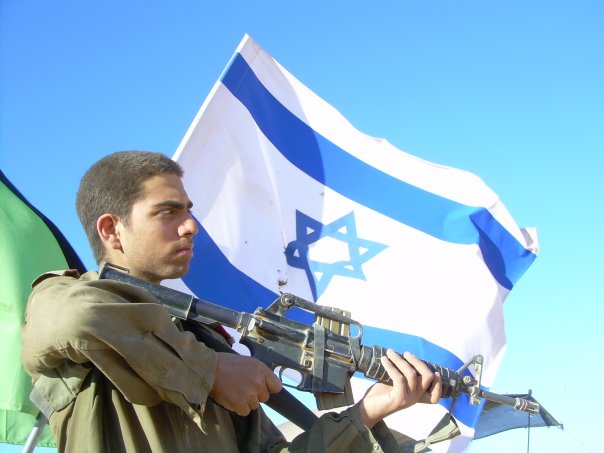

 Posts
Posts


